How you travel to the Douro Valley deeply changes your experience of the gorgeous wine region. Whether you curve around the steep ridges by car, trace the water’s edge on the historic Linha do Douro train line, or navigate massive river locks on a scenic day cruise from Porto, each mode of transport unlocks a completely different perspective of this vertical, terraced landscape.
This comprehensive guide on how to get to the Douro Valley breaks down the pros, cons and costs of trains, boats, cars and guided tours to help you choose the perfect journey into the world’s oldest demarcated wine region.
Quick Porto to Douro Valley transport comparison
| Transport mode | Best For… | Time from Porto | Cost | Flexibility |
| 🚂 Train | Solo travellers, great scenery | 2h – 2.5h train | € – Low | Low |
| 🚗 Car | Freedom to explore, viewpoints and obscure wineries | 1.5h drive | €€ – Mid | High |
| 🚢 River cruise | Relaxed day on the water | 7h – 9h boat | €€€ – High | None |
| 🗺️ Guided tour | Logistical ease, drinking without worry. Easiest and most popular option! | 10 –12h tour | €€€ – High | Medium |
Option 1: 🚂 Train (Linha do Douro) from Porto
The Linha do Douro is considered the most beautiful rail route in Portugal. It traces a historic track that first carved its way through and along the valley walls in the late 19th century. While the first hour out of Porto cuts through standard northern suburbs, the scenery shifts dramatically the moment the tracks lock parallel to the water’s edge. The best part comes after Peso da Régua, where the stretch to Pinhão puts you so close to the riverbank you could almost touch the water.
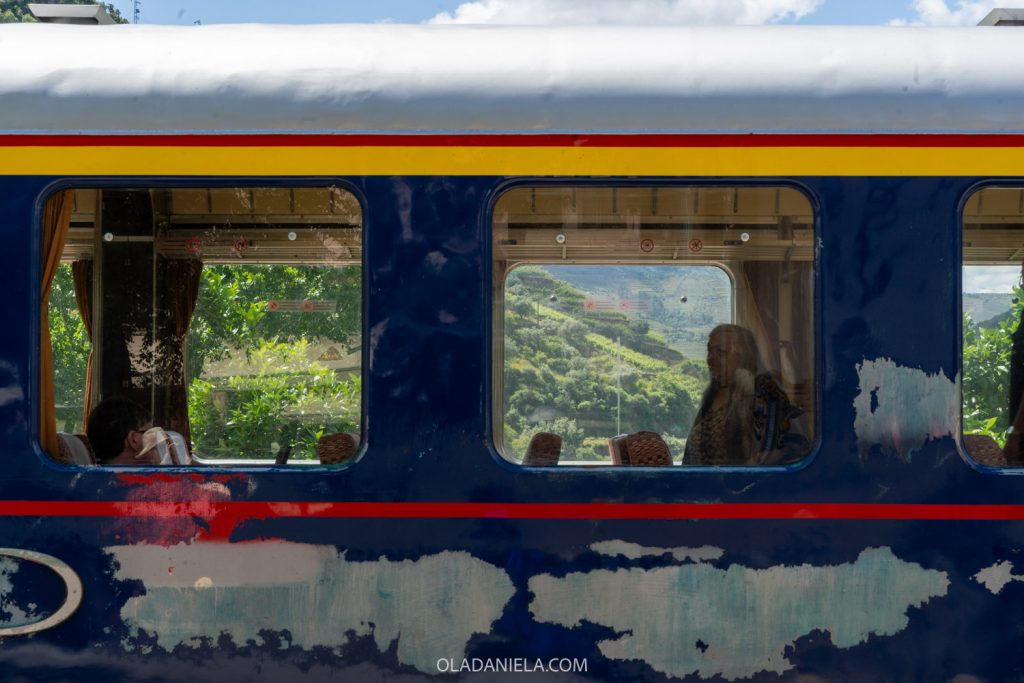
There’s something romantic about rail travel in Europe – the Linha do Douro is a charming step back in time with some very cool older carriages that feel like they’re out of a Wes Anderson film. If you book the MiraDouro, you’ll get the CP 1400 series diesel locomotive with Schindler or Sorefame carriages. The 1940s Schindler carriages have panoramic windows that can be opened during the journey, as do the 1970s restored Sorefame carriages. Both can carry bicycles.
✅ Pros: Incredibly scenic, affordable, drops you right in the centre of riverside wine villages like Pinhão.
❌ Cons: You are bound to train schedules, can’t easily reach high-altitude lookouts or boutique wineries
✨ I recommend: Sit on the right side of the train when heading into the valley for uninterrupted river views. Switch to the left side for the return trip to Porto. Get off in Pinhão, a small village with plenty to do. Walking distance from the village, you can visit Quinta do Bomfim for a chic lunch, vineyard picnic or Port wine tour and tasting or Quinta das Carvalhas. Save time for a one-hour rabelo boat ride on the river before returning to the city — or stay overnight in town at The Vintage House hotel. To go further, get a local guide like Paulo from Douro Autêntico to take you on an off-road adventure to explore viewpoints and small wineries far from town, then return to Porto the next day.
How to book the train
- ➡️ Book your trains directly via cp.pt, or via third-party site Omio
- Sometimes I find the CP website is glitchy in English. If you’re having trouble, try switching to Portuguese when hitting the book button. If you don’t have patience, use Omio.
- Book from São Bento Station or Campanhã Station in Porto, and end at Pinhão or Pocinho (depending on your plans).
- If the system asks for a tax number (NIF) and you can’t get past it, just plug 9 numbers in.
Summer steam train: Look out for the Comboio Histórico (Historical Train) running from June to October. This is a special service using a magnificent 1925 steam locomotive and vintage wooden carriages. The trip includes port wine and traditional music on board!
Option 2: 🚗 Self-Drive to the Douro Valley
For total freedom and the opportunity to conquer the verticality of the valley, nothing beats having your own wheels. A car (or private tour) is the only way to reach the high-altitude viewpoints, ancient stone roads and boutique estates that look down on the river from above. Driving here is an adventure in itself – you’ll go from the highways of Porto through a modern tunnel before hitting the curving switchbacks down into the valley.
Don’t miss the gentle, sweeping riverside curves of the famous N222 – considered the best driving road in the world. A self-drive Douro adventure allows you to set a slow, independent pace, pulling over whenever a terrace view steals your breath.
➡️ Read my Independent Guide to the Douro Valley and my 3-Day Self-Drive Itinerary if this sounds like you
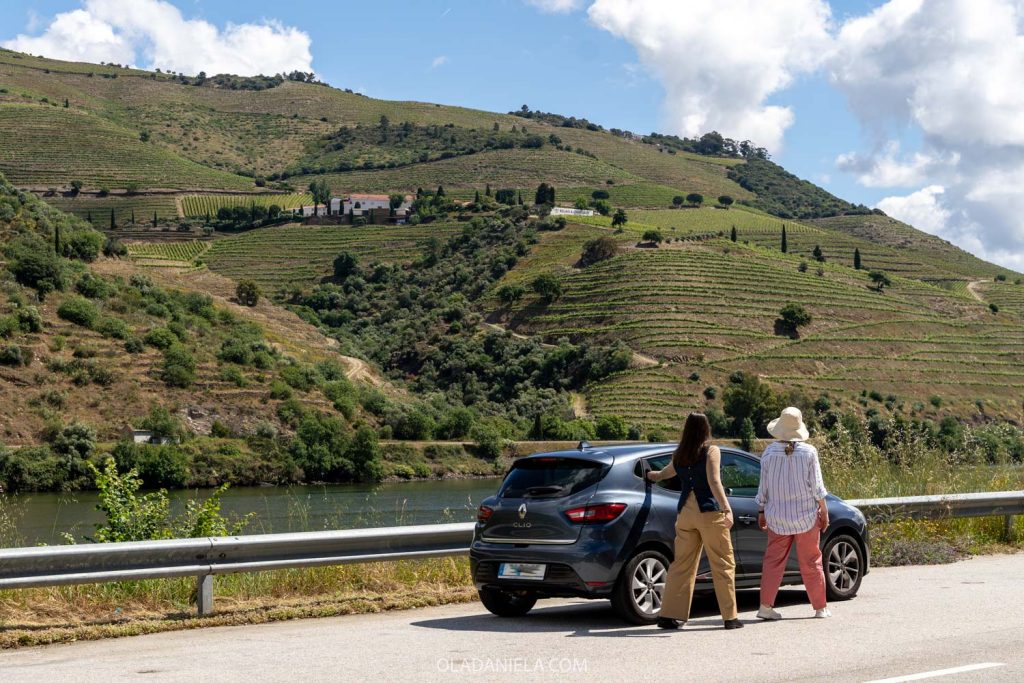
✅ Pros: Maximum flexibility to explore off-the-beaten-path quintas, viewpoints and villages on your schedules
❌ Cons: Navigating narrow, steep switchbacks, tricky parking in villages, someone needs to be the designated driver, you need to pre-book winery experiences
Driving routes: Fastest is the A4 highway (with tolls) from Porto (around 75 minutes to Vila Real or Régua via the impressive Marão Tunnel). Don’t miss the legendary N222 stretch between Régua and Pinhão.
Parking: It’s fairly easy to park in the Douro Valley, except in Pinhão. One benefit of visiting Quinta do Bomfim in Pinhão is the private car park.
⚠️ Designated driver limit: Portugal has a strict legal blood alcohol limit of 0.5 g/L. Because Ports are heavy (around 20% ABV), take care with tastings. You must plan ahead: book a local guide like Douro Autêntico for tasting afternoons, spit out when at the tasting table, or book an estate within walking distance of your bed.
Option 3: 🚢 Douro Valley river cruise from Porto
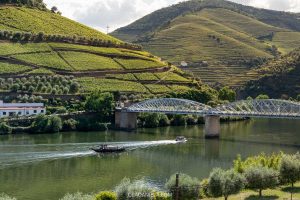
For a slow, relaxed day, you can board a large river boat in Porto and spend the whole day cruising upstream to reach the terraces of the Douro Valley. It’s a serene, unhurried vibe (with a wine in hand) as you pass through ginormous locks and often enjoy both breakfast and lunch onboard.
Many day-trippers don’t realise that the boat journey from downtown Porto to Peso da Régua will take a full 7-8 hours. Manage your own expectations — you’ll spend most of your day on deck rather than at wineries. There is also the option to do multi-day Douro Valley river cruises, which will give you time to visit wineries and explore in the valley itself.
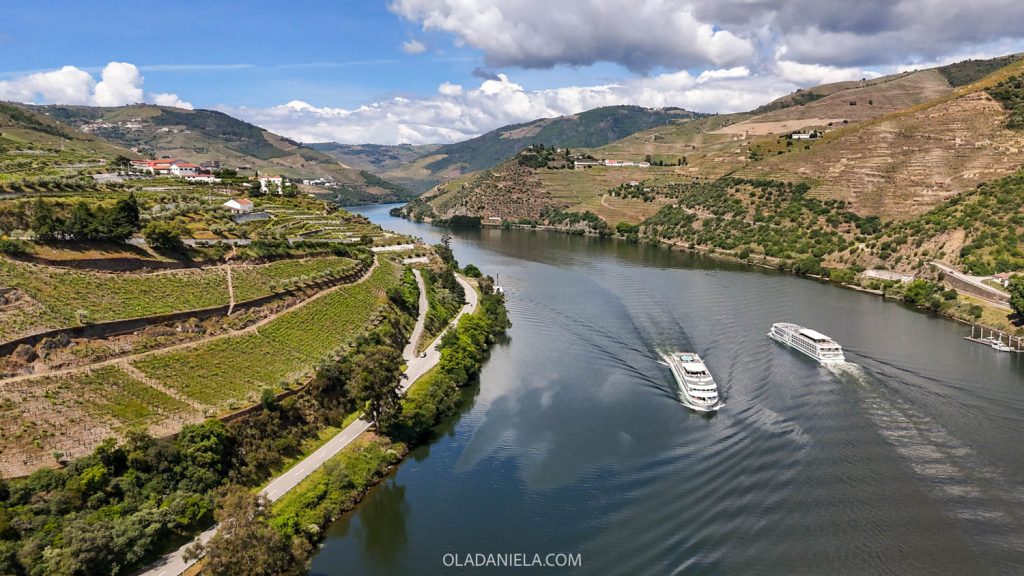
✅ Pros: Relaxing journey floating into the heart of the Douro Valley, passing through colossal hydroelectric dams and locks.
❌ Cons: It takes nearly a full day just to arrive, and itineraries are highly rigid. Once there, you bus or train back to Porto — unless you book a multi-day cruise.
Massive locks: A highlight is sailing into the narrow locks – Carrapatelo Dam is one of the deepest river locks in Europe, and you’ll rise 35 metres (115 feet) to pass through.
How to book the boat — your full-day river cruise options:
- Porto > Régua (return to Porto by bus)
- Porto > Régua (return to Porto by train – includes visit to a winery)
- Porto > Pinhão (return to Porto by bus – includes a wine tasting in Pinhão!)
- Régua > Porto (transfer to Regua by bus, return to Porto by dusk)
Option 4: Guided tours from Porto (the easiest & most popular option!)
If you want the absolute easiest, zero-stress entry into the wine region, let a local manage the logistics. The most popular way to visit the Douro Valley is with a guided day trip from Porto. Why? It removes the logistical headache of tracking train schedules, pre-booking winery visits and navigating narrow and unfamiliar roads. Plus, no one draws the short straw and has to drive!
Small Group vs. Private: Be warned — there are massive, 50-seater tour buses that only stop at giant, commercialised estates. If you choose a small-group Douro Valley day tour, look for ones that advertise small-group minivans (usually capped at 8 people). They are a fraction more expensive, but well worth the difference. I can highly recommend Cooltour Oporto’s small-group Douro trip.
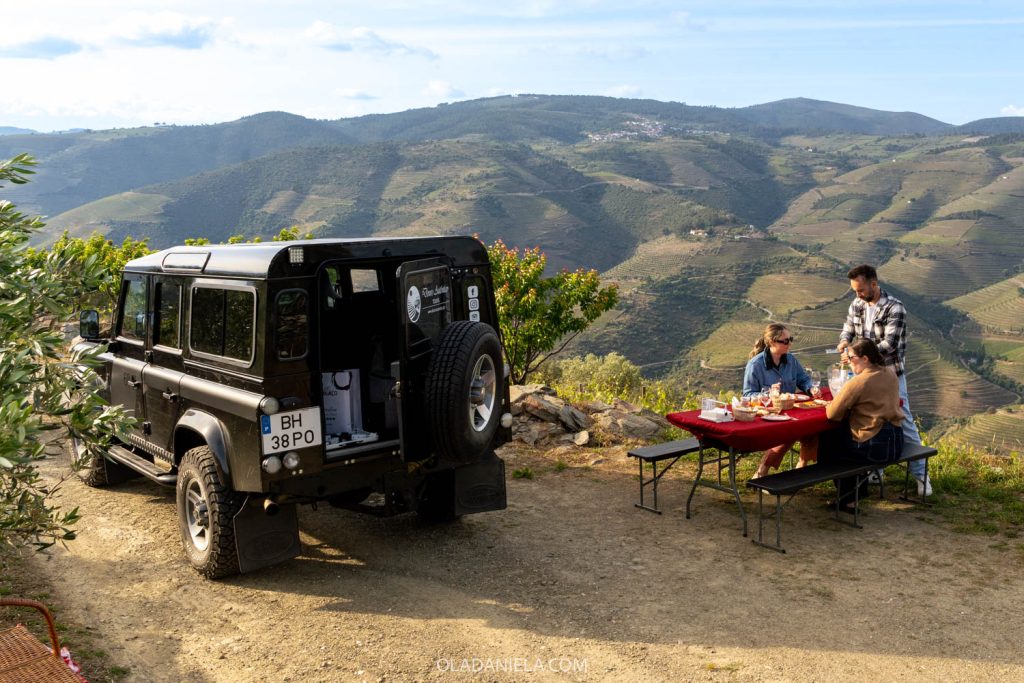
Better yet, if you have the budget, book a private guide to take you out for the day with maximum flexibility and no need to drive! For a touch of adventure, go with Paulo from Douro Autêntico (pictured below).

✅ Pros: Door-to-door transport, pre-booked premium winery slots, invaluable context from your guide
❌ Cons: Less independent flexibility, higher upfront cost
✨ Find the perfect Douro day tour: Because the Douro Valley tour market is incredibly saturated with generic options, I have spent time vetting local companies to find the ones doing things right. Head over to my comprehensive breakdown of the Best Douro Valley Tours from Porto.
How to get around the Douro Valley (once you’re there)
First things first: there’s basically no Uber in the Douro Valley. You might spot the odd car on the app, but drivers know not to accept fares as they’re often for tricky, remote vineyards.
If you travel here without a car, you’ll be more restricted. The train will take you to towns where you can find hotels, wineries and restaurants. I’d suggest Pinhão village as a base, as you can also walk to a handful of world-class estates like Quinta do Bomfim (a flat, five-minute stroll) and Quinta de la Rosa (about 20 minutes along the riverfront).
The moment you want to head into the hills to visit boutique properties or high-altitude viewpoints, you’ll need to hike or get help. Your options are:
🚕 Local taxis: Old-school taxis are reliable and reasonably priced — you just need to ask your hotel or waiter about 30 minutes in advance of when you want the car. If you like your driver, grab their phone number for the return ride.
🚙 Private guides: There are a handful of local guides who will plan a custom half or full-day adventure across the Douro. I’ve been out with Paulo from Douro Autêntico, and he’ll collect you in his luxe Land Rover, navigating the rugged backroads you’d never risk a rental car on. You can co-plan a day with wineries, viewpoints, lunch and scenic picnics, and he’ll manage the logistics.

Essential Douro Valley guides & map
- The Independent Guide to the Douro Valley: Road trip logistics, best things to do & where to stay
- 3-Day Douro Valley self-drive itinerary
- Best river cruises in the Douro Valley
- Best Douro Valley wine tours from Porto
- Where to stop between Porto and the Douro Valley
- Where to stop between Lisbon and the Douro Valley
That’s my guide covering how to get to the Douro Valley. Read my other Douro Valley guides above and leave a comment with what you plan to do!