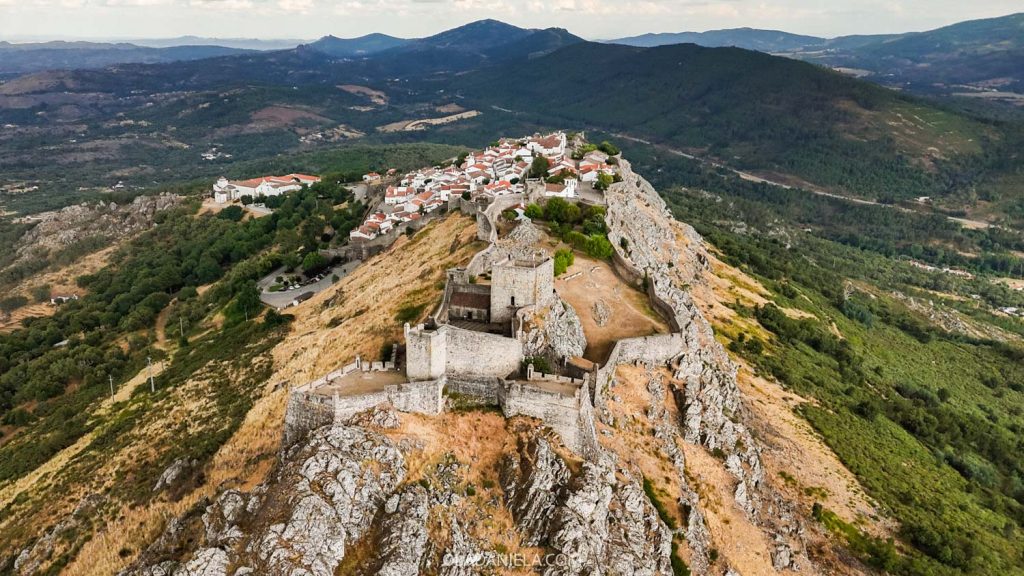
I gasped when I first saw Marvão. Of course, I’d seen pictures online of this tiny hilltop village, perched on a rocky quartzite outcrop in the Serra de São Mamede. But nothing prepared me for how small I’d feel staring up at the imposing castle of Marvão as we wound our way uphill towards its towering stone walls.
Famous Portuguese writer José Saramago once said, “From Marvão, one can see the world”, and perhaps he’s right. Sitting mighty at 843 metres (2,765 ft) high, standing guard over the border with Spain, Marvão makes the impossible feel possible…
What and where is the Serra de São Mamede?
Stone villages and stories of smugglers’ routes. A fine arts tapestry museum and a farmstay that doubles as a sculpture park. A Jewish hideout and craft brewery. What I love about the Alentejo region is its seemingly endless pockets of countryside, quaint villages and quirky things to explore. And the Serra de São Mamede – a prominent mountain range and protected natural park – is one of these gems.
Recently, I had the chance to revisit the Alentejo’s only natural park. While the Alentejo is famous for being a hot, flat plain, this green northeastern pocket rises sharply against the Spanish border. I hoped its altitude would make for a cooler early summer weekend away with my parents (and it did!).
Here we visited Marvão, Castelo de Vide and Portalegre – a village, a town and the regional capital – all set within the verdant Serra de São Mamede. I found a fantastic farmstay run by a local artist who has also transformed the property into a sculpture park. More on that below!
Here’s what I got up to and why I want to return, along with other suggestions for how to explore this area of the Alto Alentejo.
Where to stay in Alto Alentejo
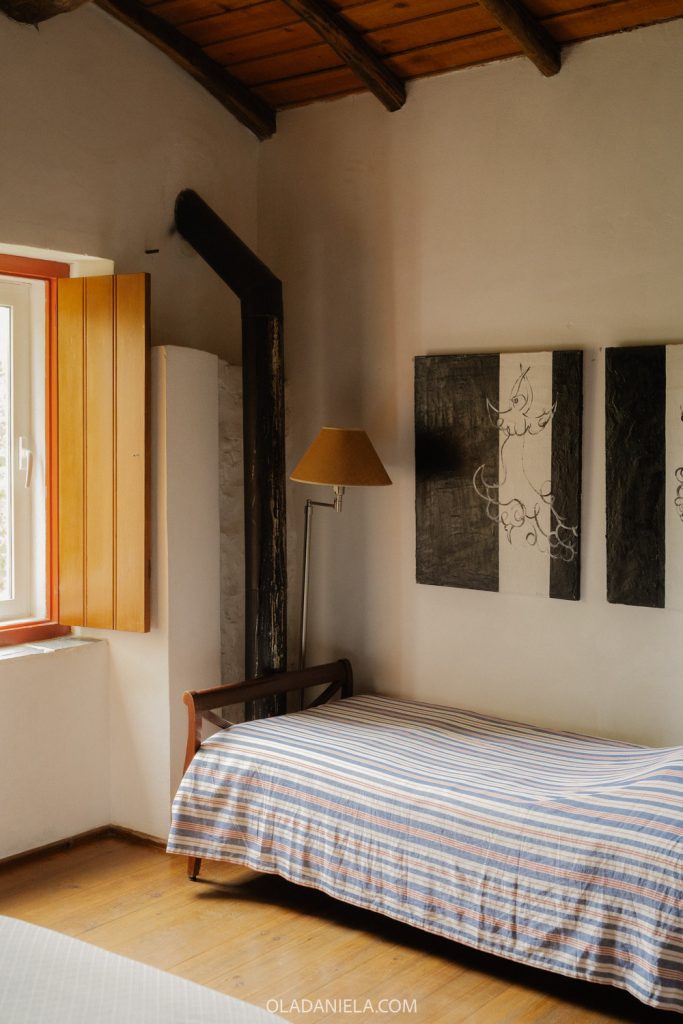
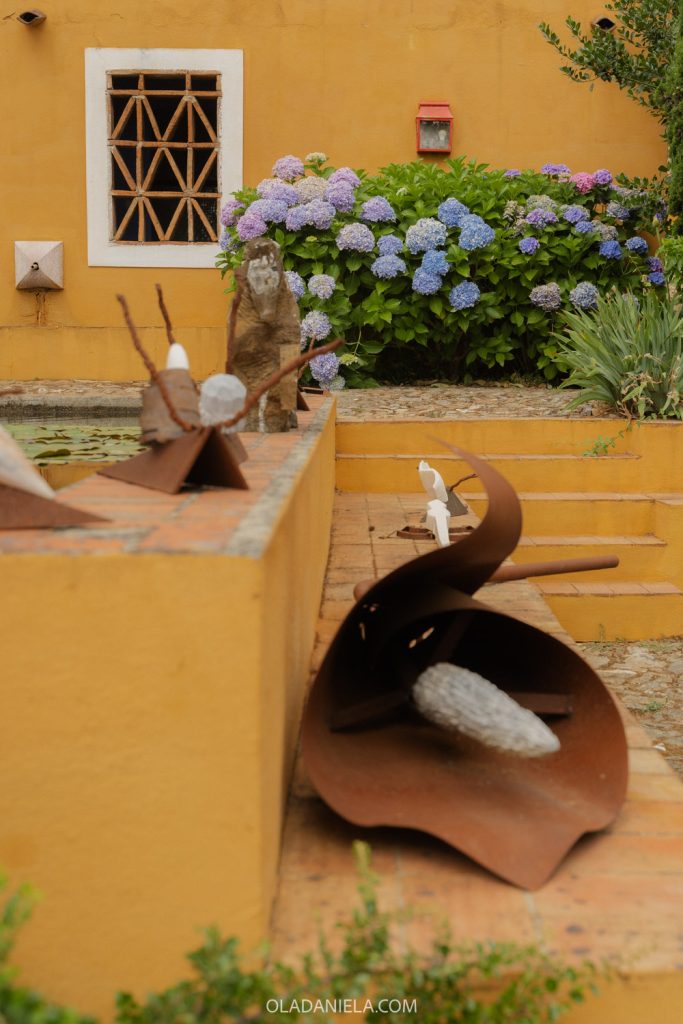
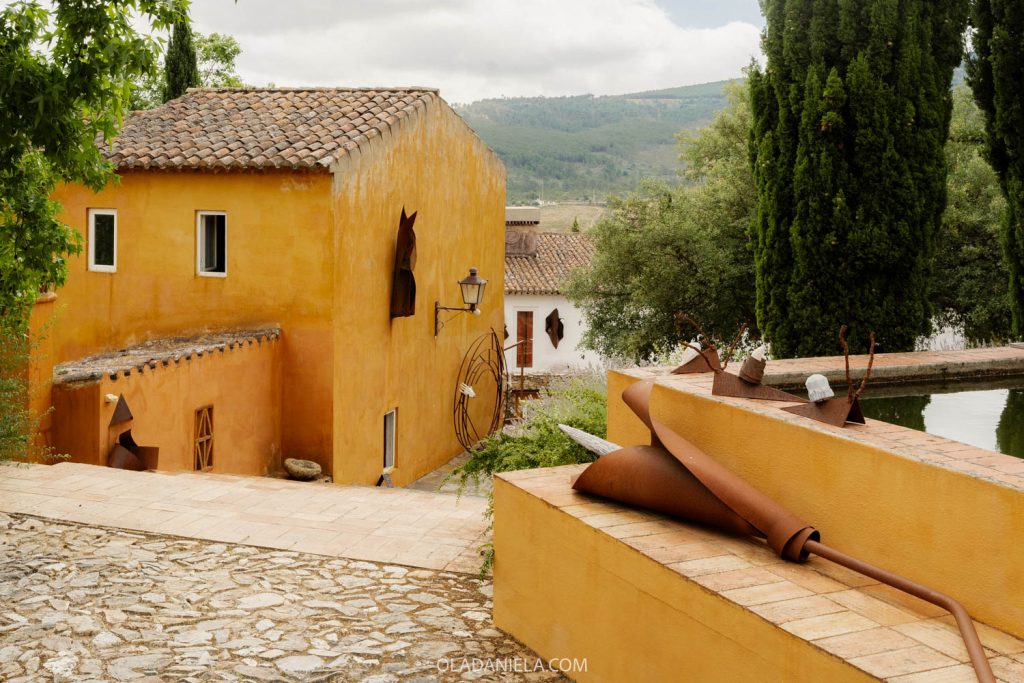
While I considered staying in Marvão village itself – to wake up with the cobblestone streets all to ourselves – ultimately we chose Barrieiro – Art & Nature. This estate has a handful of traditional restored farmhouses that have become holiday cottages and a two-bedroom house. A sculpture trail meanders across the property between the old cork trees, lavender gardens and dwellings, with pieces made of metal and marble scattered around the huge pool and dams, where sheep graze. This stay is worth it for the breakfast alone! One to repeat.
➡️ Check your dates at Barrieiro – Art & Nature
Other places that caught my eye in the Serra de São Mamede:
- Marvão Hotel Museu – newly restored 4-star hotel in Marvão village with a sun terrace, hot tub and free bicycles.
- Pousada de Marvão – historic 4-star hotel with stunning views from Marvão village.
- Casa Amarela – a cute Castelo de Vide guesthouse set in a national monument.
- Quinta das Lavandas – a lavender farm that blooms in the first weeks of July.
- Convento da Provença – an old countryside convent-turned-guesthouse with a pool
- Estalagem de Marvão – cosy house in Marvão village.
- Pensão Destino – charming guesthouse set in the old Castelo de Vide train station.
Getting to the Serra de São Mamede
By car: It’s roughly a 2.5-hour drive from Lisbon, and then about 20-30 minutes to drive between each of the three destinations.
By public transport: From Lisbon – or elsewhere – take a train to Entroncamento station and change to the regional line to Portalegre, or take a RedeExpressos coach. The train takes 3-4 hours; the bus is faster. You can also catch a RedeExpressos coach between Portalegre, Marvão and Castelo de Vide too – but there’s only 1-2 buses per day.
By guided tour: This half-day private tour will collect you from your hotel in Marvão, Castelo de Vide or Portalegre. Or join this full-day private tour from Lisbon, or this one from Evora.
Marvão, the invincible village on Spain’s frontier

Ibn Marwan, a rebel Arab ruler who took refuge here in the 9th century, left his legacy in the name of Marvão. He built the village’s first fortifications atop the quartzite ridge, where natural rock is woven into the castle’s defences. It changed hands during the Christian Reconquista in the 12th century, and King Dom Sancho II granted the village its first charter in 1226. Marvão remained a border fortress for centuries, surviving many wars with Spain, up until the last action in 1833.
It remains a still-small and remote destination – ideal for a quiet weekend connecting with nature. Nearby, you can hike the Smugglers’ Route and taste olive oil, quad bike or cycle, tour Megalithic sites and even go canyoning.
The main drawcard: Marvão Castle
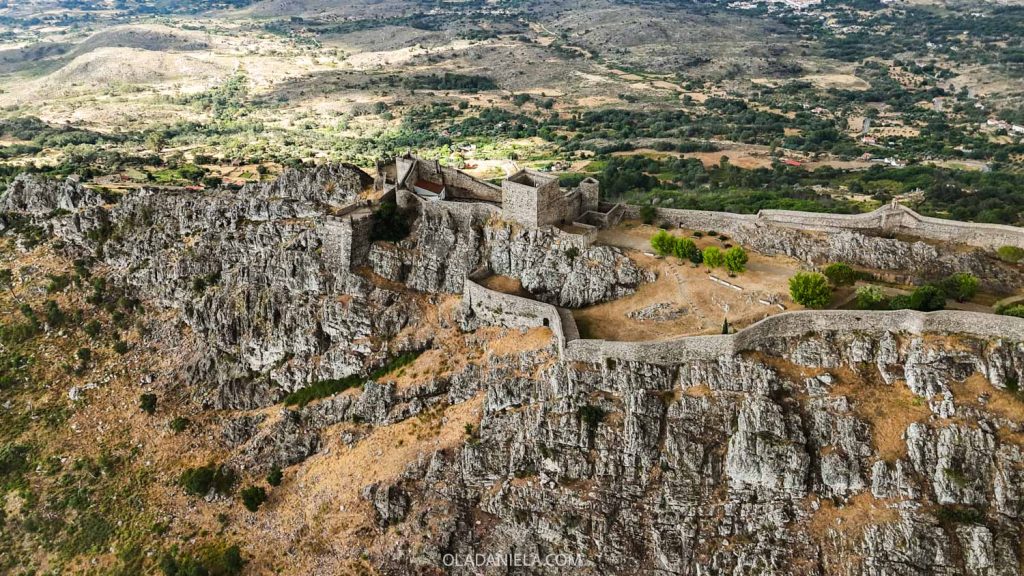
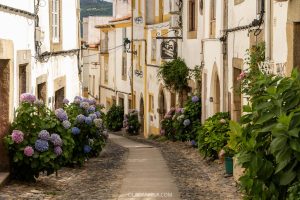
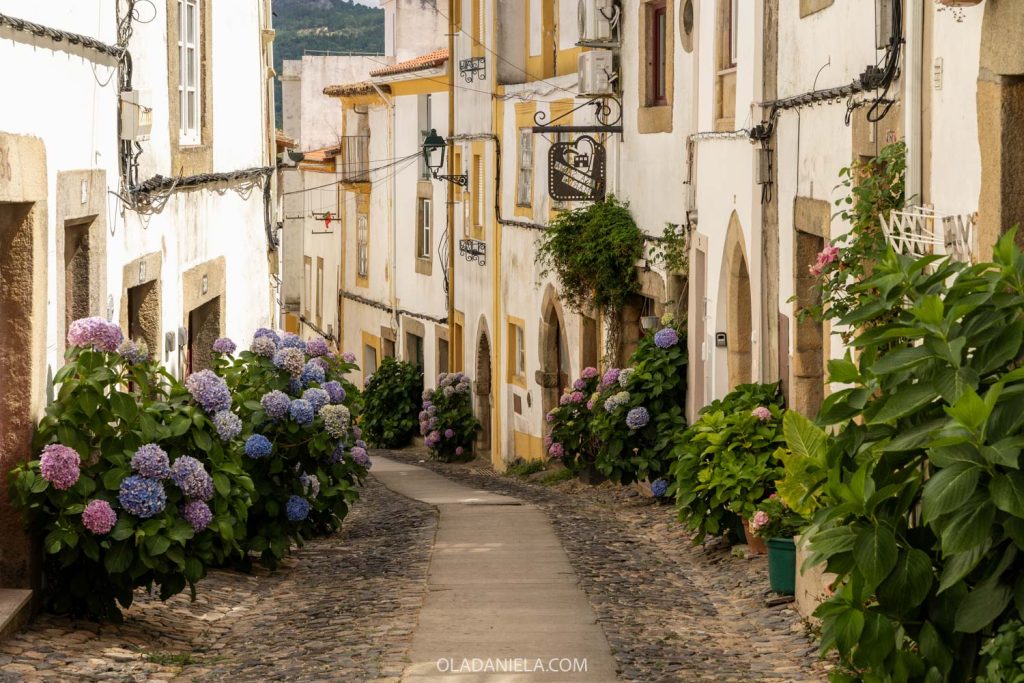
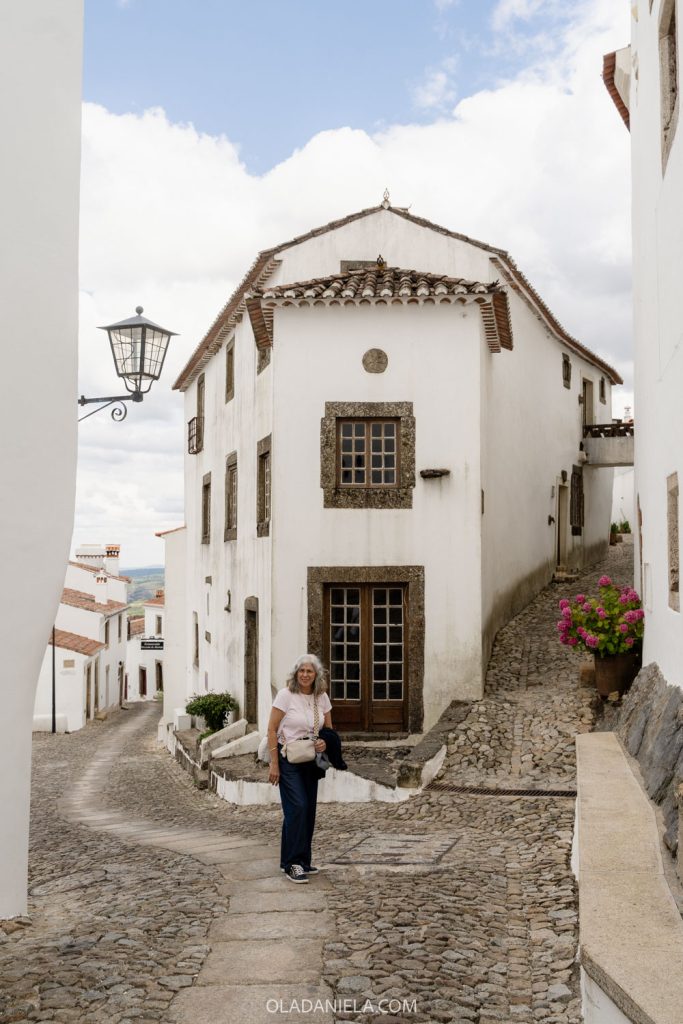
Park the car just outside the village, then venture through the fortified stone walls on foot. Aim (slowly) for the castle entrance, taking your time to get lost as you wander the whitewashed cobblestone streets, taking pictures of stone doorways and flower pots. Finally, you’ll arrive at the stunning parterre garden below the castle. Pause here to admire the low-clipped hedges and lavender beds, and (in spring and early summer) the hum of bumblebees and hummingbird moths.
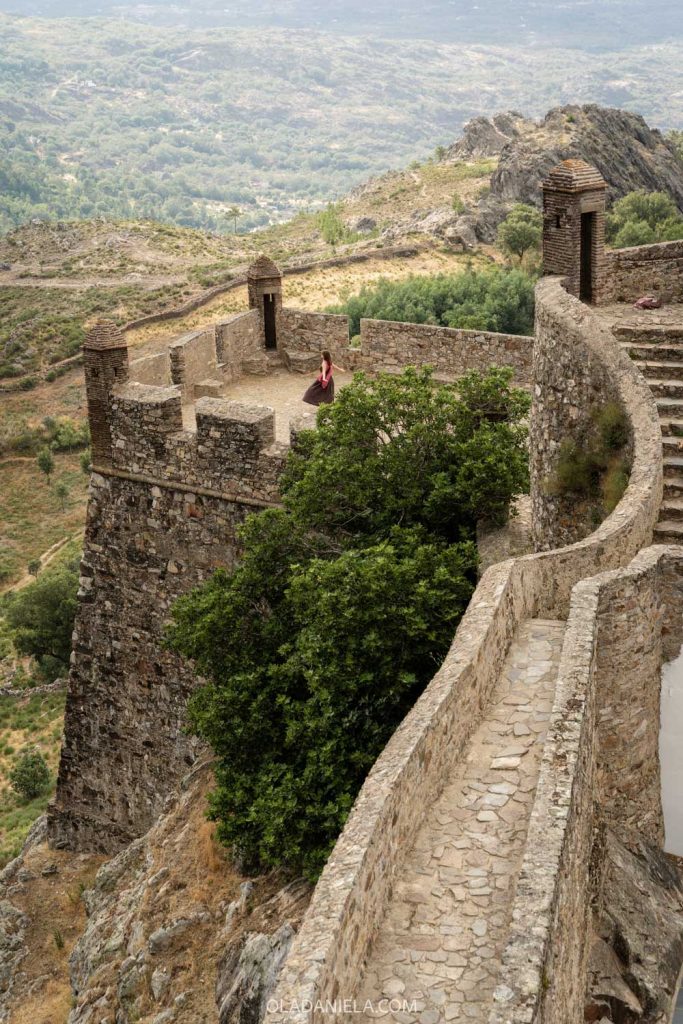
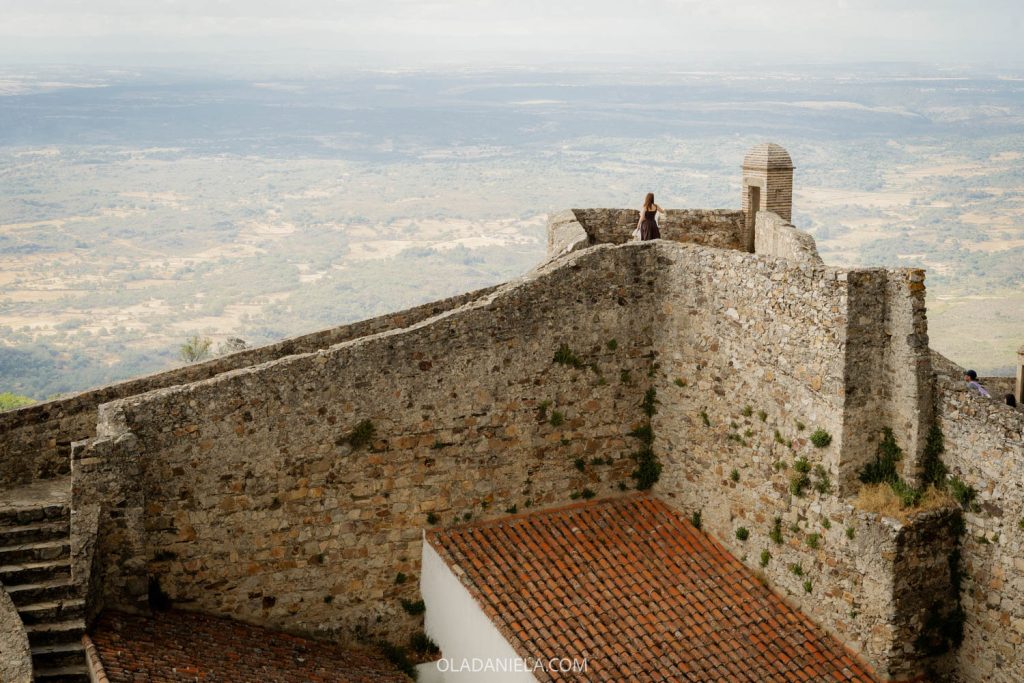
For a small fee, enter the well-maintained Marvão Castle and head to the keep. From the top, you gain sweeping 360-degree views – south to the Serra de São Mamede and Estremoz, north to Serra da Estrela, and east to Spain.
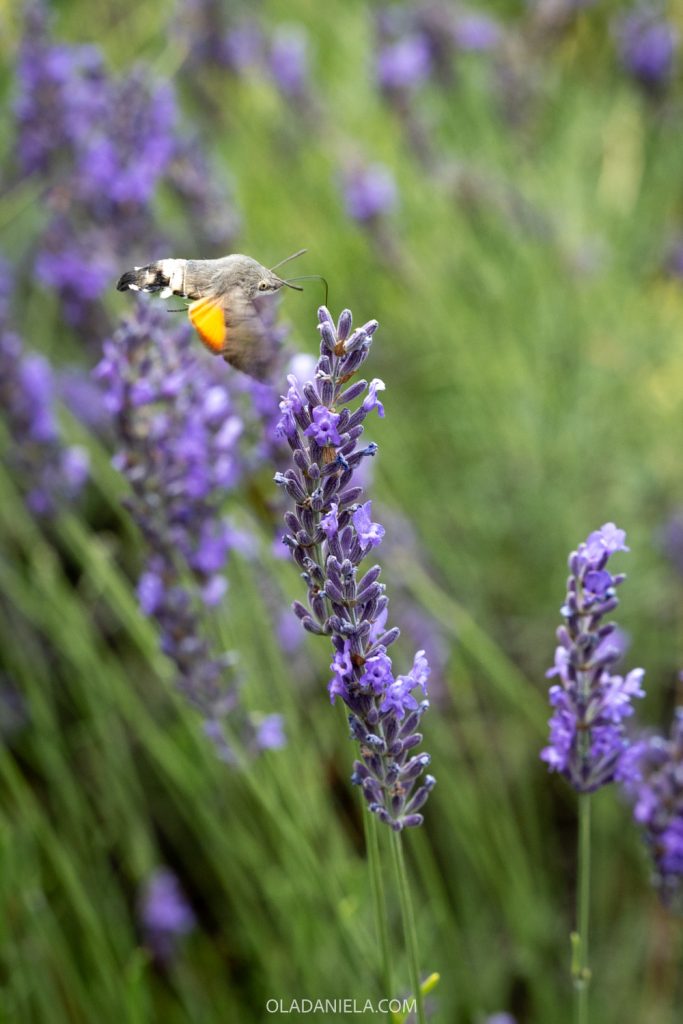
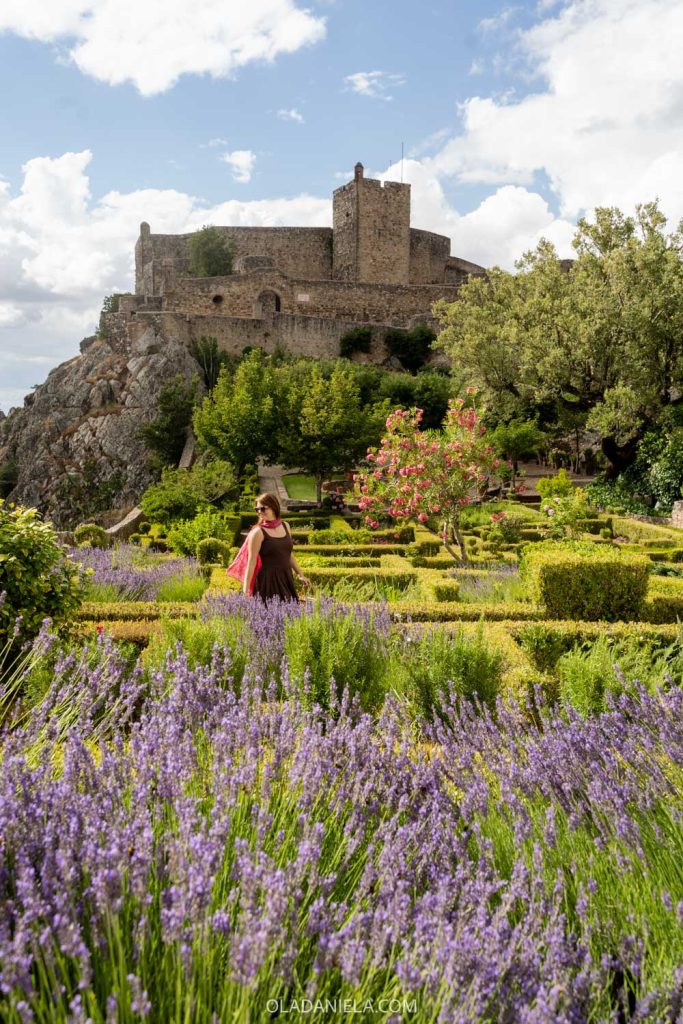
Watch for Bonelli’s eagle – one of Portugal’s rarest raptors. There are fewer than 140 breeding pairs left in the country, nesting in the cliffs around the village. The second I spotted one, I stopped flying my drone!
Once you’ve had your fun walking a circuit of the castle walls, taking in views from every angle, head back through the village. The Municipal Museum (Museu Municipal de Marvão) is well worth a look – explore local history, from the Paleolithic period to the 20th century, with artifacts and art inside an old church.
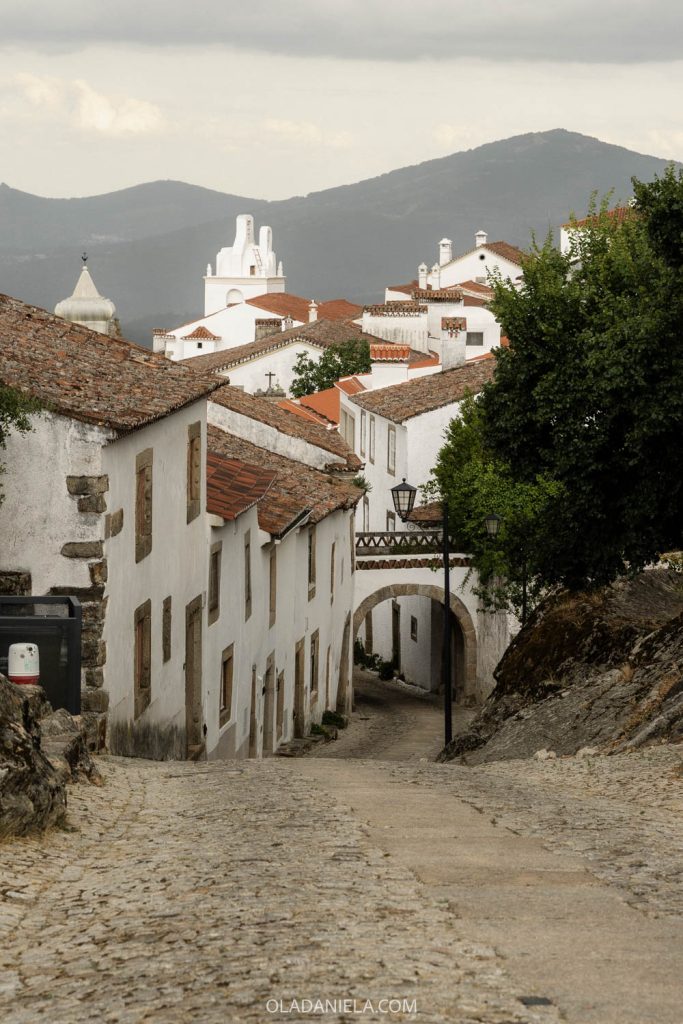
📅 Big events in Marvão: Time your visit around late July’s FIMM, an incredible classical music festival in the castle; early October’s Al Mossassa festival, celebrating the town’s Moorish roots; or November’s decades-old Chestnut Festival.
Best things to do in Marvão
- Walk the walls of Marvão Castle for views across the Alentejo and into Spain.
- Wander the cobbled lanes of whitewashed houses.
- Visit the Museu Municipal de Marvão for local history and archaeology.
- Stay for sunset or overnight, when the day-trippers have gone, and the village is far quieter. It’s an ideal spot for stargazing!
- Hike the Smugglers’ Route from the tiny village of Galegas into Spain, with this guided hike that includes a visit to the olive oil mill and museum (that I loved!).
- Try local chestnuts, honey, olive oil, cheese and cured sausages, with wines from the Portalegre region.
- Discover the area’s prehistoric stories with this guided Segway-bike tour of Megalithic monuments, or this private tour with hotel pick-up.
- Stop by the Roman ruins of Ammaia to see parts of the forum, baths and town gate.
- Explore nature in the Serra de São Mamede Natural Park – there’s a trail linking Marvão and Castelo de Vide; you can go cycling or join a buggy and quad bike tour.
- Go canyoning and feel the adrenaline as you spring, dive and abseil down a river.
- Try climbing with a beginner-friendly guided Via Ferrata route.
- Cross the border for petrol or gas. It’s cheaper in Spain, and you’re awfully close!
🫒 Visit a historic olive oil mill – one of the best and most unique things I’ve done in the area was to visit the Olivoturismo Lagar Museu António Picado Nunes in the tiny village of Galagas. Here, a new generation has turned the old olive mill into a small museum, while still operating as a working co-operative with new equipment. Visit in October or early November to see the harvest in action, and stay for an olive-worker’s lunch.
This guided hike follows the old Smugglers’ Route to and from the olive oil mill and museum!


Where to eat in Marvão
- For a quick snack or easy lunch, there’s a great café called O Castelo with a huge terrace. We stopped for a toasted sandwich, salad and craft beer, brewed in nearby Portalegre.
- On my to-eat bucket list is a little spot called fago, a Michelin-recommended spot with a focus on modern, seasonal, sustainable cooking.
- If you’re there for dinner and want views, try Varanda do Alentejo, a family-run spot with hearty regional cooking, or Ninho D’Águias, for traditional cuisine.
Castelo de Vide, curious and cruel stories of the past
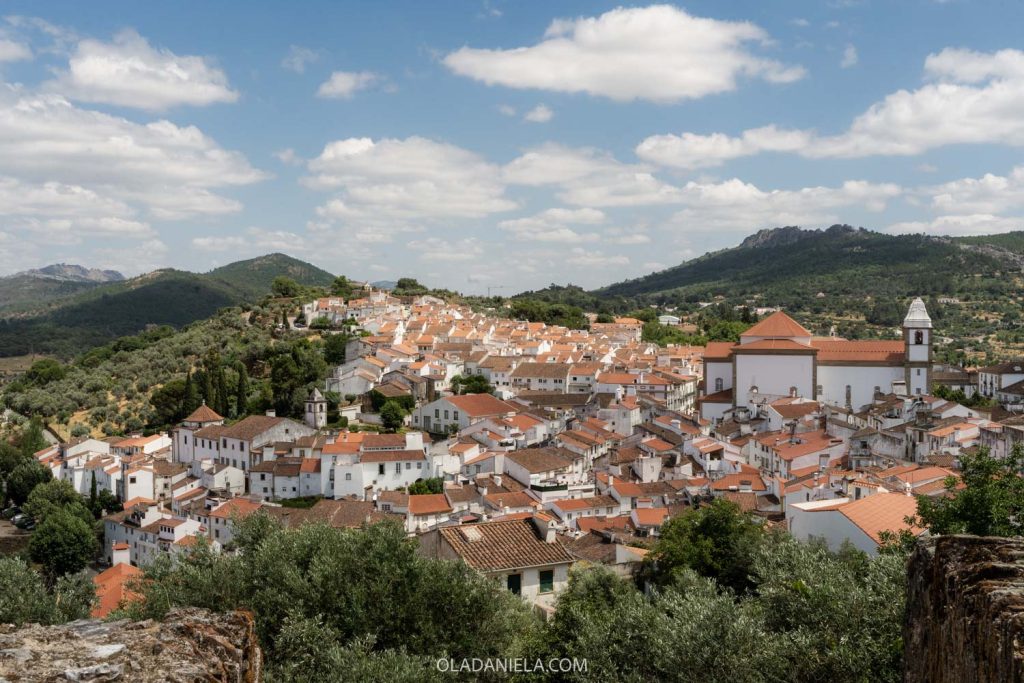
We arrived on market day to find the main square buzzing with action. A small feira had taken over the centre of Castelo de Vide, with about a dozen stalls selling everything from ceramics to cuecas (underwear).
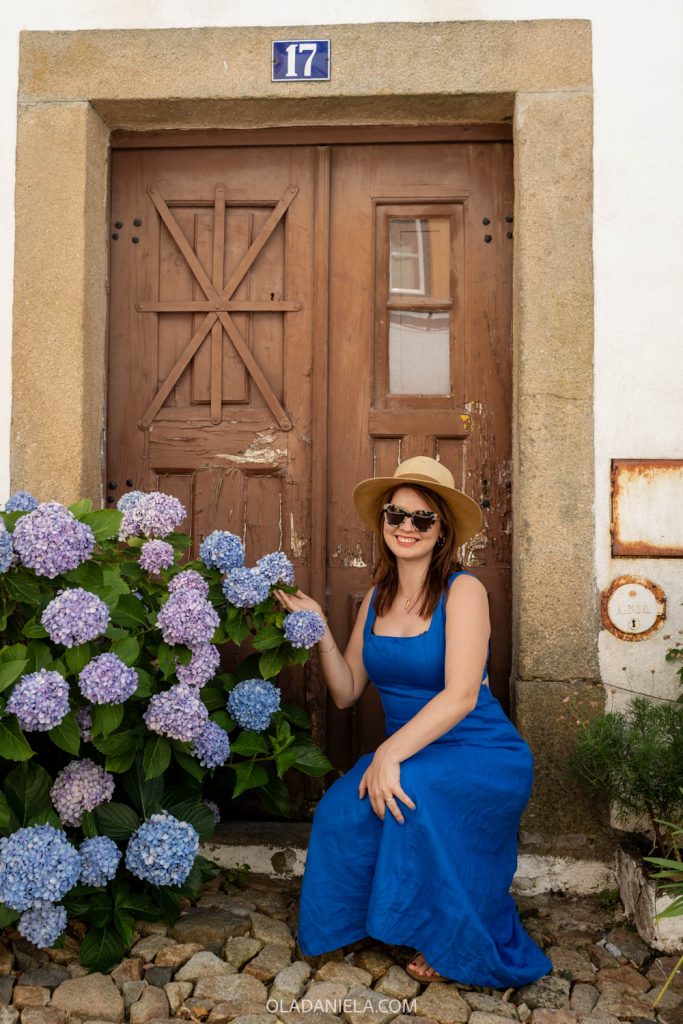
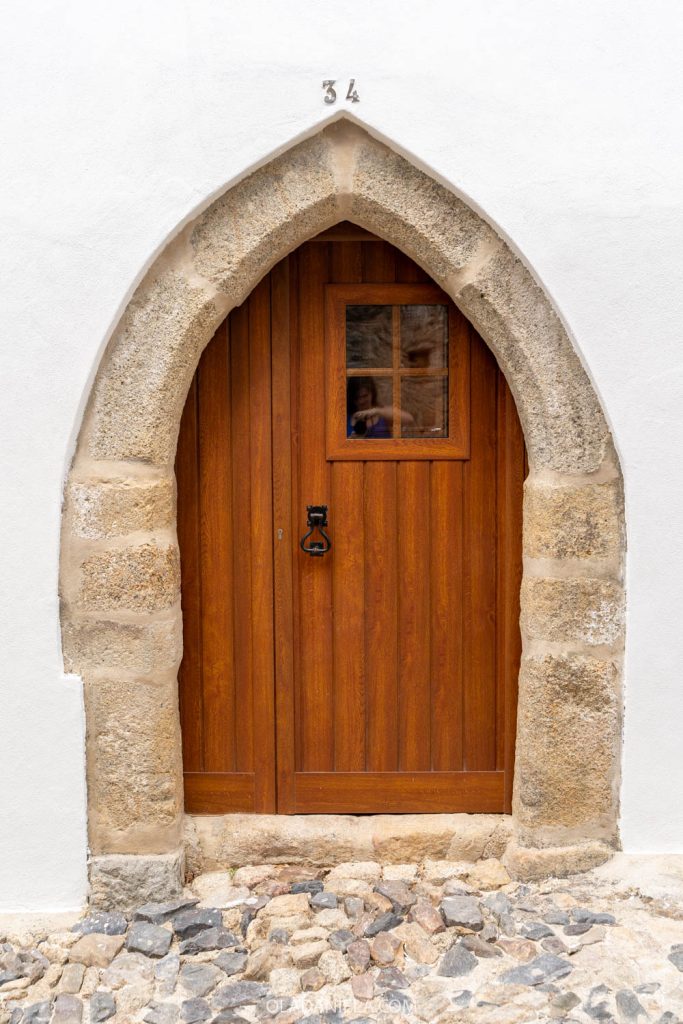
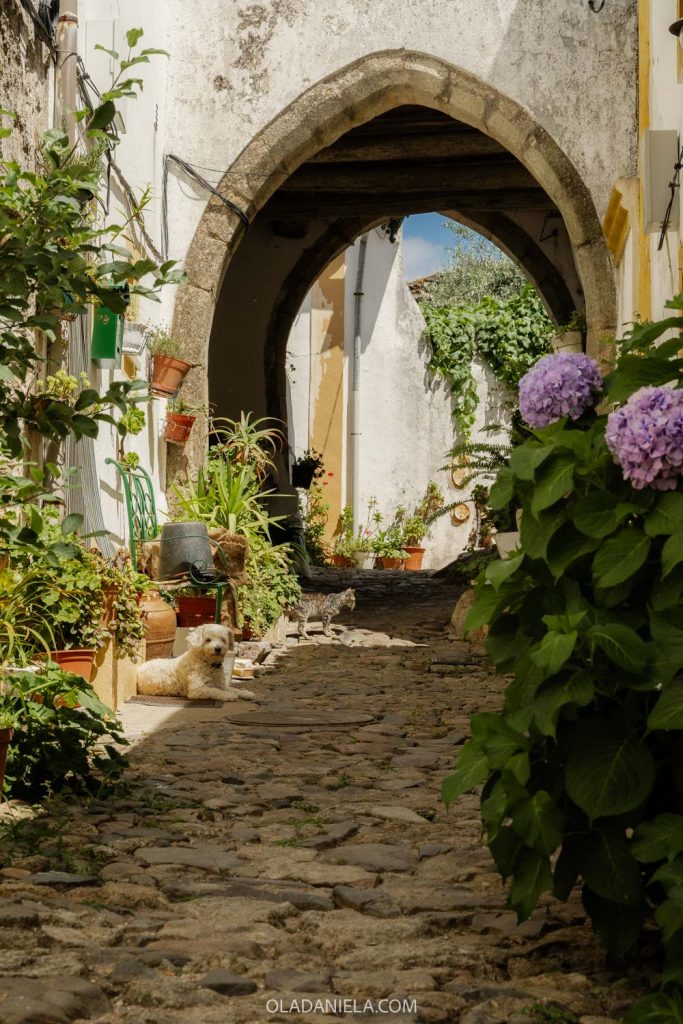
Castelo de Vide is a 20-minute drive from Marvão, and it’s a must-stop if you’re in the area. I dare say, I loved this whitewashed hill town with its Gothic doorways and colourful flower boxes even more.
People have lived on this hill for some 150,000 years (you can visit the 7.5m Menhir da Meada, the tallest standing stone in the Iberian Peninsula, just outside town), but the real story starts when you leave the square and head uphill.
The main drawcard: the Jewish Quarter and Rua Direta
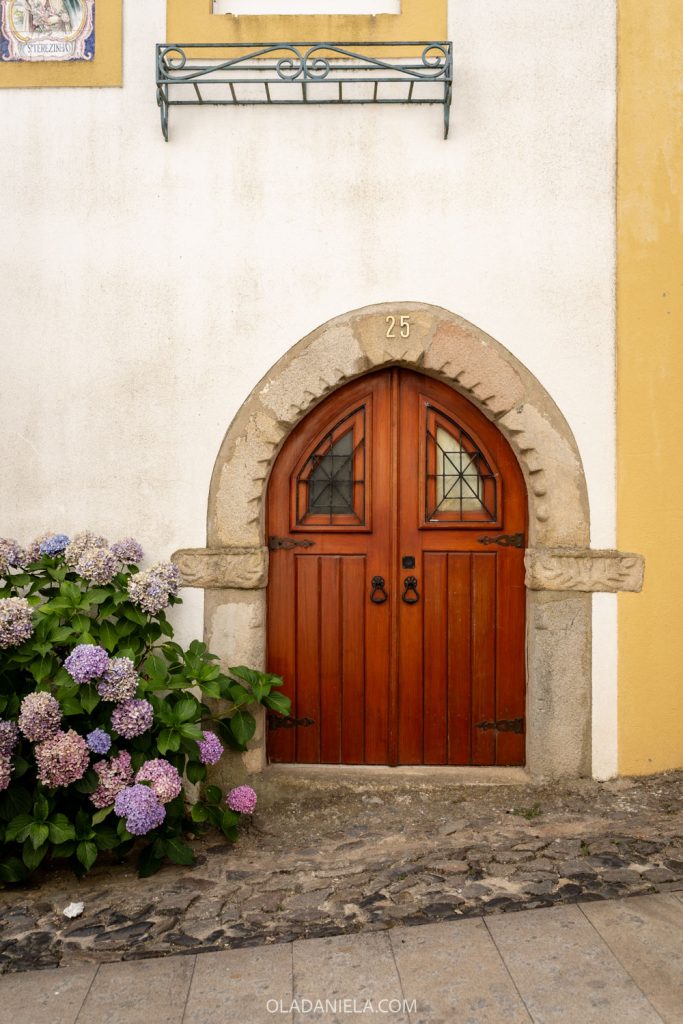
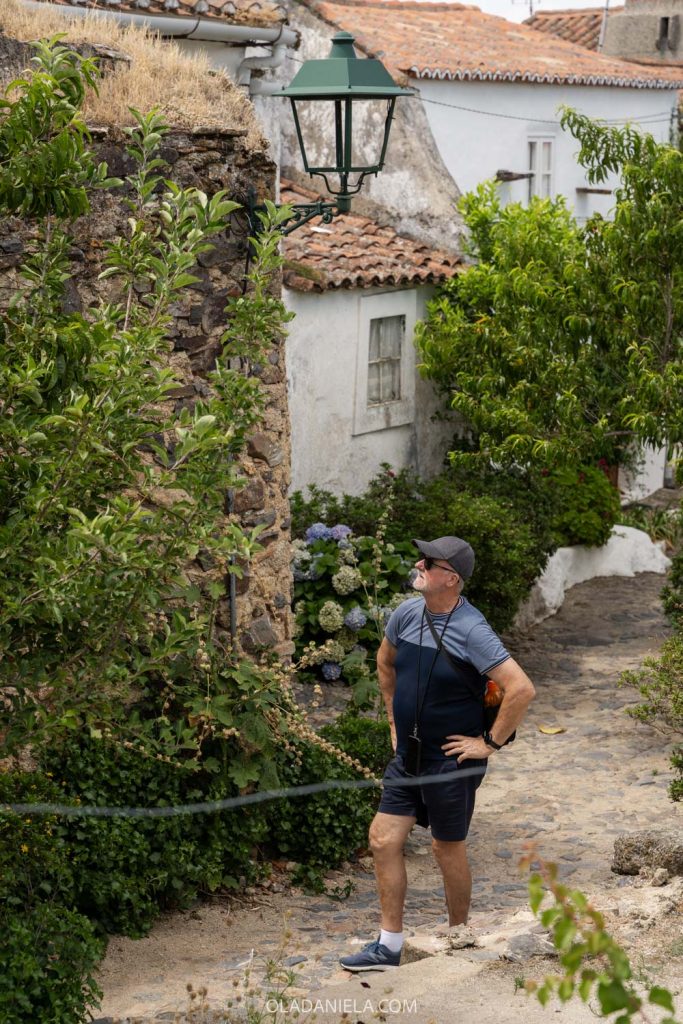
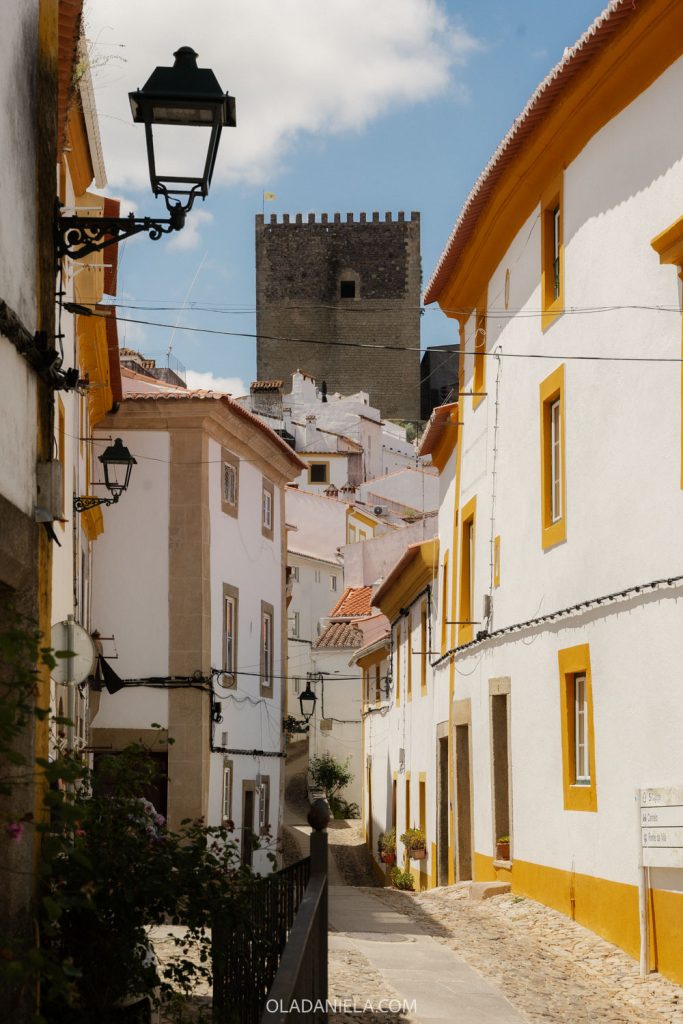
The Romans left the ruins of nearby Ammaia, but Castelo de Vide’s greatest legacy is from the late Middle Ages. In 1492, Jews expelled from Castile’s Spanish Inquisition crossed the border and built a life here. The Judiaria, or Jewish Quarter, is the heart of the old town – a small but well-preserved neighbourhood of steep, narrow lanes with granite doorways that lead up to the castle. Look for symbols carved above door frames and the medieval synagogue (with a small museum inside).
Instead, I visited the small (and free) Inquisition Museum (Casa da Inquisição de Castelo de Vide), set in an 18th-century house. The Portuguese Inquisition lasted from 1536 until 1821, and this little house-museum does a decent job of highlighting how many people were burned alive, arrested, tortured and condemned during this dark period of Portugal’s history. Plus, the wax models offer a few jump scares.
⚠️ To go deeper, I’d suggest this guided Sephardic tour, which focuses on the importance of the Jewish community to this town and the effects of the Portuguese Inquisition.
Continue uphill to Rua Direta, a street that carves through the middle of the castle. I’ve visited dozens of Portuguese castles, and this one is unique – there’s a whole (very charming) neighbourhood built inside, including a small church. From up here, enjoy views over the whole town too.
Best things to do in Castelo de Vide
- Wander the Judiaria (Jewish Quarter) – even better, join a guided Sephardic tour.
- Visit the medieval synagogue and its small museum.
- See the Casa da Inquisição (free house-museum).
- Visit the Fonte da Vila, a unique 16th-century fountain.
- Sit in Praça Dom Pedro V, the main square, framed by the Igreja Matriz and the Câmara Municipal (Town Hall).
- Walk up to the castle and its keep for views over the town and the Alentejo plains.
- Stroll Rua Direta through the castle’s inner neighbourhood, and visit the small church inside the walls.
- Try boleimas, a Jewish-Marrano dessert bread – a flat slice stuffed with apple and cinnamon.
- Climb to the Santuário de Nossa Senhora da Penha, a hilltop chapel about 1km from town, for more views.
Where to eat in Castelo de Vide
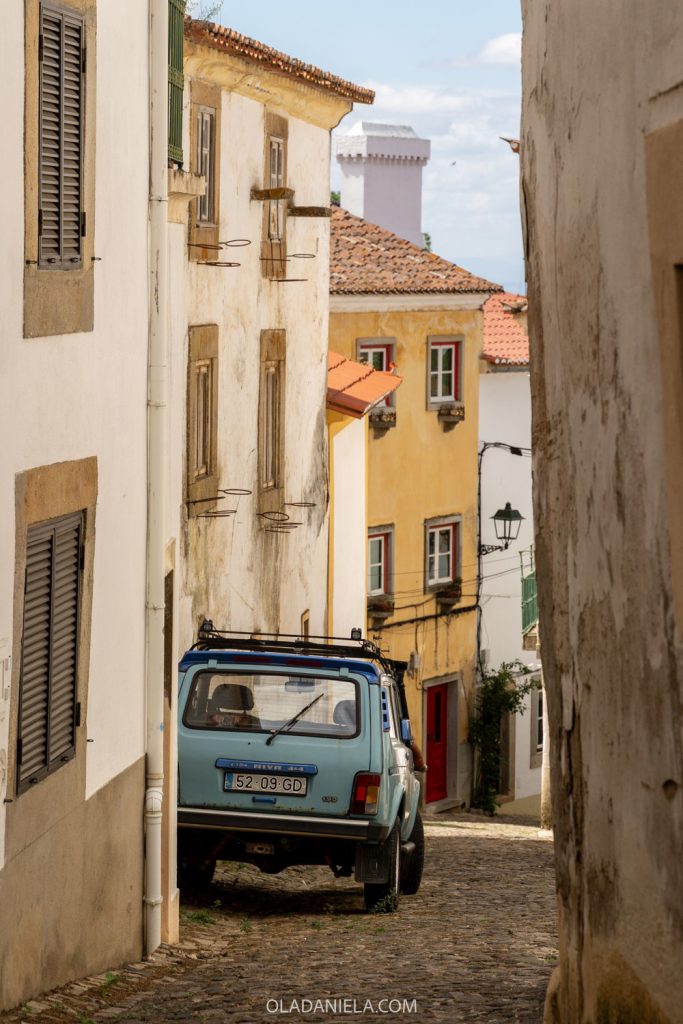
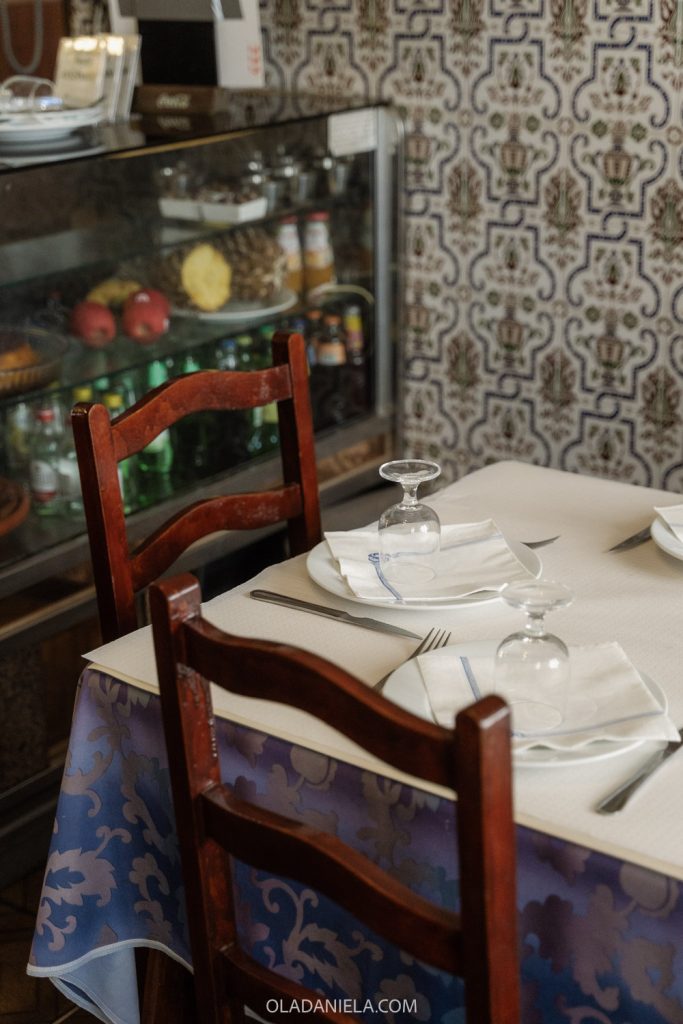
- We stopped for lunch at O Miguel, a casual tasca set up on a side street. The grilled black pork was wonderful. Its neighbour Pirolito CV – Wine & Tapas also looked good.
- Later, we went for beers at BARONA Craft Beer House, which brews in a nearby village. I liked that they have a dedicated pub here!
- Next visit, I want to try A Confraria as it still serves dishes super specific to Castelo de Vide, such as alhada de cação (garlicky dogfish stew), and stewed partridge and hare.
Portalegre, weaving thread into art

The word tapestry conjures up images of faded, oversized medieval wall hangings used to keep draughty castles warm, or dowdy handmade cushion covers that say Live, Laugh, Love. Thankfully, the tapestries of Portalegre are nothing of either sort. These are pure art.
Each textile work is genuinely exquisite. The weavers have an almost unbelievable palette of wool colours to draw from. And the detail is insane.
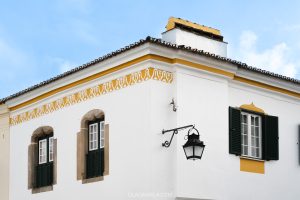
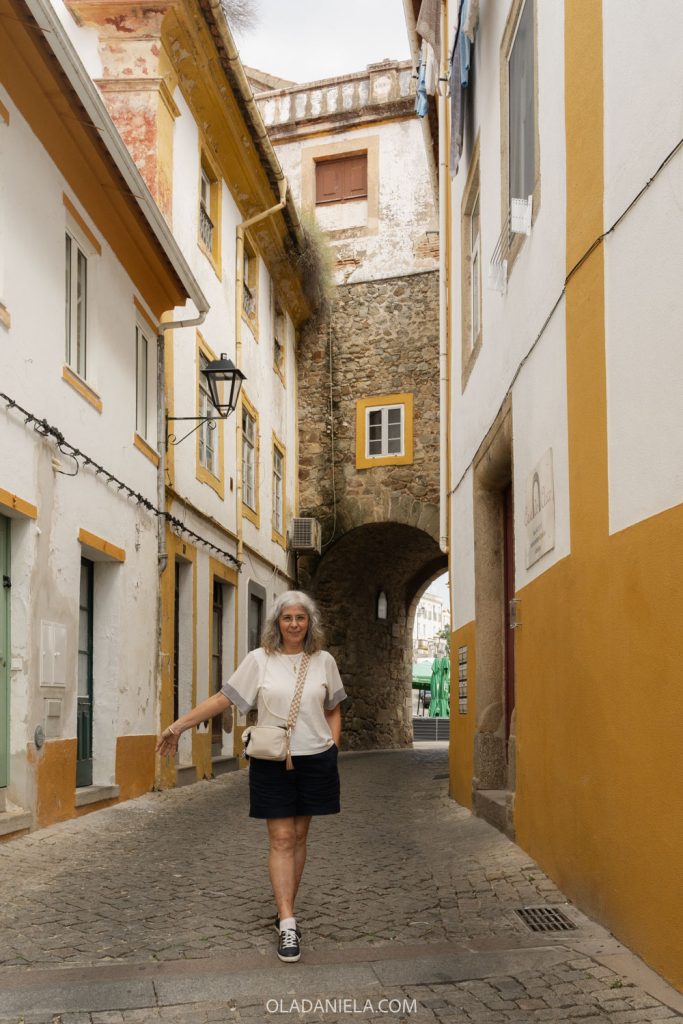
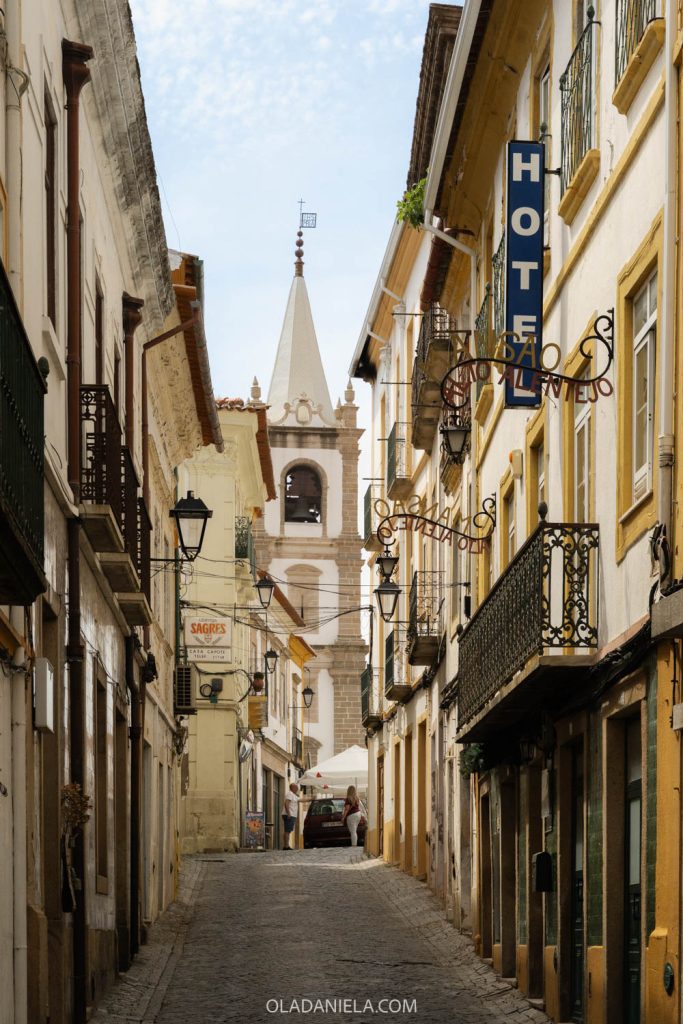
I arrived in Portalegre expecting a large-yet-quiet town, complete with cobblestone lanes, shuttered Baroque mansions, and whitewashed buildings finished with Alentejo-yellow trim. But don’t let the sleepy vibe of the capital of the Alto Alentejo fool you. Here lies one of the best – and more surprising – museums in Portugal.
The main drawcard: the Tapestry Museum
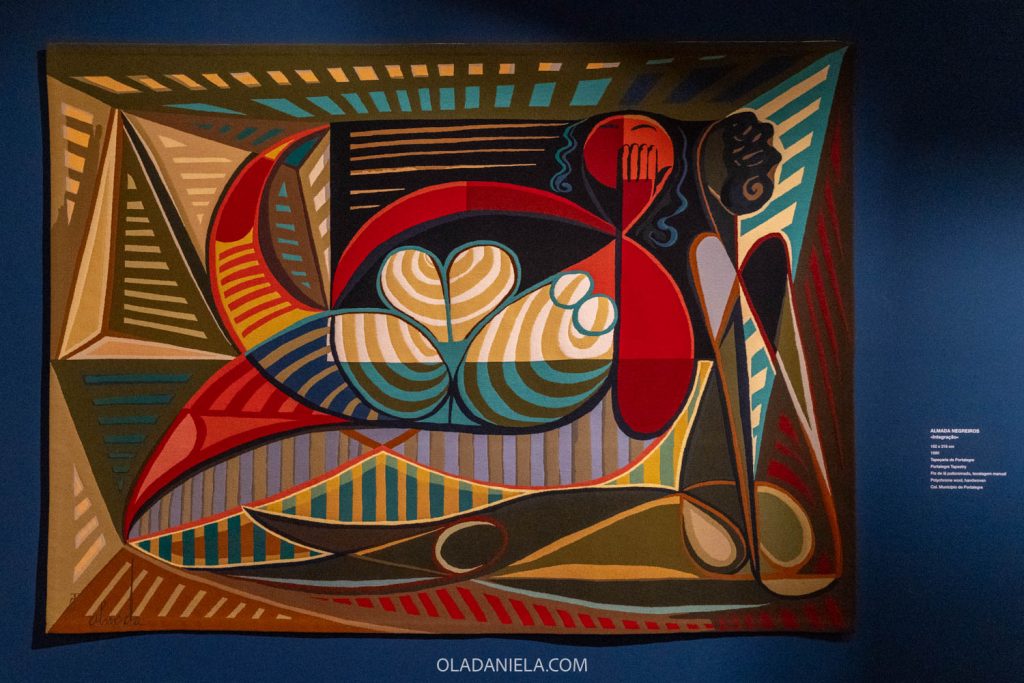
Portalegre tapestries are ginormous works based on real artworks, hand-woven stitch-by-stitch with such detail that you need to cross the room for a closer look to see that the art is not simply painted on a canvas. Dozens hang inside the stunning Museu da Tapeçaria de Portalegre – Guy Fino, a museum that shares the history of the craft yet feels like a modern, fine art gallery.
It was in 1946 that two friends – Guy Fino and Manuel Celestino Peixeiro – decided to produce hand-knotted carpets in Portalegre, but competition was fierce. Manuel’s father challenged them to use a stitch he developed while studying at the textile school in Roubaix.
After the first works were made and shown off, known Portuguese artists including Almada Negreiros, Júlio Pomar, Manuel Lapa, Maria Keil and Lima de Freitas signed on to have their works transformed into thread.
While a Portalegre Tapestry is always based on an original painted artwork, it isn’t a simple reproduction. Every stroke is translated to thread on gridded paper, where a technician draws each stitch from the often-enlarged original, considering contours, shapes, colours, shades. This process alone can take months.

Over the decades since, talented weavers from Portalegre have turned art from some of Portugal’s most famous living artists into tapestries, something that has kept this labour-intensive craft in step with the present.
The museum is truly wonderful and unexpected. I’d put it up there with the Berardo Tile Museum in Estremoz. Also in Portalegre you’ll find the Manufactura de Tapeçarias, the working tapestry workshop, inside the former Jesuit convent of São Sebastião. You may be able to visit the workshop with prior booking.
Best things to do in Portalegre
- Visit the Museu da Tapeçaria de Portalegre Guy Fino, a must-do for everyone.
- Wander the old town’s quiet streets, hunting for old neon signs and pops of tile.
- Step inside the Sé de Portalegre (main cathedral).
- Visit the Casa-Museu José Régio, the home of one of Portugal’s great modern poets.
- Drive into the Serra de São Mamede Natural Park, which rises right behind the city.
🪡 Find Portalegre Tapestry in Lisbon: If you can’t make it out here, there’s an official gallery-store for the Manufactura de Tapeçarias de Portalegre in the heart of Lisbon. Or you can seek out tapestries made in collaboration with Almada Negreiros at the Ritz in Lisbon.
Where to eat in Portalegre
- We had lunch at Tombalobos, a place I’d long wanted to try. Here, chef José Júlio Vintém adds a touch of creativity to traditional Alentejo cuisine, elevating local produce without losing its soul or humble roots.
- Next time I want to try Solar do Forcado, a spot that received a Michelin Bib Gourmand stamp for high-quality, good value eating, or Sal e Alho.
More top things to do in the Serra de São Mamede
- Visit Portagem, at the foot of Marvão village, to see the 16th-century “Roman” bridge (it isn’t actually Roman, despite the name) and the old customs tower.
- Explore the ruins of Ammaia, a Roman town between the Sever River and the Ribeira da Madalena, a short drive from Marvão.
- Cool off at the Praia Fluvial do Sever, a river beach on the border with Spain.
- Visit the Menhir da Meada, the tallest standing stone in the Iberian Peninsula, and the Anta da Melriça, a Neolithic dolmen.
- Swim or picnic at the Póvoa e Meadas dam river beach.
- Hike in the Serra de São Mamede Natural Park, including trails linking Castelo de Vide and Marvão.
- Look for other outdoor activities, like paragliding, canoeing, mountain biking and orienteering.
Practical tips and FAQ
When is the best time to visit the Alto Alentejo?
Spring and autumn would be my pick for the best time. I visited in early summer, and the altitude makes it noticeably cooler than the Alentejo plains, so it’s a good choice for summer too, and in winter you can find cosy stays with fireplaces. Otherwise, I suggest you time it around key events if you can – FIMM classical music festival in the castle (late July), Al Mossassa in Marvão (early October), and the Chestnut Festival (November).
How many days do you need?
I suggest two nights at a minimum, giving you three days to explore the area, relax, and take in the scenery. The drive between Marvão, Castelo de Vide and Portalegre is only 20 to 30 minutes, so you can base yourself in any one of them. Add a day if you want to hike, canyon or tour the Megalithic sites too.
Can you visit as a day trip from Lisbon?
You can, but it’s a long day, as the drive is about 2.5 hours each way. If you want to do a day trip, book this full-day private tour from Lisbon to maximise your time while someone else drives.
Do you need a car?
Yes, ideally. Public transport is possible (train from Lisbon to Entroncamento, then the regional line to Portalegre, or a RedeExpressos coach), but it takes 3 to 4 hours by train, and buses between the three towns only run once or twice a day.
What’s the parking like?
Relatively easy as you’re in a rural area. In Marvão, leave the car just outside the fortified walls and walk in. Castelo de Vide has paid street parking around the central squares. In Portalegre, don’t drive too deep into the town – lots of skinny one-way streets. There are some good parking options around this square.
Where else can you visit in the Alentejo nearby?
You could pair your visit with a day or two in Estremoz or Elvas, two large towns with lots to do. Between them and the Serra, you could stop by the Monforte Sacro or have lunch at Taberna do Adro. You’re also close to Alter do Chão, home to the famous royal horse-riding school, Coudelaria de Alter. Or if you head north, stop in the town of Nisa, famous for its unique terracotta pottery studded with tiny stone patterns.
Check out my Alentejo region guides
- Guide to the Alentejo
- 18 best places to visit in the Alentejo: prettiest villages, towns and cities
- 24 hours in Elvas: Portugal’s fortress city
- Best things to do in Estremoz
- 48 hours in Monsaraz
- Portugal’s pottery village: Why you should visit São Pedro do Corval
- 24 hours in Arraiolos: Rugs, food & wine
- 48 hours in Évora
- 20 best things to do in Évora, the Alentejo capital
- Bottomless wine and secret cellars: Redondo’s tasca and talha trail
- Explore Redondo, Portugal’s best-kept pottery secret
- Portuguese artisans: 10 traditional crafts from the Alentejo
- 1-Day hike: The most beautiful section of Portugal’s Fishermen’s Trail
- Meet Portugal’s last cowbell makers