
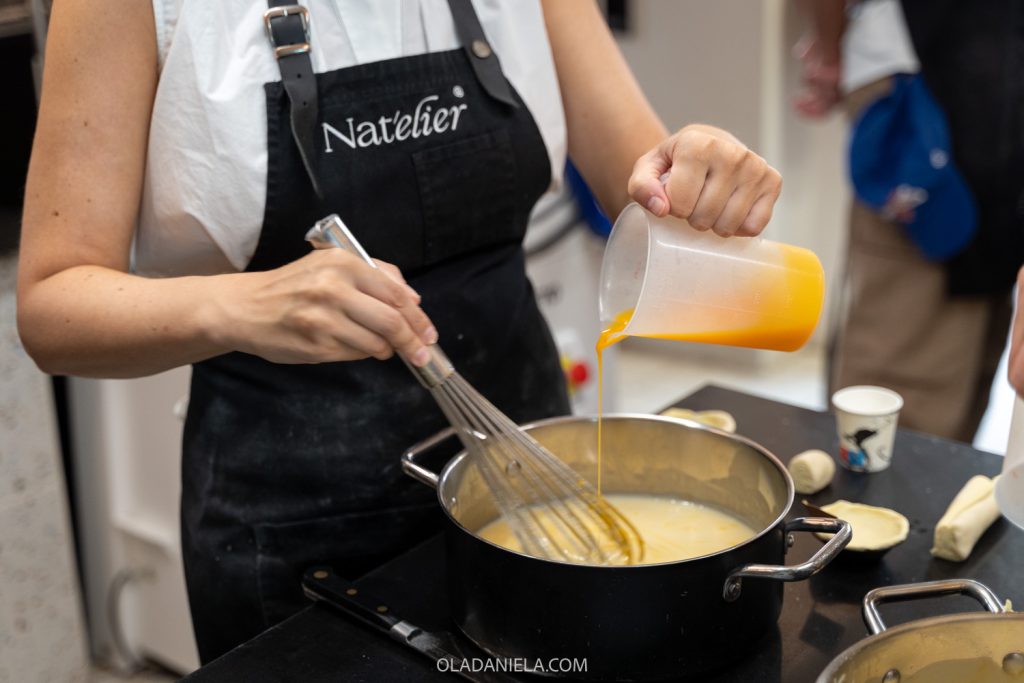
It took me eight years of living here to finally roll up my sleeves and join a pastel de nata cooking class in Lisbon – and I honestly have no idea why I waited so long. As someone who writes about Portuguese food culture and loves hands-on workshops, learning the art and science behind Portugal’s most famous pastry was long overdue.
If you’re visiting Lisbon, you can make a pilgrimage to the monastery where the famous Portuguese custard tarts were invented, then roll up your sleeves and learn to make them for yourself. With half a dozen classes on offer across the city, I recently tested one of the city’s top-rated Portuguese custard tart workshops in the heart of Baixa (downtown) to help you decide which to choose. I was especially curious to find out how easy it would be to recreate these tarts in a standard home oven.
Below, I’m sharing my honest, step-by-step review of the class I took at Nat’elier, key baking takeaways for home chefs, plus a curated list of Lisbon’s other top-rated pastry classes (including options for a vegan baking class).
No time to read the whole article? No worries ↩️
⭐⭐⭐ ➡️ I did this top-rated class with Nat’elier, where you make the pastry and custard from scratch.
⭐⭐ ➡️ My friends loved this top-rated two-hour custard tart class with HomeCooking.
⭐ ➡️ Vegan? This class is totally vegan, or you can join the Nat’elier class.
Quick comparison: Best pastel de nata workshops in Lisbon
| Workshop | Price | Good to know | Bookings |
| Nat’elier – I’ve done this one! | €70 | Easy-to-find, downtown in a real bakery; vegan possible | Book here |
| Home Cooking – my friends did this one! | €55 | Most popular class in Lisbon; at a dedicated studio | Book here |
| Lisbon Cooking Academy | €56 | Option of a vegan class, or regular | Book vegan here, regular here |
| Lisboa Food Studio | €65 | Small-group size | Book here |
| Compadre Cooking | €52 | Make natas plus a savoury treat; kid-friendly | Book here |
Looking for a class in Porto or the Algarve? Try…
⭐ My top pick for Porto – ➡️ Book this two-hour pastel de nata baking class where you’ll learn grandma’s recipe.
⭐ My top pick for Algarve – ➡️ In Lagos? Book this two-hour pastel de nata baking class.
The pastel de nata class I did in Lisbon (full review & what to expect)
Recently I joined the pastel de nata baking masterclass at Nat’elier, a real bakery located in Lisbon’s downtown Baixa neighbourhood. The space is gorgeous, a two-storey café-bakery complete with a 130-year-old wooden staircase connecting the two floors. There’s lots of space to spread out with a coffee or drink and a pastel de nata… but the flavours here aren’t what you might expect. Owner João Batalha is a fifth-generation baker; however, unlike those who have come before him, he’s taken Portugal’s favourite pastry and given it a slight reinvention.
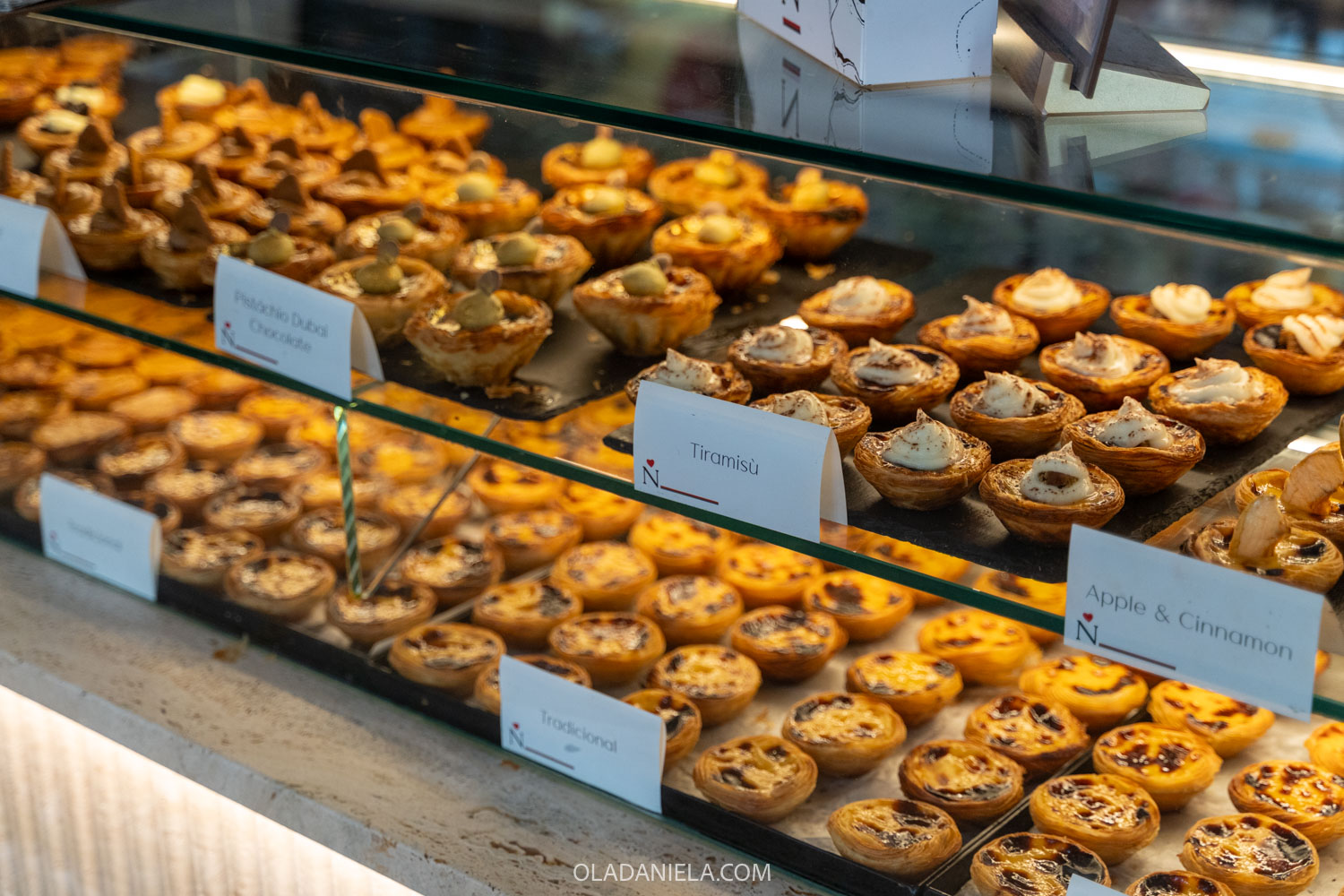
Within the bakery’s display counter, you’ll see traditional custard tarts alongside those inspired by some of the world’s favourite desserts, such as tiramisu and creme brulee.
How the workshop works (step-by-step)
We’re greeted by our pastry chef, Adriano, and invited upstairs to meet the other participants and find out where they’re from. From there, we return downstairs to a dedicated workshop space, pop on aprons and hair nets and get to work on the dough.
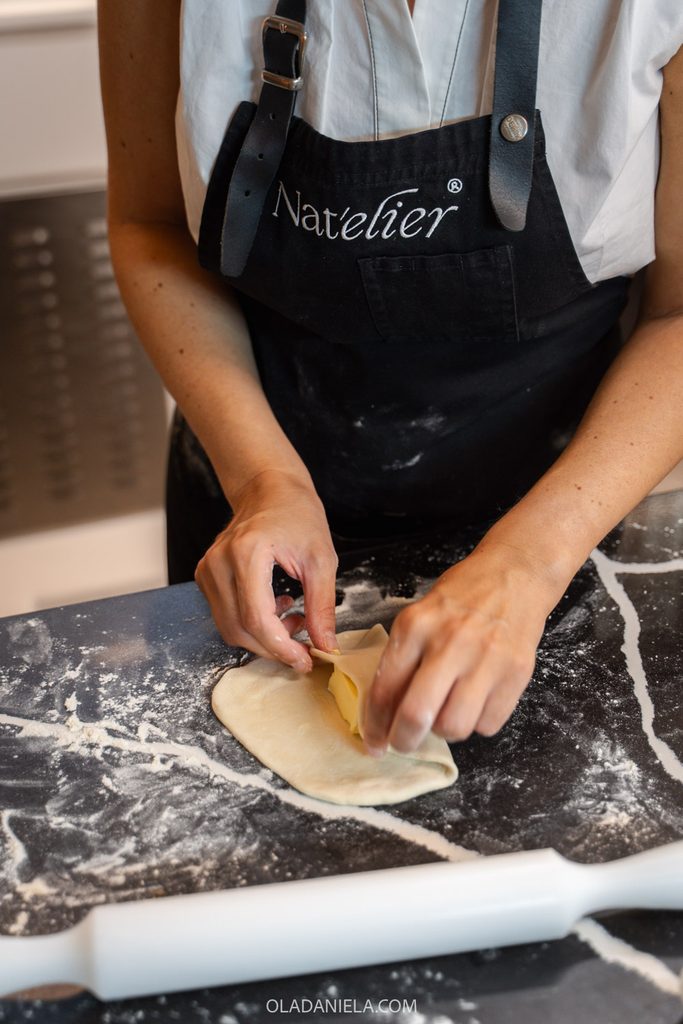
The first part was kneading and shaping our puff pastry, a multi-step process. I appreciated that we each got to make and knead our own dough. Sometimes I find cooking workshops can feel more like cooking demonstrations when all you get to do is add a bay leaf to the communal pot that someone else is stirring! I want hands-on, and this part was definitely hands-on!
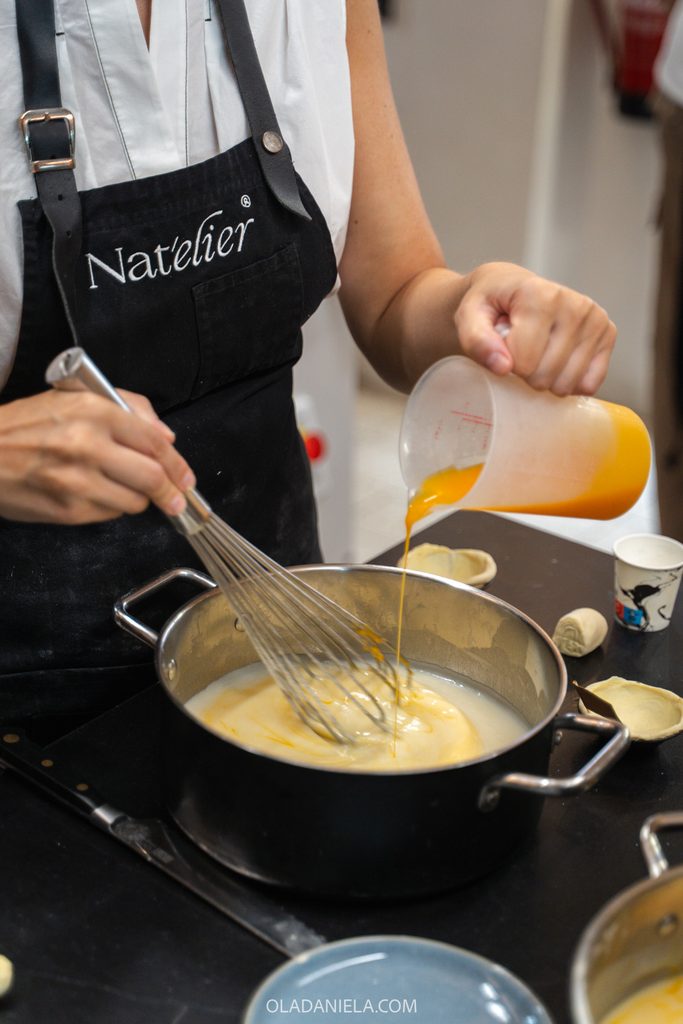
Once ready, our dough went into the fridge to rest while we got onto making the custard. In groups of 2-3 people, we added two lemon peel slices to the milk along with cinnamon sticks and let it boil while we mixed sugar and flour. I think I’d tone the lemon down if I make the custard at home. The final touch was egg yolks – that had been pre-prepared for us.
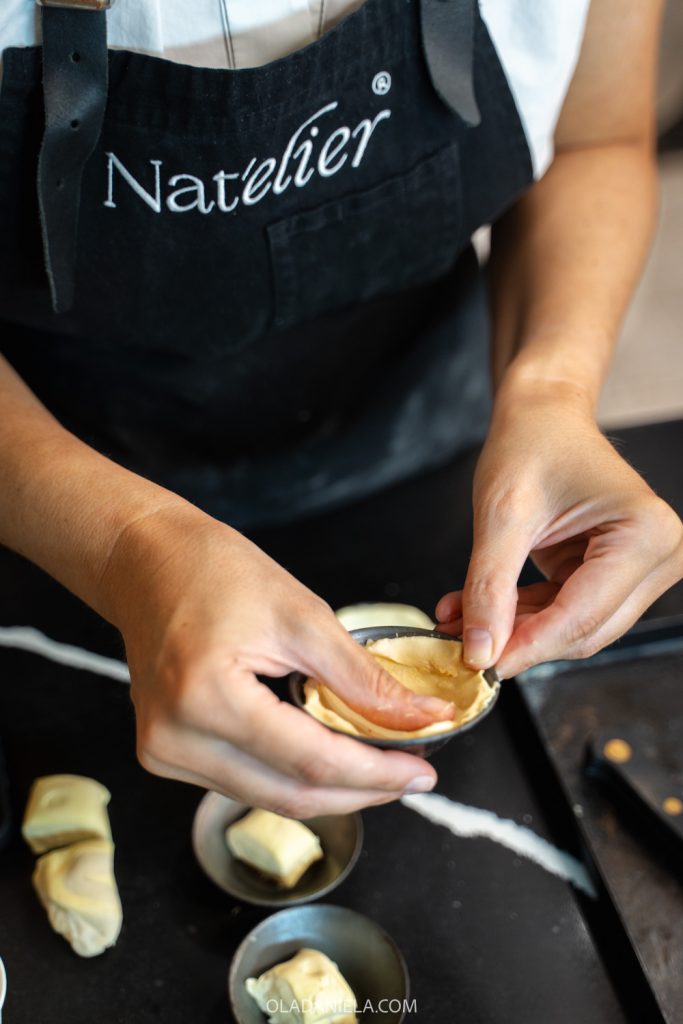
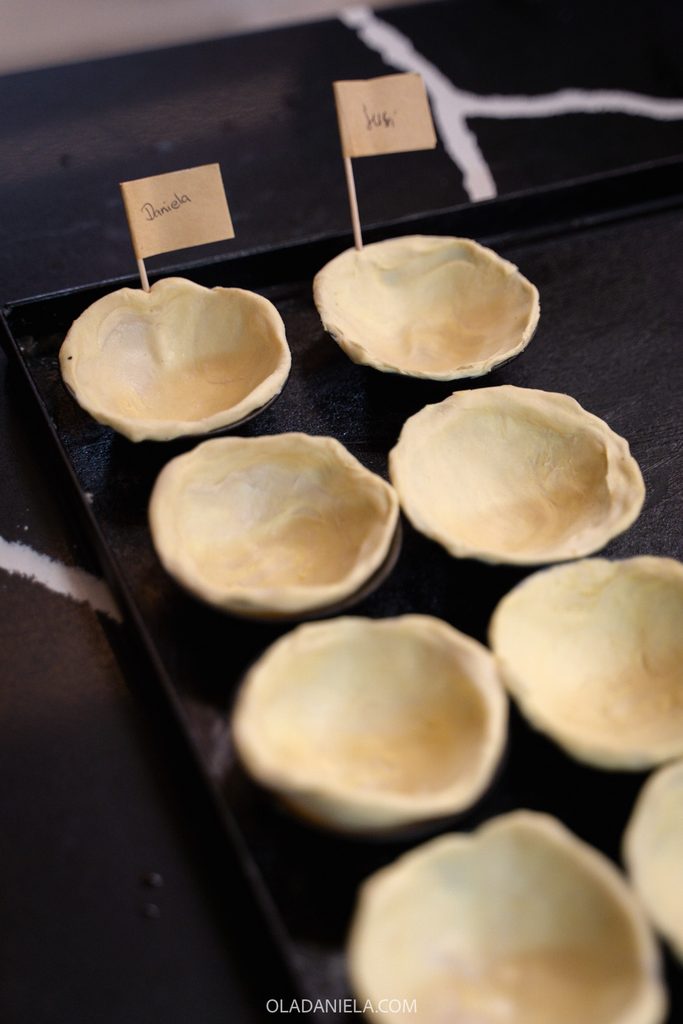
With the custard ready, we received our chilled dough rolls and sliced them into fat discs. Each dough biscuit was popped into an individual pastel de nata baking tin. Chef Adriano showed us how to use a wet thumb to push the pastry puck up to the edges. I’ve oogled through the fishbowl windows of enough pastel de nata bakeries now that I felt confident I could do it, and I was happy with my five tart shells!
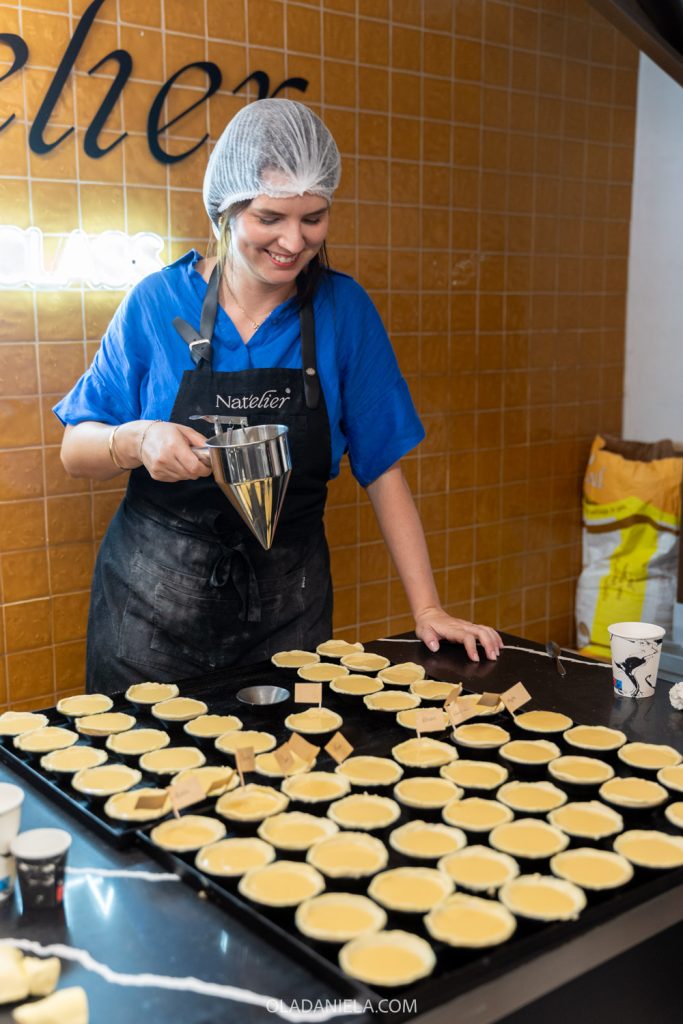
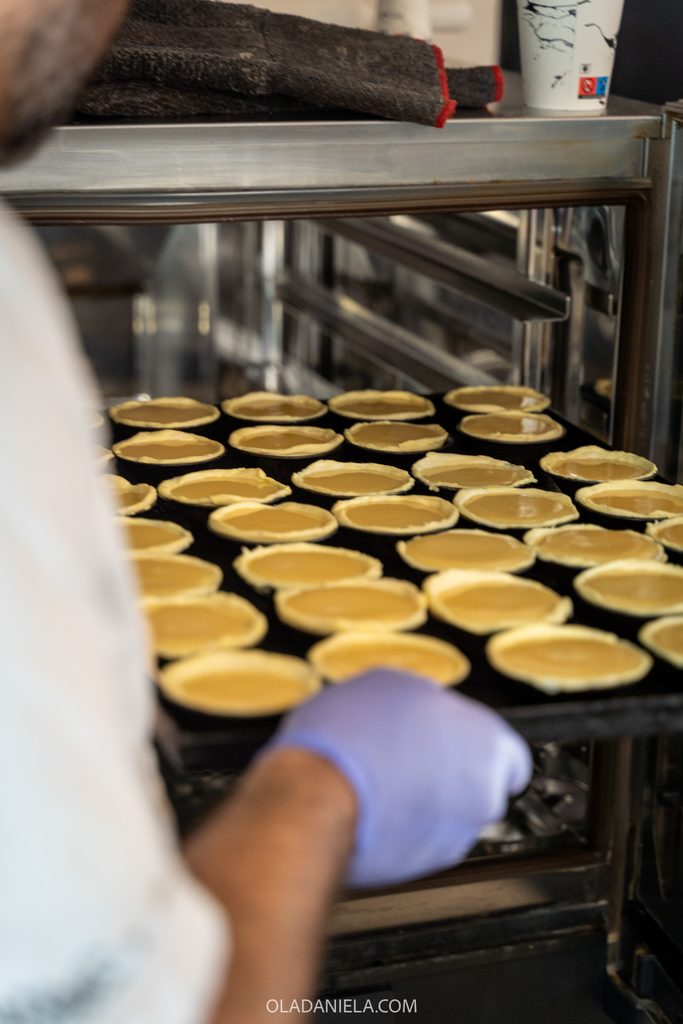
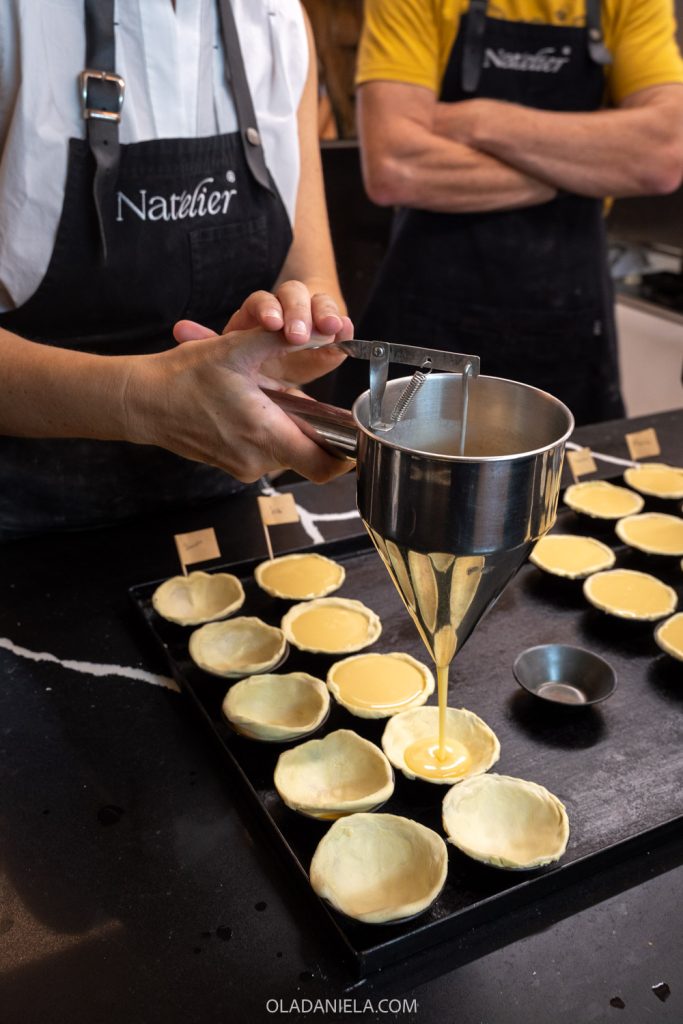
Soon enough, it was time to add our custard using a cool funnel with a control lever that made it easy. While they baked (10-15min), Adriano took our drink order (any barista-made coffee, tea or hot chocolate), and we popped back into the main bakery where we could watch the real masters at work through the window. Okay, I have plenty to learn!
➡️ Book the class at Nat’elier
Key takeaways & baking tips for home ovens

My main concern when it came to doing a pastel de nata baking class was not being able to replicate the experience at home. This one is held in a professional kitchen, so I hoped we’d get notes to adapt where needed – but actually the whole class has been designed for home kitchens. While at Portuguese bakeries the tarts cook at a sweet 400°C, in the class they had the ovens set at around 250°C – the maximum for a home oven.
After the class, we received a follow-up email with a picture of our group and a stunning PDF recipe booklet that detailed every step – along with some helpful pictures – so I’m hopeful I can recreate the recipe at home for my family and friends!
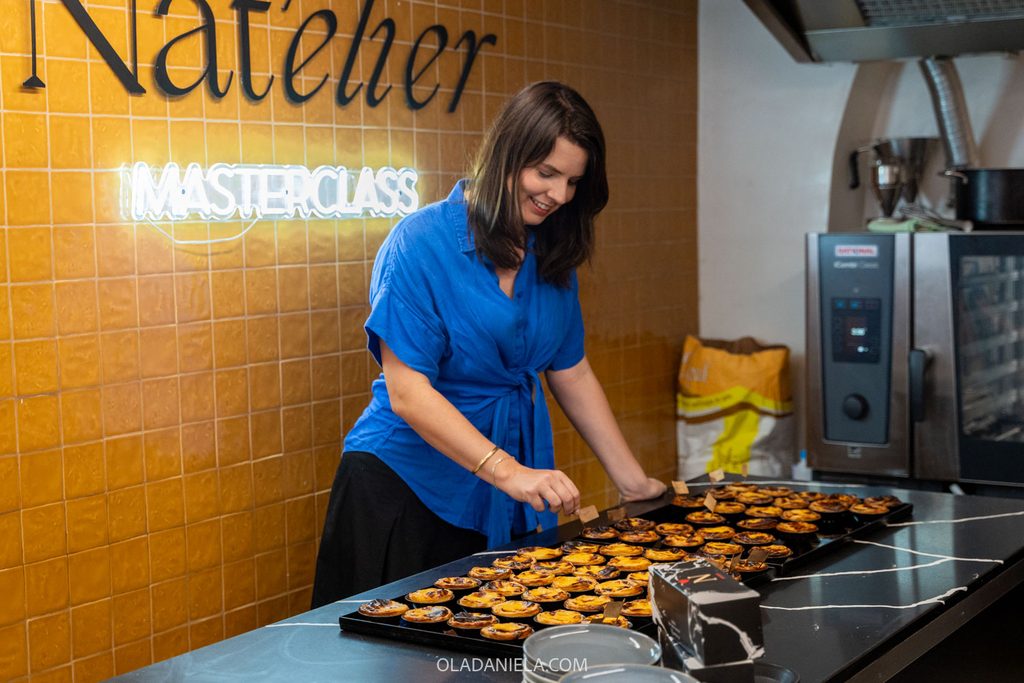
Overall, I’d say this Portuguese custard tart class is an easy and rewarding way to spend a couple of hours. It rides the line between being a baking experience and a hands-on cooking class, with a recipe I can replicate again.
➡️ Book the Nat’elier class yourself
Other top-rated pastel de nata classes in Lisbon
Top-tested Portuguese tart workshop: Home Cooking
I sent my friends to this top-rated two-hour pastel de nata baking class with drinks. It’s located in Ajuda, close to Belém and Alcântara, and it’s the most popular workshop in the city. I got to sample the final result, and I’m happy to report the taste was 10/10.
➡️ Book Home Cooking class here
Best vegan option: Lisbon Cooking Academy
Lisbon Cooking Academy offers both a regular class and a vegan pastel de nata pastry class. The vegan one only happens once a week, but you’ll make plant-based puff pastry from scratch along with a dairy-free and egg-free custard filling, resulting in totally vegan pastéis de nata.
If the date doesn’t work out, book Nat’elier’s masterclass and request vegan.
➡️ Book the regular class or vegan class
Read next… The best pastéis de nata in Lisbon
Best small-group class: Lisboa Food Studio
The class at Nat’elier takes up to 14 people, so if you prefer a smaller group size, perhaps this two-hour class with Lisboa Food Studio would suit better. The class is limited to 8 participants, and you have the option of morning or afternoon sessions.
➡️ Book Lisboa Food Studio class
Sweet & savoury experience: Compadre Cooking
In this two-hour pastel de nata cooking class, you’ll make everything – including the pastry – from scratch, plus you won’t just make natas. The class promises you’ll also make a traditional treat, which I believe is usually cod fritters.
➡️ Book Compadre Cooking class
FAQs about Lisbon pastry classes
What is a pastel de nata?
It’s a flaky, buttery, creamy gift from the heavens. The anatomy comes down to two parts – a flaky, buttery shell and a set custard filling. When you flip a Portuguese custard tart, you should see a puff pastry coil at the bottom. The custard should be a touch eggy, not too sweet.
What is the history of the pastel de nata?
The origin of the tart is connected to the monks of Lisbon’s Jerónimos Monastery. When religious orders were forced to cease in the 1830s, they sold the recipe, and since 1837 a bakery called Pastéis de Belém, located about 100 metres from the church, has kept the exact recipe under lock and key. If you visit Lisbon, you have to make a pilgrimage to Belém to taste the OG at the source.
What is the price of a baking class?
Typically, the cost for a Portuguese custard tart baking class is around €55-70 per person. Most of the inclusions are the same – a two-hour class with either tea or coffee, or a glass of port wine or ginjinha, a local liqueur.

Can you make pastéis de nata in a home kitchen?
Yes, it won’t taste as good as in Portugal (it’s the magical light, relaxed holiday vibe and the pretty tiled buildings to photograph as the backdrop). But a class will give you the skills and the recipe to whip up a dozen pastéis de nata from scratch – making you very popular with your family and friends. There’s nothing like eating one that’s still warm.
Most professional bakeries have super hot ovens that bake the tarts in a flash. Home ovens can’t quite compete, but with a hands-on class you’ll pick up tips and tricks for home chefs with regular home ovens.
Can kids join a pastel de nata class?
Yes! Most classes are family-friendly – naturally kids love getting their hands messy with pastry dough. When booking, see if tickets are offered for children – that should indicate whether kids are allowed. Some small-group classes are restricted to ages 15 and up (but offer private classes to families), so read the fine print.
Are there vegan or gluten-free options?
Vegan pastel de nata is an option — this vegan pastel de nata cooking class is one of the few focused on plant-based versions. Gluten-free is a no-go at the moment, since puff pastry is such a key element. If you have dietary restrictions, reach out to the instructor in advance to see what’s possible.
What should I bring or wear?
Keep it casual! Think comfortable clothes you don’t mind getting a dusting of flour or a splash of custard on. Closed shoes are better in a kitchen. Cooking schools usually provide aprons, utensils and all the ingredients.
How long does a class usually take?
Most pastel de nata workshops run for about two hours. That’s enough time to learn the technique, bake your batch, and of course, eat them warm from the oven.
What language are the classes taught in?
Almost all classes are taught in English, and since this is an English-language website, I’ve featured classes that will be held in English. Some teachers may also speak Portuguese, Spanish or French too. My instructor at Nat’elier even spoke Japanese!
Do I get to take some pastel de nata home?
Usually, yes! Most classes let you box up the extra tarts you’ve baked. That said, they’re at their absolute best straight from the oven – you’ll eat more than you save.
How far in advance should I book?
If you’re visiting Lisbon, book at least 1-2 weeks ahead – especially in peak season, as spots sell out quickly.
Disclosure: I was invited to experience Nat’elier’s masterclass. I wasn’t asked or required to write about it, and they had no say over this article. All opinions are my own.
That’s my guide to the best pastéis de nata cooking workshops in Lisbon. Read my guide covering where to eat the best pastéis de nata in Lisbon, and leave me a comment if you take a class! I’d love to hear about your experiences….
Keep reading about Lisbon….
- 48-hour itinerary for Lisbon
- Where to eat in Lisbon
- Where to Find the Best Views in Lisbon: 11 Top Miradouros
- Local’s Guide to Feira da Ladra, Lisbon’s Famous Flea Market
- Lisbon’s best vintage shopping
- Best Pastéis de Nata in Lisbon
- The best cooking classes in Lisbon
- Where to find the best Portuguese street food and snacks in Lisbon
- Where to eat in Belém: Local’s guide to the best restaurants, snacks and bars








2 Responses
Hello Daniela
I would love to bring my group to a pastel de nata cooking class in Lisbon or Porto. Which would you recommend please? And how do I book?
Hi Maggie, Great idea! I would always recommend a class in Lisbon – this is the city where the sweet originally comes from. Every town in Portugal has “convent sweets” invented in monasteries and convents, and the pastel de nata is from Lisbon. Lucky us! The best classes depends on how many people you have. If it is a small group, you can probably book using the links in my blog above, bigger groups you might have to reach out directly.