
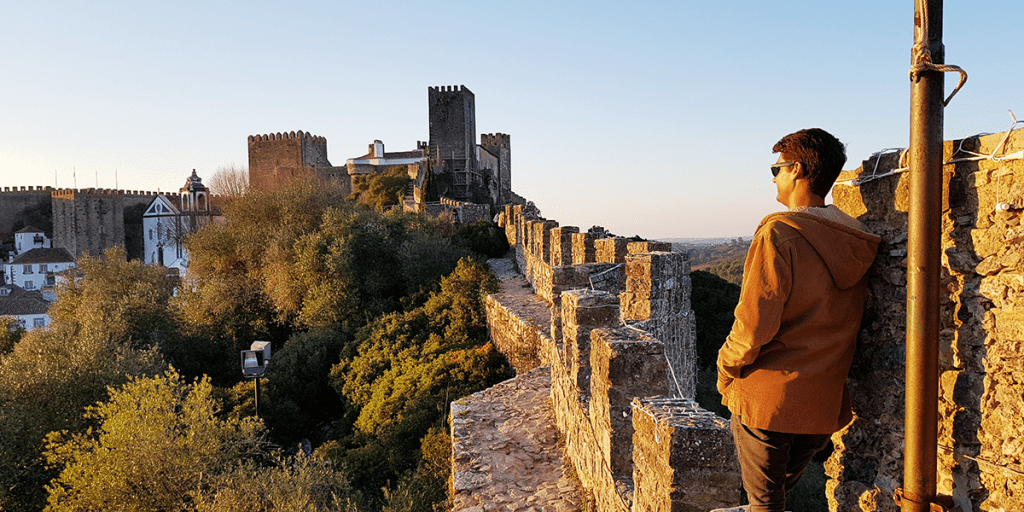
While Lisbon is a history-lover’s dream to explore, some of Portugal’s richest stories lie just beyond the city limits. Within an hour or so, you can wander medieval walled towns, stand before Roman ruins, trace the path of the Knights Templar, or get lost among the turrets of pastel palaces.
I’ve lived in Lisbon since 2018, and below I’ve shared my favourite tips and ideas for where to go on a day trip from Lisbon – plus I have published deeper guides for a lot of these Portuguese destinations. Have a scroll and take your pick – whether you’re into royal romance, sacred sites or secret stone circles, you’ll step through history on one of these easy, top day trips from Lisbon.
My definition of a day trip is anywhere I can reach by car in 20 to 90 minutes. Public transport might take slightly longer, and I’ve included the best options for each location too.
Which of these Lisbon day trips can you do without a car?
No car, no worries – a lot of these historic destinations are well connected to Lisbon by train, or otherwise, there may be a public bus or Rede Expressos coach. From Lisbon, the train will easily reach Sintra, Évora, Tomar and Vila Franca de Xira.
Map of Lisbon’s best day trip destinations
Read my complete Lisbon day trips guide here
Sintra: Palaces, a Moorish castle & mountain magic
How to reach Sintra – 30-minute drive west from Lisbon, or 40-minute train from Rossio Station (I don’t recommend driving if you just visit the historic village).

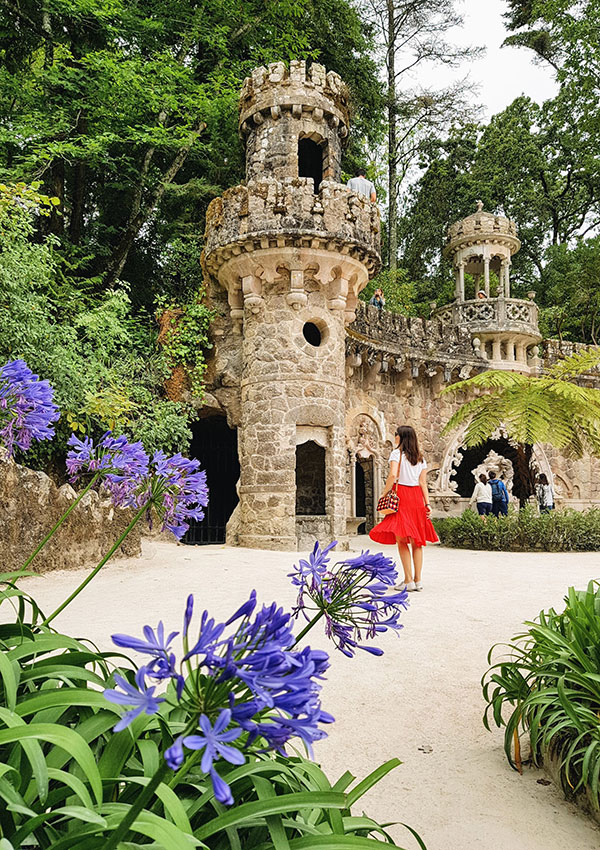
There’s something mystical about Sintra, a historic mountain village filled with grand palaces and topped with an ancient 10th-century castle. Once a summer playground for the rich during the 19th century, the romance of a bygone era is still alive here, and it’s fun to dress up and wander about palace halls. You’ll have no shortage of those: from Pena Palace to Monserrate to Quinta da Regaleira to the National Palace.
Equally, Sintra’s micro-climate makes the mountain an interesting place to explore. Giant boulders covered in green moss and off-road tracks offer a different kind of exploring on this top day trip from Lisbon.
But take note – this is Lisbon’s most popular day trip, and some palaces have timed entry tickets. A day trip to Sintra requires prior planning. I have two in-depth guides to help: a 1-day Sintra itinerary, and a list of 30+ cool things to do in the region.
There are two ways to explore Sintra. You can take the train from Rossio or Sete Rios stations (driving is not recommended) and stroll through the historic village and visit the palaces nearby. Or you can extend the fun to explore nature – crossing Sintra-Cascais Natural Park to reach the ocean at Cabo da Roca (Europe’s westernmost point), take in some viewpoints and visit beaches.
If you’re visiting from abroad, I highly suggest joining a small-group or private guided tour for this – my picks are a private tour with Fernando (book via GetYourGuide or go direct and say I sent you!) or a small-group off-road tour with the fun guys at FlaminGO who have an army of vintage UMM jeeps.
Best things to do in Sintra
- Hike or bus up to the yellow-and-red fairytale Pena Palace to explore its fantastical gardens (requires pre-booked, timed tickets if you want to see inside).
- Wander the walls of the ancient Moorish Castle and uncover the underground tunnels and Initiation Well at Quinta da Regaleira or half a dozen other palaces (seriously, no shortage of palaces here).
- Eat a travesseiro de Sintra from the most famous bakery, Piriquita
- Extend your trip to cross the Sintra-Cascais Natural Park and reach Cabo da Roca, the westernmost point of continental Europe.
- Discover the rugged Atlantic beaches like Praia Grande or the stunning sea-pool village of Azenhas do Mar.
- Go for an off-road small-group Jeep adventure with the fun guys at FlaminGO Experiences.
- Carry a jacket or light sweater at all times – Sintra’s micro-climate means it can be cold and foggy even when Lisbon is sunny.
Read next… 31 things to do in Sintra and Sintra 1 or 2-Day Itinerary
Óbidos: medieval walled village from a picturebook
How to reach Óbidos – 1-hour drive north from Lisbon, or take an express bus called the Rapida Verde (the regional train takes more than two hours).
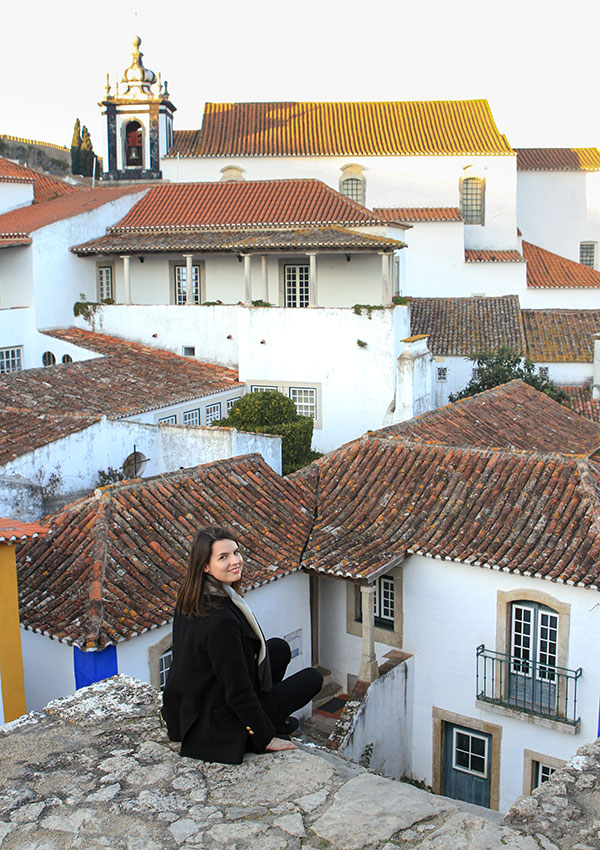
Imagine receiving a small walled city as a wedding gift? Portugal’s King Dinis gave Queen Isabel the little village of Óbidos to mark their wedding back in 1282. This super cute medieval walled city is just over an hour north, making it one of the best day trips from Lisbon.
Wander inside the fortified walls and you’ll find a Portuguese village of typical white-washed buildings with yellow or blue trims. Usually, you can also climb the stone walls and cut most of a lap around the town. If you have time, explore deeper with a walking tour that reveals secret spots and medieval tales.
While in Obidos, be sure to taste the local liqueur, ginjinha – made from the ginja sour cherry. It’s one of Portugal’s most famous, and you can drink it from a tiny and delicious chocolate cup.
Sleep in the castle: This gem is a popular day trip from Lisbon, so if you want to see the village without the crowds, consider sleeping in the 14th-century castle for your own royal moment. The Pousada Castelo de Obidos is a dream stay! If it’s out of the budget, Óbidos has plenty of cute guesthouses.
Things to do in Óbidos
- Walk around the medieval village and castle walls. The full lap is 1.5km. Right by the entrance, if the staircase is open, you can just go for it at your own peril! (There are no safety railings.)
- Stop by a window to taste ginjinha liqueur, a traditional drink from the village.
- Get lost in the narrow, winding streets of the whitewashed village within the walls. Admire the bright blue and yellow trim on the houses and the care locals take by adding cute flower pots.
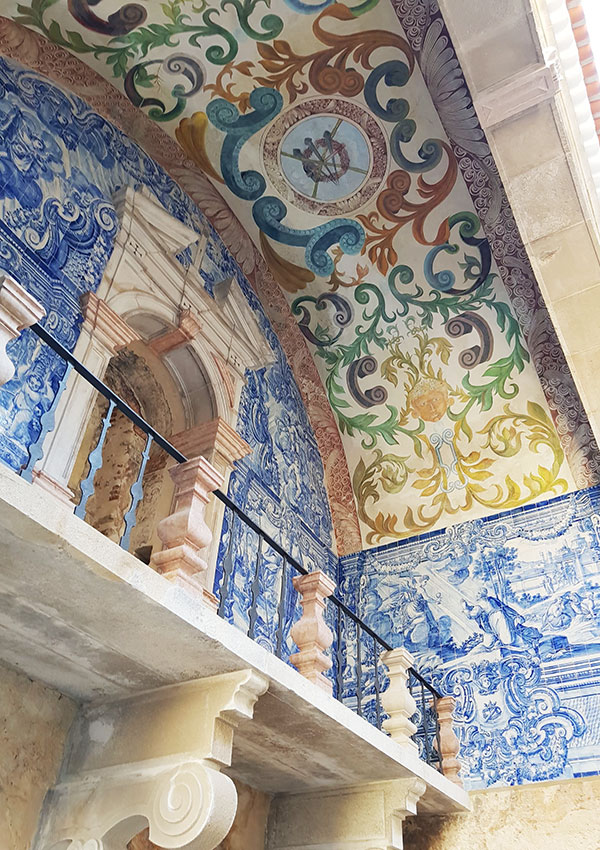
- Pause at the magnificent Porta da Vila (main gate), which is famously lined with beautiful 18th-century blue and white tile panels (azulejos) that depict the Passion of Christ.
- In the main square, visit the beautiful Church of Santa Maria (Igreja de Santa Maria), built over a former mosque and known for its richly decorated interior and historical importance.
Guided day trip from Lisbon: If you have a few days in Lisbon, Óbidos makes for a good day trip. Take a look at this top-rated guided tour that combines the walled village with the towns of Fátima, Batalha and Nazaré.
Évora: Roman temple, wine & a bone chapel
How to reach Évora – 90-minute drive or train south-east from Lisbon. Note: for a day trip, the last train back to Lisbon often leaves quite early! Better to do an overnight stay by train.
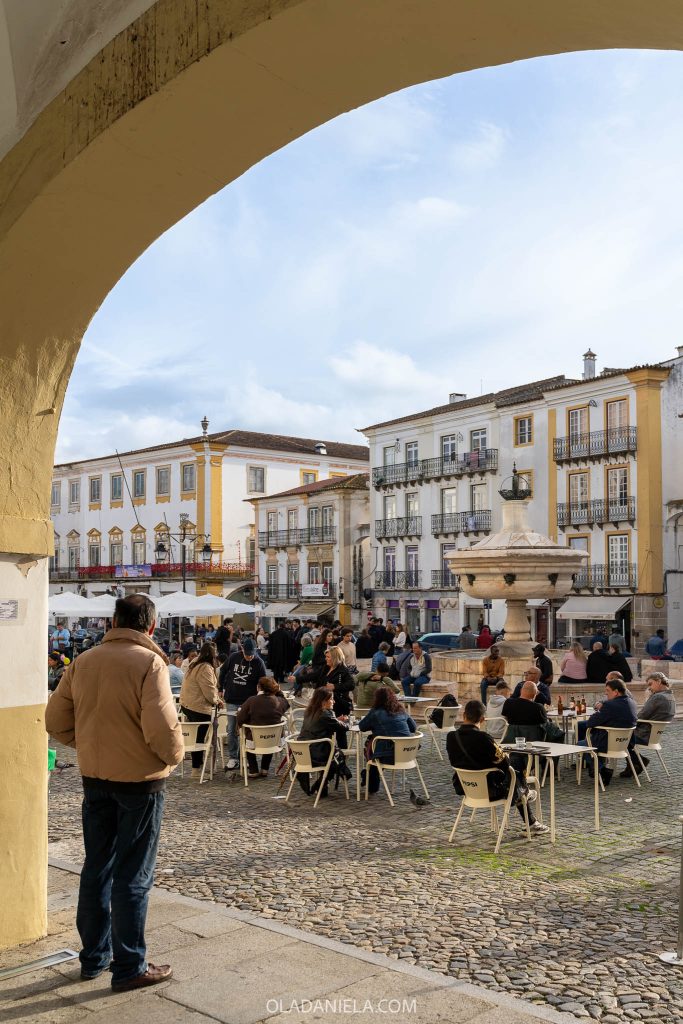
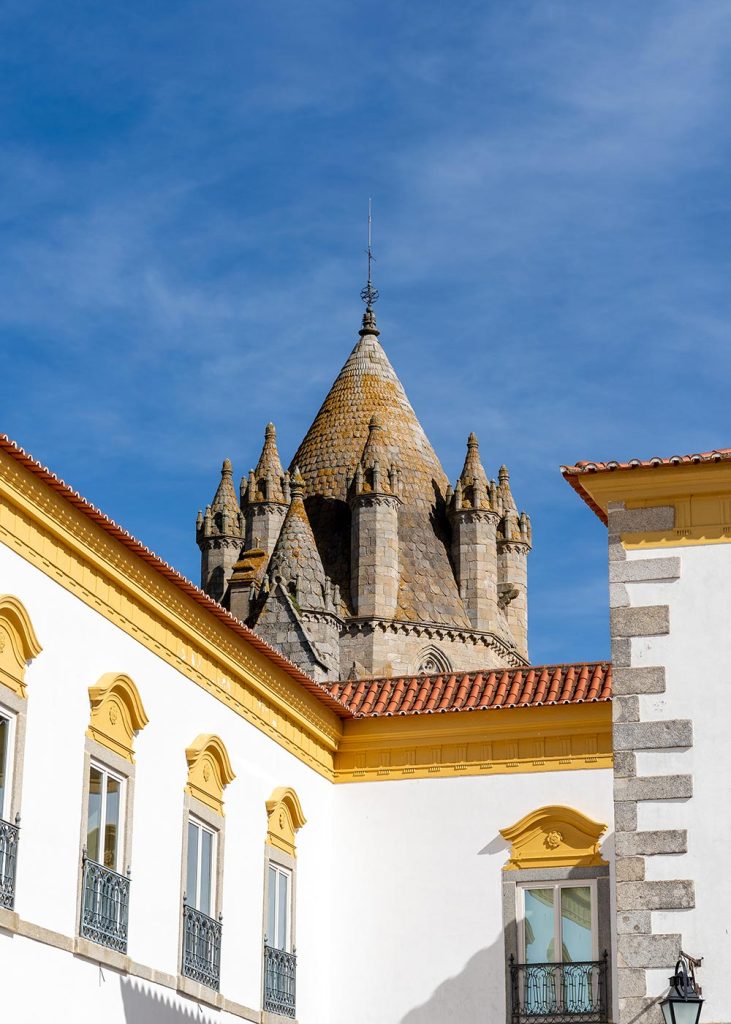
Located about a 90-minute drive or train ride east of Lisbon, Évora is the magnificent, UNESCO-listed capital of the Alentejo region. A living time capsule, the whitewashed city centre is steeped in history, bearing the marks of Roman, Moorish and medieval influences – and yet the small yellow-toned city pulses with a youthful energy, thanks to its historic university.
Personally, I think Évora deserves a full weekend itinerary to soak up history and enjoy the Alentejo’s famously relaxed, slow pace. But it’s only a 1.5-hour drive, so you can dash out there for a day trip from Lisbon.
Things to do in Évora
- Visit the legendary Bone Chapel (Capela dos Ossos) – one of Portugal’s most striking and solemn sights. Located next to the Church of St. Francis, the chapel’s walls and columns are lined entirely with the skulls and bones of over 5,000 human remains.
- Admire the Roman Temple – the 1st century AD relic is set on the highest hill with Corinthian-style columns.
- Climb onto the roof of the largest cathedral in Portugal. A winding staircase leads to the best panoramic views over the city’s terracotta rooftops and the surrounding Alentejo plains.
- Seek out the 16th-century Água de Prata Aqueduct that runs for over 18 kilometres, portions of which are famously built directly into the structure of houses within the city walls.
- Feast on Alentejo cuisine – you always eat so well in this region, one of my favourites for dining out. Enjoy a traditional, long lunch at an institution like O Fialho or Botequim da Mouraria.
- Look beyond the pastel de nata and try Évora’s traditional convent sweets (doces conventuais). Look for Pão de Rala (stuffed almond cake) or Sericaia (a fluffy sponge cake).
- Those Alentejo plains produce bold, tannin-heavy reds. Stop to sample local wines at Enoteca Cartuxa, or venture out to a vineyard like Herdade do Esporão or Fitapreta for a cellar door experience and lunch.
- Visit the Cromlech of the Almendres: Just outside the city, explore one of Europe’s largest collections of standing stones, a fascinating Neolithic site that pre-dates Stonehenge.
Read next… Évora is so much fun, and I have some in-depth guides with more ideas for things to do, where to shop, where to eat and how to spend 48 hours in the small city.
Tomar: Follow the trail of the Knights Templar
How to reach Tomar – 90-minute drive north of Lisbon, or the train takes two hours from Santa Apolónia Station.
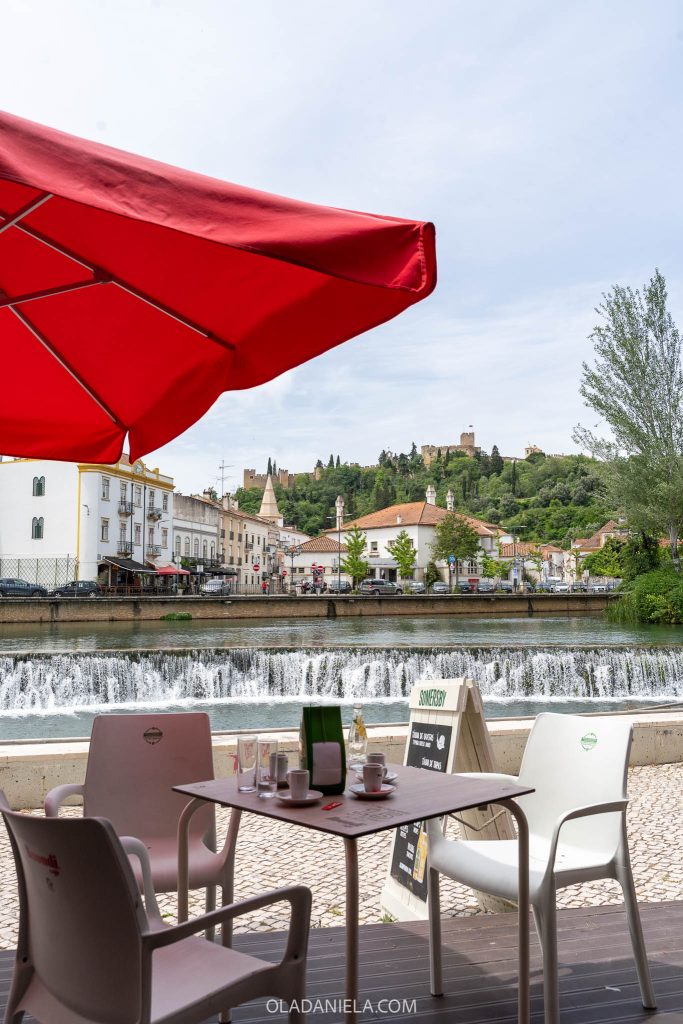
Tomar, a city steeped in the legends of the Knights Templar, is a cool inland destination located about a 90-minute drive north of Lisbon. It holds a unique place in Portugal’s history as the city was founded by the Grand Master of the Knights Templar, Gualdim Pais, in 1160 to serve as their headquarters. When the Templars were suppressed across Europe, they simply rebranded in Portugal as the Order of Christ and continued their influence, notably supporting Portugal’s famous Age of Discoveries (with Prince Henry the Navigator as their Grand Master).
There’s soooo much history and beauty to explore here, and while you can cross most of it off in a day, I’d recommend this one as a weekend trip too.
Things to do in Tomar
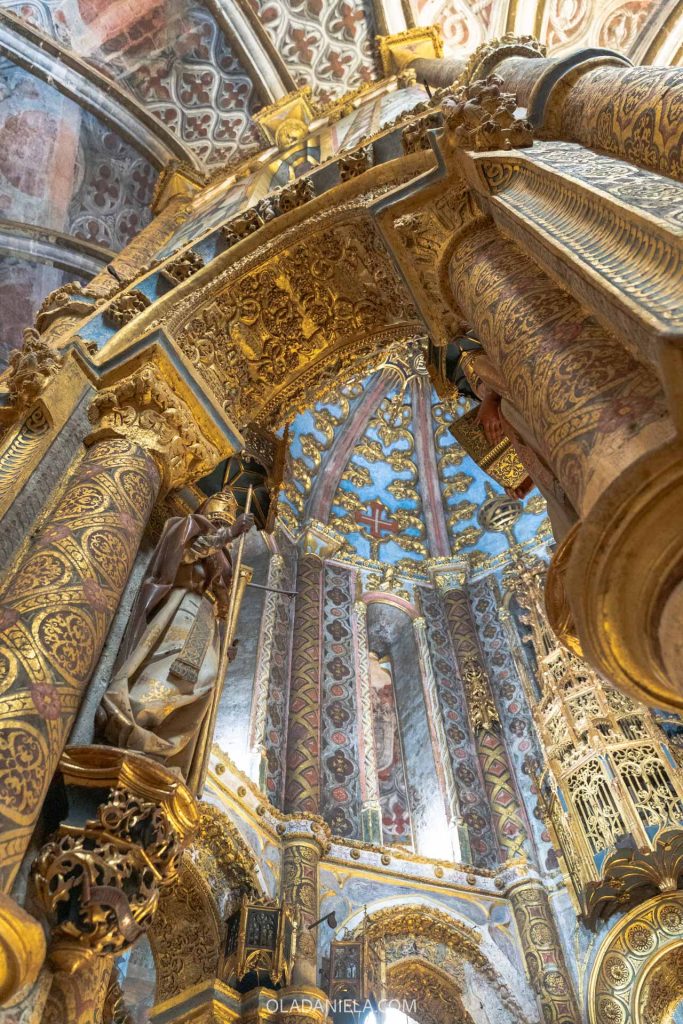
- Explore the Convent of Christ and Templar Castle – this UNESCO World Heritage site is the single most important reason to visit Tomar. Give yourself at least two hours to explore the sprawling complex, which includes the iconic circular chapel (Charola), pictured above, and the extraordinary Manueline Window, carved with maritime motifs.
- Step through Tomar’s Old Town, including the central Praça da República with its 16th-century town hall and the Igreja de São João Baptista church.
- Walk atop the jaw-dropping 16th-century Pegões Altos Aqueduct, a five-minute drive outside town (again, no railing, so be careful).
- Escape the heat at the peaceful river island park, Mouchão Park, surrounded by the Nabão River.
- For something unique, visit the Museu dos Fósforos (Matchbox Museum), housed in the old convent, which holds Europe’s largest collection of matchboxes – more than 60,000 of them!
- Pop into Tomar’s many free museums – there are loads to explore, including an arts centre in an old flour factory.
Read next… Best day trips from Tomar
Mafra: mega palace, wolves & wild boars
How to get to Mafra – 35-minute drive north from Lisbon, or catch a coach with Mafrense from Campo Grande.

Sometimes I remember facts that truly have little value, like this one: Palácio Nacional de Mafra is home to Europe’s longest palatial corridor. The 232-metre-long gallery is just one of the many outsized features of this Baroque giant – an architectural 18th-century statement built by King João V when Portugal’s gold-rich colonies were at their height. Completed in 1755, it has more than 1,200 rooms, 156 stairways and a library considered one of the most beautiful in Europe, filled with over 36,000 leather-bound volumes plus bats.
Exploring the palace and its basilica will only take you half a day, so spend the other half in nature at Tapada Nacional de Mafra, the former royal hunting ground established in 1747. This vast, forested park is now a protected reserve with trails where deer, wild boar, and foxes roam freely among cork oaks and pines. Nearby is the Iberian Wolf Recovery Centre (Centro de Recuperação do Lobo Ibérico) – a sanctuary dedicated to protecting and rehabilitating the endangered native wolves of Portugal and Spain (book visits in advance).
Or organise a wine tasting or picnic at Quinta de Sant’Ana, a family-run estate just outside Mafra that produces elegant, small-batch wines amid rolling hills. You can combine Mafra with the charming surf town of Ericeira, just 15 minutes away (mentioned above).
Things to do in Mafra
- Wander the halls of Palácio Nacional de Mafra, taking time to visit the library, basilica, and the 232-metre corridor.
- Organise a wine tasting or picnic at Quinta Sant’ana.
- Lunch at Adega do Convento, a cosy spot serving hearty Portuguese dishes near the palace.
- Walk the trails of Tapada Nacional de Mafra. Keep an eye out for wild boar and deer.
- Visit the Iberian Wolf Recovery Centre, a sanctuary devoted to the conservation of Iberian wolves (advance booking required).
- Combine Mafra with a day trip to Ericeira, for beaches, surf and seafood with Atlantic views. This guided day trip combines the two.
Fátima: a sanctuary of faith
How to reach Fátima – 80-minute drive north from Lisbon, or a direct Rede Expressos coach from Sete Rios.
FFátima is one of the most significant Catholic pilgrimage sites in the world, drawing millions of visitors annually. This is the location where the Virgin Mary is said to have appeared to three shepherd children in 1917. While the site is a major cultural and religious landmark for believers, there’s not much else to the town that may pique your interest. Plus, once you leave the new and old basilicas, you’re met with religious gift shops that detract from the spirit.
Day trip tip: I’d suggest combining a visit to Fátima with a side quest to somewhere nearby. Depending on your interests, you could continue the religious theme at the UNESCO World Heritage site of Mosteiro da Batalha (Batalha Monastery), or bounce over to Nazaré for seaside vibes and (potentially) mega waves. You can also combine Fátima with a visit to Óbidos, Caldas da Rainha or Tomar.
Things to do in Fátima
- Visit the Chapel of the Apparitions (Capelinha das Aparições) – a small, simple chapel at the heart of the sanctuary built on the exact spot where the Virgin Mary appeared.
- Explore the neo-baroque Basilica of Our Lady of the Rosary (which holds the tombs of the three shepherd children) and the modern, immense Basilica of the Holy Trinity (one of the largest Catholic churches in the world).
- Time your visit to join a candlelit procession – the biggest dates are May 13 and October 13. Expect big crowds.
Caldas da Rainha: creative city of ceramics
How to reach Caldas da Rainha – 70-minute drive from Lisbon, or 80-minute bus with Rede Expressos.
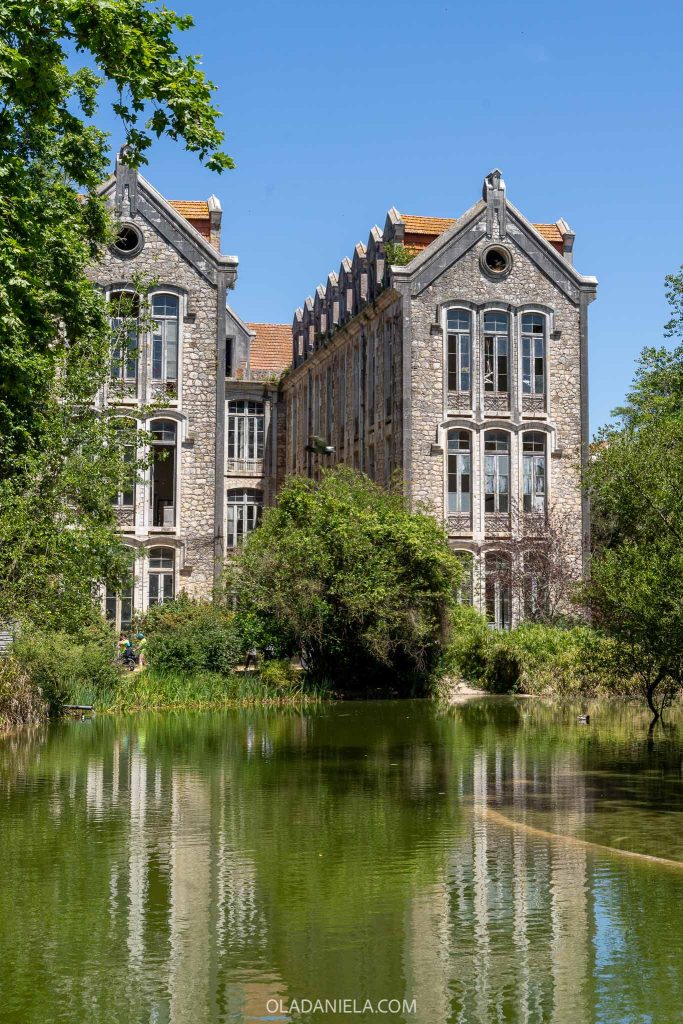
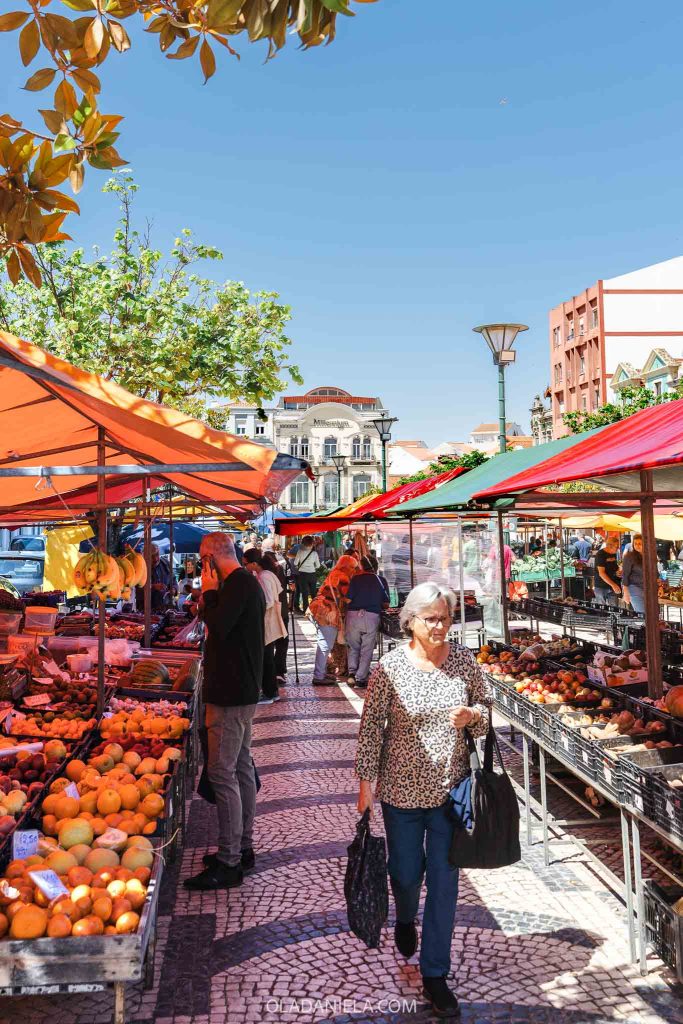
There’s something romantic about Caldas da Rainha, a charming and artistic small city in the centre of Portugal. Maybe it’s the leafy Parque Dom Carlos I with its elegant lakes and the 19th-century thermal hospital that gave the city its name. Queen Leonor, who discovered the curative sulphur springs in 1484, ordered a hospital to be built for the sick and poor. Now, Caldas remains the oldest thermal town in the world still in operation.
If not the park and thermal water, maybe it’s the Art Nouveau and Art Deco façades that line Caldas da Rainha’s boulevards, or the whimsical ceramics of Rafael Bordallo Pinheiro, whose humorous and surreal pieces helped shape the city’s creative soul. Either way, it’s easy to spend a day here exploring the mix of spa heritage, ceramic artistry and small-town charm before unwinding at Foz do Arelho, where the Óbidos Lagoon meets the Atlantic.
Things to do in Caldas da Rainha
- Stroll through Parque Dom Carlos I, a peaceful green heart once reserved for spa patients. Wander its shaded paths, feed the ducks, and if you’re feeling romantic, hire a paddle boat on the ornamental lake.
- Follow the Bordallo Pinheiro trail, a self-guided walk through the city that reveals the artist’s legacy – from giant ceramic frogs, cabbages and sardines scattered across town.
- Buy ceramics at the Bordallo Pinheiro factory outlet. You can find seconds and bargains on the top floor, above the store.
- Pay a visit to the Museu do Cerâmica, housed in a graceful 19th-century mini-mansion surrounded by gardens. Inside, you’ll find centuries of Portuguese pottery.
- Lose yourself in the city’s art scene, with half a dozen small galleries, museums and craft studios showcasing local contemporary artists.
- Shop at the daily farmers’ market at Praça da República, one of Portugal’s largest open-air markets. Come early (7am–3pm) to browse stalls overflowing with local produce, cheese and flowers – Saturday and Monday are best.
- Admire the 17th-century azulejos (tiles) decorating the tiny Ermida de São Sebastião.
- Explore the curious Jardim de Água, a surreal ceramic park created by sculptor Ferreira da Silva over the course of a decade.
- End your day at Foz do Arelho, a wide sandy beach where the calm lagoon waters meet the surf of the Atlantic – ideal for swimming, paddleboarding or sunset watching.
Vila Franca de Xira: birdwatching and bullfighting traditions
How to get to Vila Franca de Xira – 30-minute drive north from Lisbon, or 23-minute train from Santa Apolonia Station.

Vila Franca de Xira is a small riverside town just 30 minutes north of Lisbon by train, set along the Tejo (Tagus) River. Though often overlooked (few tourists venture here), the historic core is charming (especially the market hall), and it has a distinct identity rooted in bullfighting traditions. Start with a stroll along the riverfront promenade, where you can get coffee or watch locals fish, then visit the azulejo-covered Mercado Municipal to admire the tile panels and shop for local produce.
In the 21st century, bullfighting is a controversial topic, but for Vila Franca de Xira, the tradition is core to its identity. The town’s early 20th-century bullring still hosts events, particularly during Colete Encarnado (the “Red Waistcoat Festival”) each July (expect parades, music, bull runs). Around town, you’ll see statues, posters, murals and the Casa-Museu Mário Coelho celebrating this heritage. Fortunately, in Portugal, the bull is not killed in the arena – but still, the sport uses animals for entertainment.
Vila Franca sits where the Tagus begins to widen into the Ribatejo estuary, a landscape of wetlands and fields that attracts flamingos, storks, and herons. If you’re into birdwatching or quiet nature escapes, it could be a peaceful escape.
Things to do in Vila Franca de Xira
- To market, to market: don’t miss the amazing azulejos (tiles) on the Mercado Municipal.
- Admire the azulejos at the train station too, where you’ll see scenes of life in the town.
- Relax by the riverfront, with cafés, benches and views across the Tagus estuary.
- Wander through town, taking notice of the historic links to bullfighting: the statues, posters, murals.
- If you’re interested, visit the Casa-Museu Mário Coelho to learn about a famous bullfighter.
- Explore the Museum of Neo-Realism, which showcases Portugal’s socially engaged art and literature of the 20th century.
Looking for more Lisbon day trips? Read my complete Lisbon day trips guide
Read next…
- Where to stay in Lisbon: Best neighbourhoods & hotels
- My perfect day in Setúbal & Arrábida Natural Park
- 14 things to do and see in Caldas da Rainha
- Portugal Road Trip: Where to stop between Lisbon and Porto
- Best tile painting workshops in Lisbon, Porto and the Algarve
- 22 most beautiful castles in Portugal
- 16 most beautiful villages and small towns in Portugal
- 48-hour itinerary for Lisbon
- Where to eat in Lisbon
- Where to stop between Lisbon and Seville