It was while standing beneath the 8-metre (26-feet) high glass ceilings of Carlos Relvas’ mid-19th-century photography studio (in the middle of Portugal’s virtually unknown Ribatejo region) that I thought, ‘wow, Portugal has so many amazing stories that most people won’t know or hear about’.
I’ve lived in Lisbon since 2018, and since then I’ve been on a personal mission to explore the country from top to toe, discovering lesser-known gems, unique festivals and cool destinations most visitors skip over. With the huge amount of energy and research it takes to pull together a cohesive, helpful blog post, so many cool places and experiences continue to live rent-free in my mind… until now, that is.
Here I’m sharing some of the more unusual or offbeat sights, places and events. From the north to the south to the islands, let’s uncover some of the odd and most unique things to do in Portugal.
Lisbon’s garden of oversized ceramic creatures
Where: Bordallo Pinheiro Garden, Lisbon


Let’s start in the capital with this lesser-known free garden that’s easy to access. In the centre of Lisbon, as part of the Museu de Lisboa’s Pimenta Palace, you’ll find a curious garden filled with giant porcelain creatures and dozens of real peacocks. These are oversized ceramic editions by 19th-century Portuguese cartoonist and ceramicist Rafael Bordallo Pinheiro. On the walls, hanging from trees and in the bushes, you’ll find larger-than-life insects, lobsters, crabs, mushrooms, cats, bees, lizards and more.
Bonus tip: After, head across the road to the Rafael Bordallo Pinheiro Museum and learn more about the icon whose ceramics you can still buy today. Or stay at the Palacio de Pimenta and explore the exhibitions – there’s always something excellent to discover.
A colourful festival that falls once every four years
Where: Tabuleiros Festival, Tomar, Central Portugal
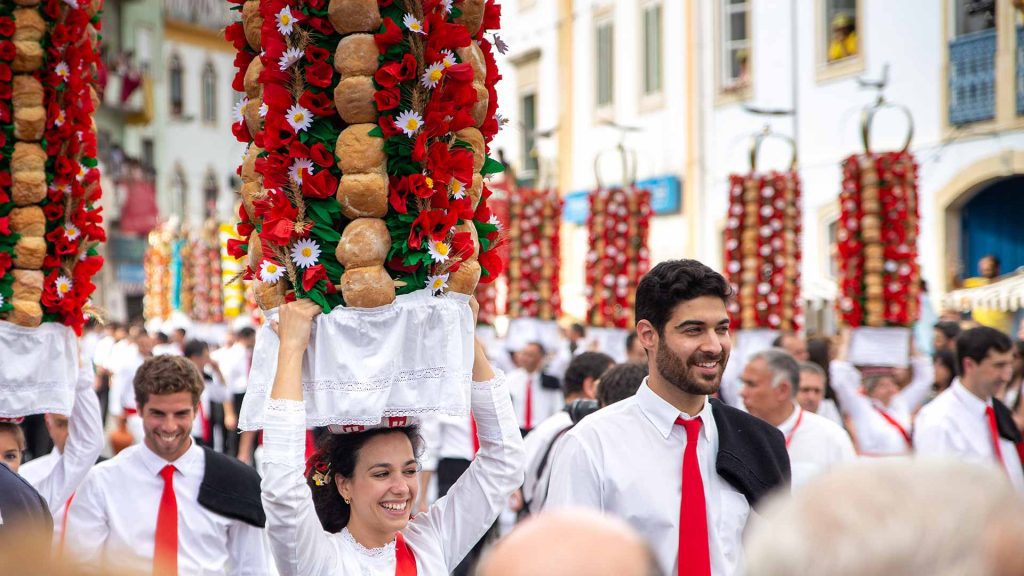
Portugal has an amazingly rich events calendar. Every village, town and city has something to celebrate at least a few times a year – though none throw a party quite like this one. Every four years, the Festa dos Tabuleiros takes over the Central Portuguese city of Tomar. It’s a colourful, physical feat where you’ll see 700+ women marching by with 1.5-metre-high, 16kg (35lb) bread-and-flower crowns atop their heads. The parade runs for 5km (3 miles), and the next event will be in July 2027.
I’ve been twice, and you can read my recap here.
Walk into a vertical lava tube
Where: Algar do Carvão, Terceira Island
How often do you get to stand within a vertical lava tube? This one you can reach on foot thanks to a small man-made tunnel carved through the magma rock. It’s located on Terceira Island, one of the largest in the Azores archipelago, which is super easy to fly to.
Within the lava tubes, you can view multiple vaults and admire a rainwater lake that appears at the bottom – it’s sometimes 15m (49ft) deep, and other times dried up.
Note: The lava tube visitor centre is currently under renovation and is expected to reopen in June 2026.
Read next… 3-day Terceira Island itinerary
Discover the studio of Portugal’s pioneer of photography
Where: The studio of Carlos Relvas, Golegã, Ribatejo

Portugal’s history books are filled with stories of kings, queens, conquests and castles, but one story I wish more people knew about is that of Carlos Relvas. Born into a wealthy family, he was an inventor and a sportsman who took to photography not long after its invention.
After being invited to join the French Society of Photography, Relvas built a unique glasshouse-like photography studio in the gardens of the palace where he was born and grew up in Golegã. The multi-storey studio was finished in 1875 using some 33 tonnes of iron to hold up the massive amount of glass windows, where curtains allowed him to play with light and shadow. I’ve never seen a house like it.
Relvas was clearly a curious, quirky and busy guy. He took portraits, self-portraits and travelled the country documenting national monuments. Besides having a natural talent for photography, he also invented a special life-saving boat that won awards, and he was a master in the bull ring.
Visit it: For a small fee staff will take you on a guided tour of the incredible Casa-Estúdio and share his story.
Float in ancient salt pans
Where: SPA Salino, Castro Marim, Algarve
The most unusual place to swim in Portugal must be the salt pans of Castro Marim. Here, close to the village’s 13th-century castle, you can take a dip in the mineral-rich salty waters at SPA Salino Agua Mãe.
I was super excited for this one-of-a-kind swim, but overall I found the super salty water to be a little too intense for me! It stings! Others were very happy floating around in the open air beneath the sunshine, rubbing mud on themselves and taking their time. It’s a great set-up with lounge chairs set along the perimeter, and you can also buy salt harvested there.
Read next… Itinerary: My ideal 7-day Algarve road trip
Make and paint a Moorish-style tile
Where: Estúdio Lazúli, Sintra
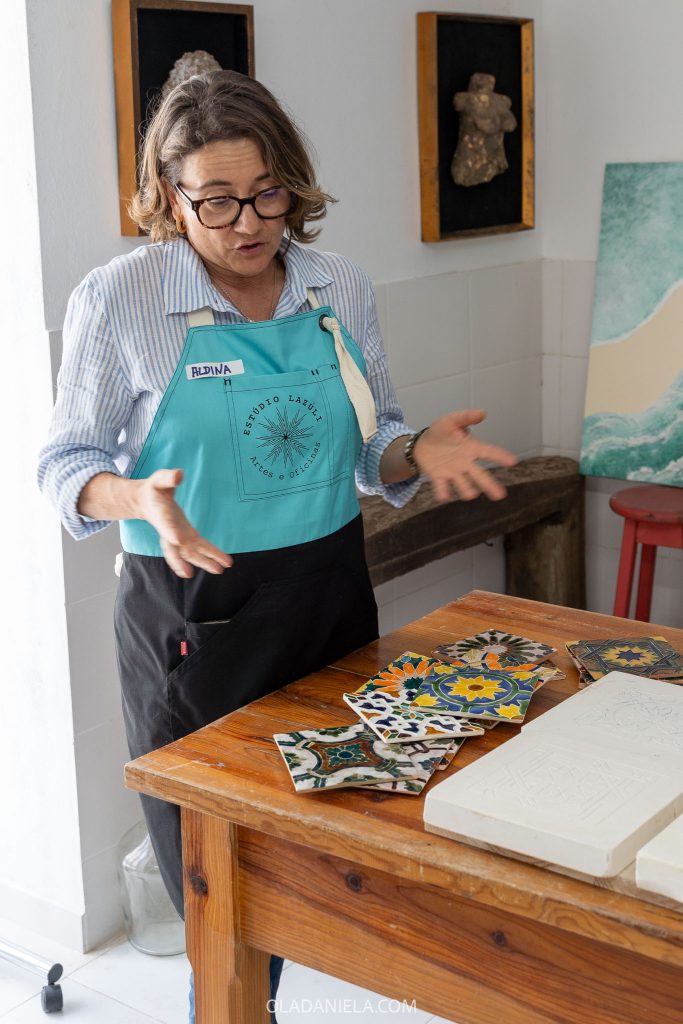
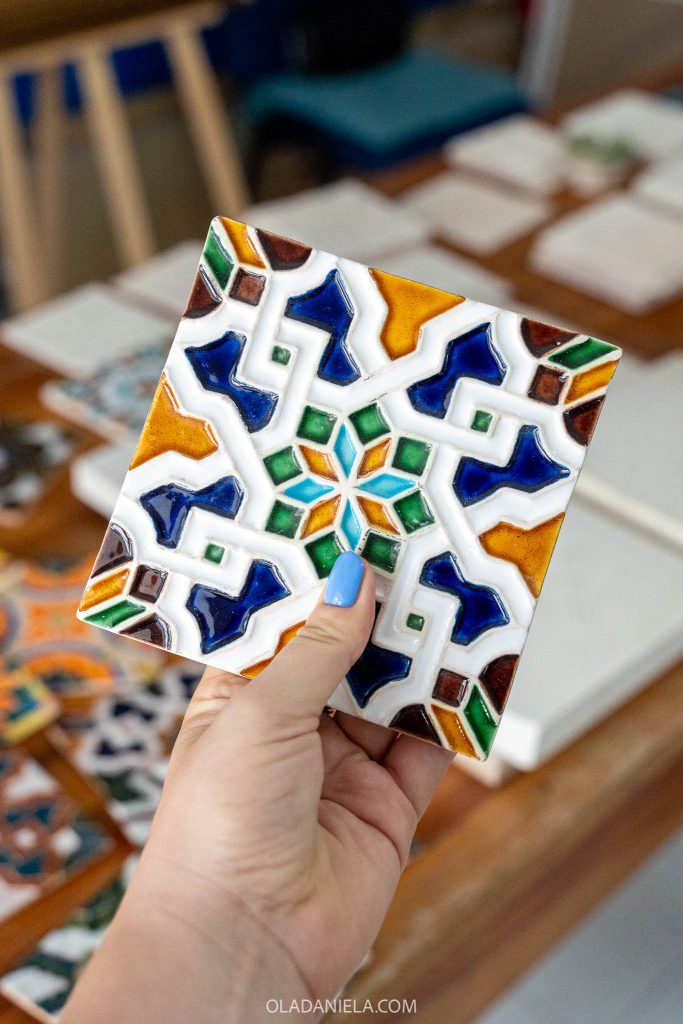
Painting your own tile is a popular thing to do in Portugal these days, but this is the only class I know of that focuses on Hispanic-Moorish techniques. Every other class I’ve seen is focused on the flat, majolica technique.
Located close to Sintra’s train station, what’s fun about this class is that in the studio you’ll start by actually making a tile with clay and a special 3D mould of your choice. After, you’ll get to paint a pre-dried tile. I’ve done the workshop, and you can read my experience then book the class here.
➡️ Book this tile-painting workshop
When the 13th is a Friday, this village throws a party
Where: Sexta 13 ‘Noite das Bruxas”, Montealegre, Trás-os-Montes
Known as the Noite das Bruxas or Witches’ Night, every time the 13th day of the month falls on a Friday, the northern Portuguese town of Montealegre hosts a festival linked to superstitions, mysticism and oral traditions of the land.
It seems to have a bit of a Halloween feel, with thousands attending and people dressing up as witches, wizards, devils, werewolves and mythical creatures. There are usually a few stages with entertainment, and you’ll want to book your hotel early.
Visit a fluffy Miranda donkey sanctuary
Where: AEPGA, Miranda do Douro, Trás-os-Montes

I’m rather obsessed with donkeys, and a visit to this non-profit project in Miranda do Douro only deepened that. The AEPGA sanctuary is dedicated to the preservation of the burro de Miranda, a super fluffy, very pretty brown donkey from this region. Donkeys live a really long time, so the sanctuary often takes these little beasts of burden from older citizens who can no longer care for them and provides veterinary services for villagers in need.
On this visit, we got to see donkey foals, learnt about their behaviours (they’re not stubborn, they’re independent thinkers!), discovered how to hug a donkey, and learnt that they love ear scratches.
Drink at a gin theme park…with donkeys
Where: Vila do Gin, Alentejo


“What a gimmick,” I thought. “A gin theme park!? In the middle of the countryside? How odd.” But Black Pig has built a small paradise, an oasis between cork trees. Vila do Gin is actually really cool and worth a detour. Enter to find a sort of Garden of Eden with plenty of shady seating, a faux river feature, and multiple bars where you can order a gin and tonic to try the locally made spirit.
While it would have been nice to kick back on deck chairs, admiring the countryside and enjoying the music, I’d heard the attached animal sanctuary had a number of donkeys… and so five minutes later, I was there looking at miniature pigs and patting two types of Portuguese donkey while sipping on a craft G&T. Heaven? Found.
Step into Porto’s Bank of Materials, a mini museum of historic building supplies
Where: Bank of Materials, Porto
Walk around Porto, and you’ll see the riches of the 19th century when it was fashionable (and practical) to adorn your house with hand-painted tiles. Now, azulejos are part of the city’s heritage, but they are under threat. Original tiles get lost as buildings are neglected or thieves steal them. (Side note: never, ever buy old tiles from flea markets.)
That’s where the Banco de Materiais, or Bank of Materials, comes in. Housed within the Palace of the Viscounts of Balsemão, this small space allows building owners to request, free of charge, some of the thousands of salvaged tiles and other historic building materials in order to restore their façades and renovation projects.
The idea is for the tiles to eventually return to the streets, where they belong. In the meantime, you can see a range of tile designs from the 17th to 20th century, all specific to Porto, in one place for free. Just pop in to wander the aisles and see what’s in stock.
Chase the devil to the weird, wild side of Carnival
Where: Podence (Trás-os-Montes), Lazarim (Douro Valley), Gois (Schist Villages) and more.

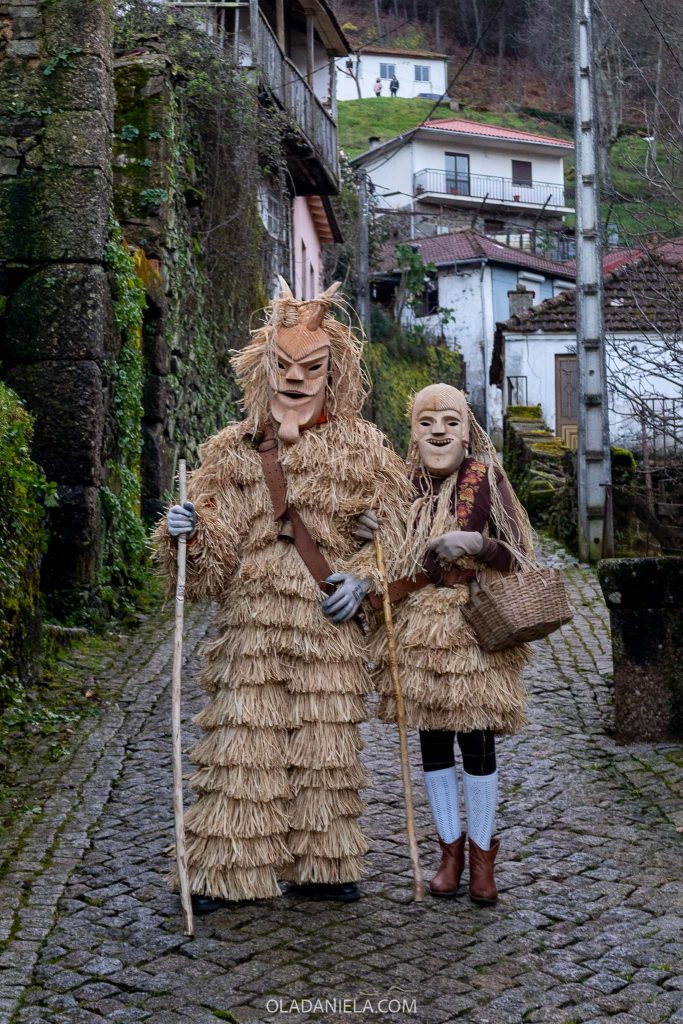
Portugal’s Carnival season isn’t all glitter and mega floats. A handful of villages across the north and centre of Portugal still celebrate some of Europe’s oldest and wildest pre-Lenten traditions. These rural Entrudo celebrations marked winter’s end with masks, fire, feasting and folklore rooted in pagan fertility rites. In places like Podence and Lazarim, costumed caretos – mischievous figures in wool and wood or metal masks – race through cobbled streets, rattle cowbells and mock societal norms. There are mock marriages, bonfires and plenty of wine wherever you choose to go.
Meet Portugal’s last cowbell makers
Where: Chocalhos Pardalinho, Alcáçovas, Alentejo
The gentle sound of cowbells still echoes across the plains of the Alentejo. I recently learnt this seemingly simple sound originates from a surprisingly complex craft – one tradition that’s deeply rooted in the village of Alcáçovas, near Évora.
These days, Chocalhos Pardalinho are among the last makers of cowbells. When I visited the workshop, I had low expectations – just a sheet of metal, right? – but the process of making, crafting and tuning these artisanal bells is an artform. The final stage is critical to make sure each bell produces a strong, lingering, and pleasant sound that will travel far across the fields. Email ahead or call to organise a visit to the workshop.
Explore Portugal’s rock village, Monsanto
Where: Monsanto, central border with Spain

Monsanto is a small medieval village that needs to be seen to be believed. Set on a mountain close to the border with Spain and near the famous Serra de Estrela mountain, the villagers of Monsanto have sandwiched their small stone homes between and around gigantic boulders. These boulders form parts of walls, floors and even the roof.
Wander through the village towards the massive castle, and you might recognise a few scenes from the Game of Thrones spin-off, House of the Dragon.
Read next… Guide to Monsanto, Portugal’s magical rock village
Fly down a mountain in a wicker basket
Where: Monte, Funchal, Madeira Island
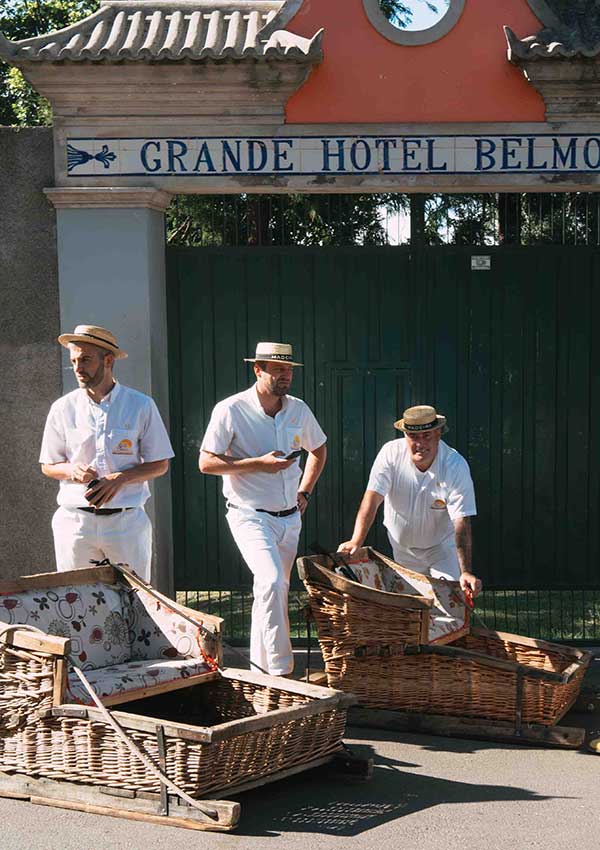

Madeira Island is a hilly place, and in the mid 19th-century locals wanted a faster way to travel from the verdant area of Monte, in the hills, down to Funchal city. The obvious solution: build a wicket basket sled and get yourself strong men to push you down. A few years ago, CNN called it the “world’s coolest commute”.
Today it’s mostly for tourists who line up to have two carreiros dressed in white with a cute straw boater hat and thick rubber-soled boots steer them down the 2km (1 mile) route. While it’s one of the most popular things to do on Madeira Island, it’s also really unique, so I’m including it in this off-beat list.
Visit a remote castle older than Portugal in Castro Laboreiro
Where: Castro Laboreiro, Peneda-Gerês National Park, North Portugal

I was blown away by the beauty of the oval-shaped Castro Laboreiro Castle. It’s all about the location – built at an altitude of 1,033 metres, you leave the town and scramble up through the precarious “traitor’s gate” to find yourself on top of the world, standing at the very border of Spain.
This expansive castle is actually older than the country of Portugal. It was reconquered by King Alfonso I, then almost destroyed by the King of León’s troops in 1212. The castle was rebuilt in 1290 in Gothic style. The walk from town up to the castle takes about 20 minutes.
Drink at the world’s largest gin library (on an island, no less)
Where: The Gin Library, Solar Branco, São Miguel Island, Azores
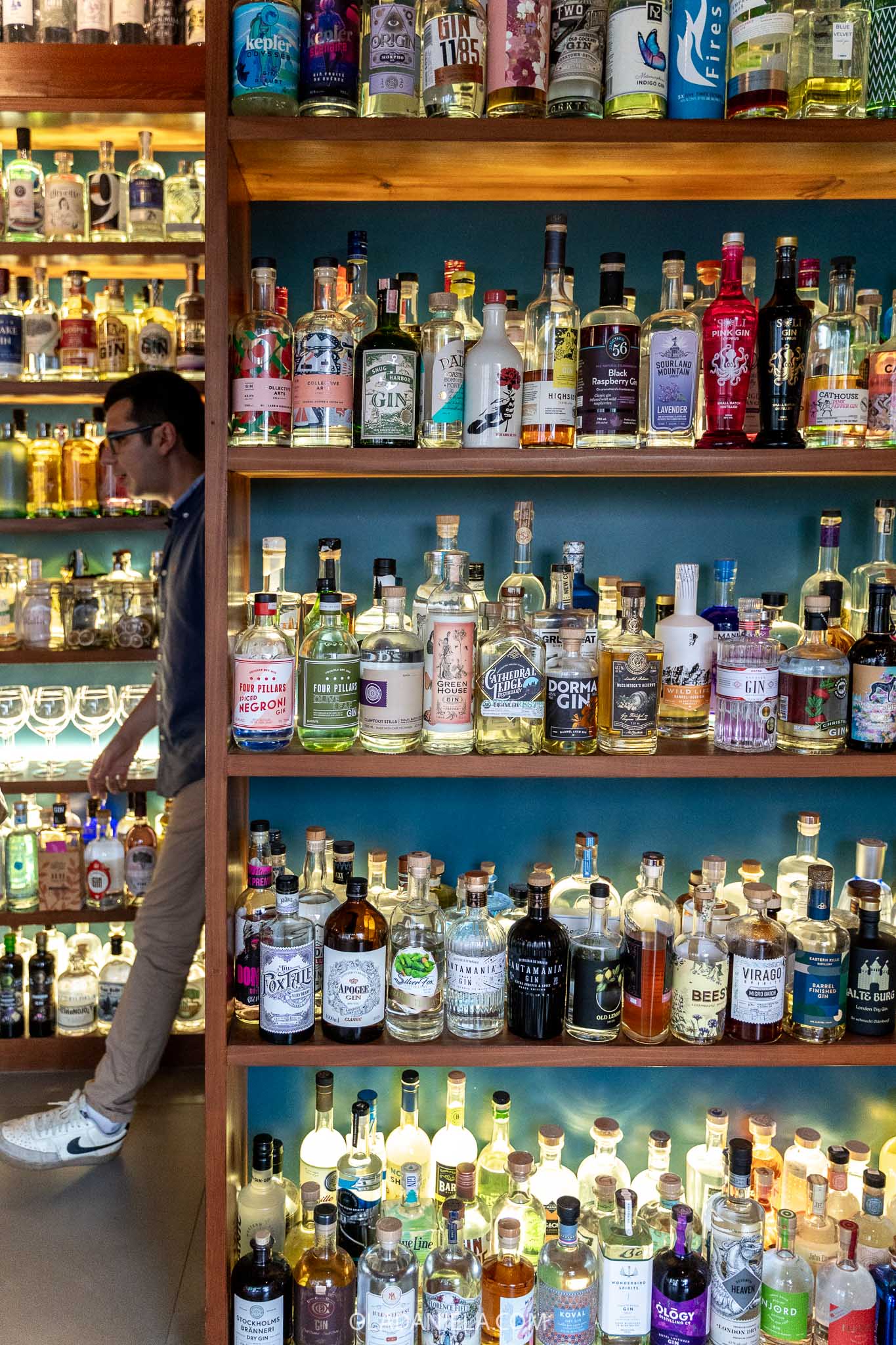
If I were to be stranded on an island, let it be São Miguel in the Azores, where at least I’d have the comfort of hot springs and the world’s largest gin collection. The Gin Library counts more than 2,200 bottles in its ever-growing collection, and you can drop by for a G&T and to cuddle the resident rescue cats.
Gin lover? Stay at Solar Branco, the gorgeous estate that’s home to The Gin Library.
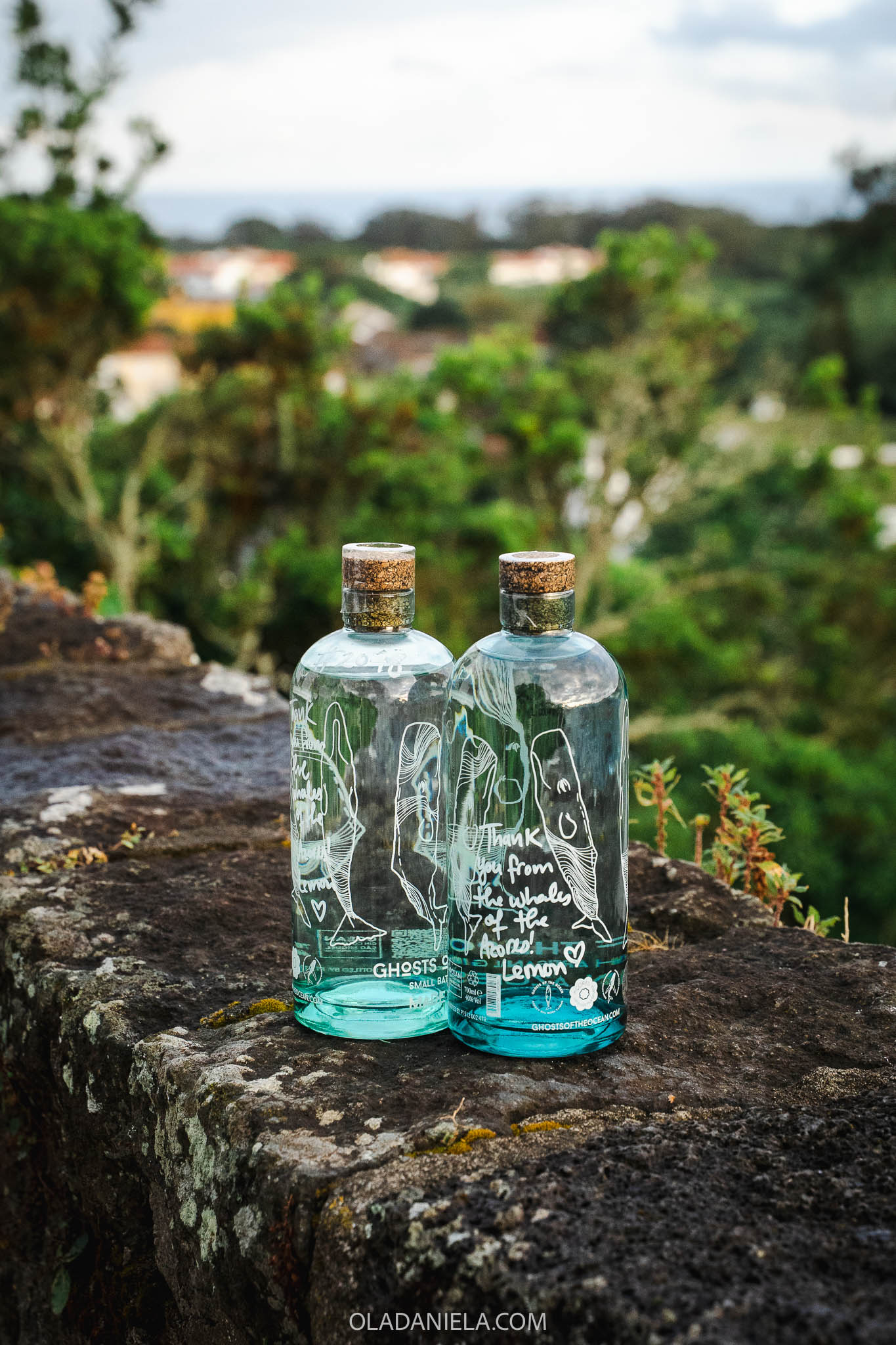
Get free gin: Better yet, The Gin Library has its own gin label called Ghosts of the Ocean that supports ocean conservation. You can get a free bottle if you bring a gin bottle that’s not yet part of their collection – there’s a PDF cataloguing what they already have. My friend brought a cool gin from Tasmania in Australia, and the staff got so excited!
Read next… 4-day itinerary for São Miguel Island, Azores
Kayak into the crater of an ancient submerged volcano
Where: Islet of Vila Franca do Campo, São Miguel, Azores
While we’re talking about São Miguel, let’s touch on another unusual experience there. The crater of an ancient submerged volcano lies just 1km (0.6 mile) from the coastal town of Vila Franca do Campo. You can join a kayaking tour and paddle out to this mini island paradise, a classified Nature Reserve with endemic vegetation. At the centre lies an almost perfect circular lake that you can paddle into via a narrow channel.
➡️ Tip: Book the kayak journey here, or between June and October, there is also a boat service.
Step inside a historic tinned fish factory
Where: Conservas Pinhais, Matosinhos, Porto
Close to Porto, the seaside area of Matosinhos welcomed Portugal’s first fish canning factory in 1853. Dozens more opened there and across the country, flourishing during the world wars and supporting Portugal’s economy. While many have since folded, there has been a bit of a renaissance of some historic tinned fish brands – and Pinhais is one of them.
Now you can explore centuries-old traditions of fish preservation first-hand when you visit the still-working Conservas Pinhais factory in Matosinhos. Here, everything is still done the artisanal, old-fashioned way – so it’s best to visit during the week when people are hard at work preparing the tins.
Two libraries where bats are part of the staff
Where: Joanina Library at the University of Coimbra; and Mafra Palace Library.
There are no bookworms to be found in two 18th-century libraries in Portugal – thanks to the resident bats who have called the bibliotecas home for centuries. It might seem a little bit bizarre, but the colonies are welcomed into these historic libraries where their job is to devour insects and critters before they touch the ancient manuscripts within.
The beautiful Joanina Library at the University of Coimbra relies on a colony of Common pipistrelle bats to protect the highly valuable books, some of which date back to the 15th century. And the Mafra Palace Library is home to grey long-eared bats and serotine bats. The bats only emerge after dark, so there’s little chance you’ll see them – but it’s well worth visiting both these incredible libraries.
Hug the largest cork oak in the world
Where: Sobreiro Monumental, near Palmela, south of Lisbon
Portugal is the world’s largest exporter of cork, so it’s no surprise that the largest cork oak resides here. The Sobreiro Monumental (or Monumental Cork Oak) is thought to be more than 240 years old, and you can find it in Águas de Moura near Palmela, about a 50-minute drive south of the capital, Lisbon.
This tree was planted sometime in 1783 or 1784. Cork trees are harvested for their bark every nine years, and in 1991, this tree provided more than 1,200kg (2,646 lb) of cork – enough for 100,000+ cork stoppers. The Guinness Book of Records has the 16.2m (53 ft) tall tree registered, and it won European Tree of the Year in 2018.
Learn how Queijo de Azeitão is made at a cheese factory
Where: Queijaria Simões, Quinta do Anjo, Palmela, south of Lisbon
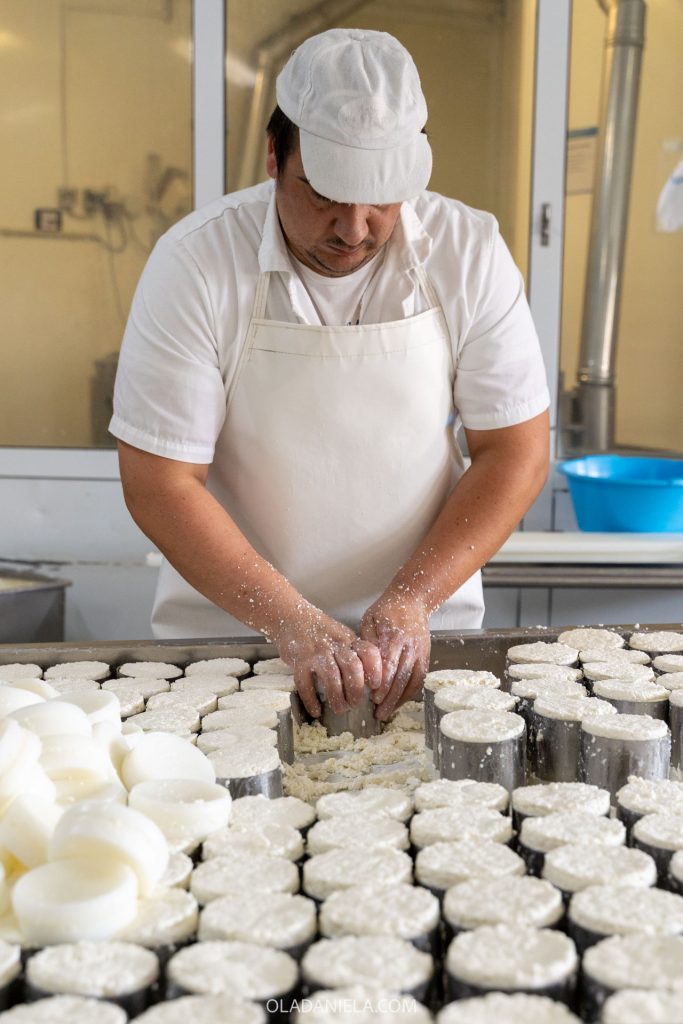
Portugal has two gooey sheep’s cheeses that you can cut the top off and eat with a spoon. The most famous is the large wheels of Queijo Serra da Estrela DOP from continental Portugal’s highest mountain. The second is Queijo de Azeitão DOP, smaller, more manageable wheels from just south of Lisbon.
One of the best producers is Queijaria Simões, where, if you email ahead, you can visit the factory to learn about the daily cheese production (in English or Portuguese) of this small family-run cheese factory. At the end of your visit, you’ll get to taste the five or so cheeses produced on-site, along with wine (even though it’s 10am).
Tip: Near here, I also love to visit Azulejos do Azeitão, a family-fun tile factory. Here, they physically make and hand-paint every tile, and it’s a wonderful artform to discover. No need to book, the owner will happily show you around – or you can email ahead to organise a tile-painting workshop.
Get up close with the endangered Iberian wolf
Where: Centro de Recuperação do Lobo Ibérico, Mafra, north of Lisbon
It’s thought there are just 2,000 wolves left in the Iberian Peninsula, and only 300 in Portugal. In the wild, you’ll find them in the deep north around Peneda-Gerês National Park, but closer to Lisbon, the Iberian Wolf Recovery Centre opened in 1987 with 18 hectares of land. It takes in wolves that can no longer live in the wild, and you can observe them from observation towers at various points.
Check it is open – at last check (March 2026), the centre is currently closed to visitors.
Tip: Nearby, the Tapada da Mafra –the former hunting grounds of the nearby palace – has several nice trails you can walk around. Within, you’ll likely see plenty of deer and even wild boar.
Visit a museum of vintage matchboxes
Where: Museu dos Fosforos, Tomar, Central Portugal
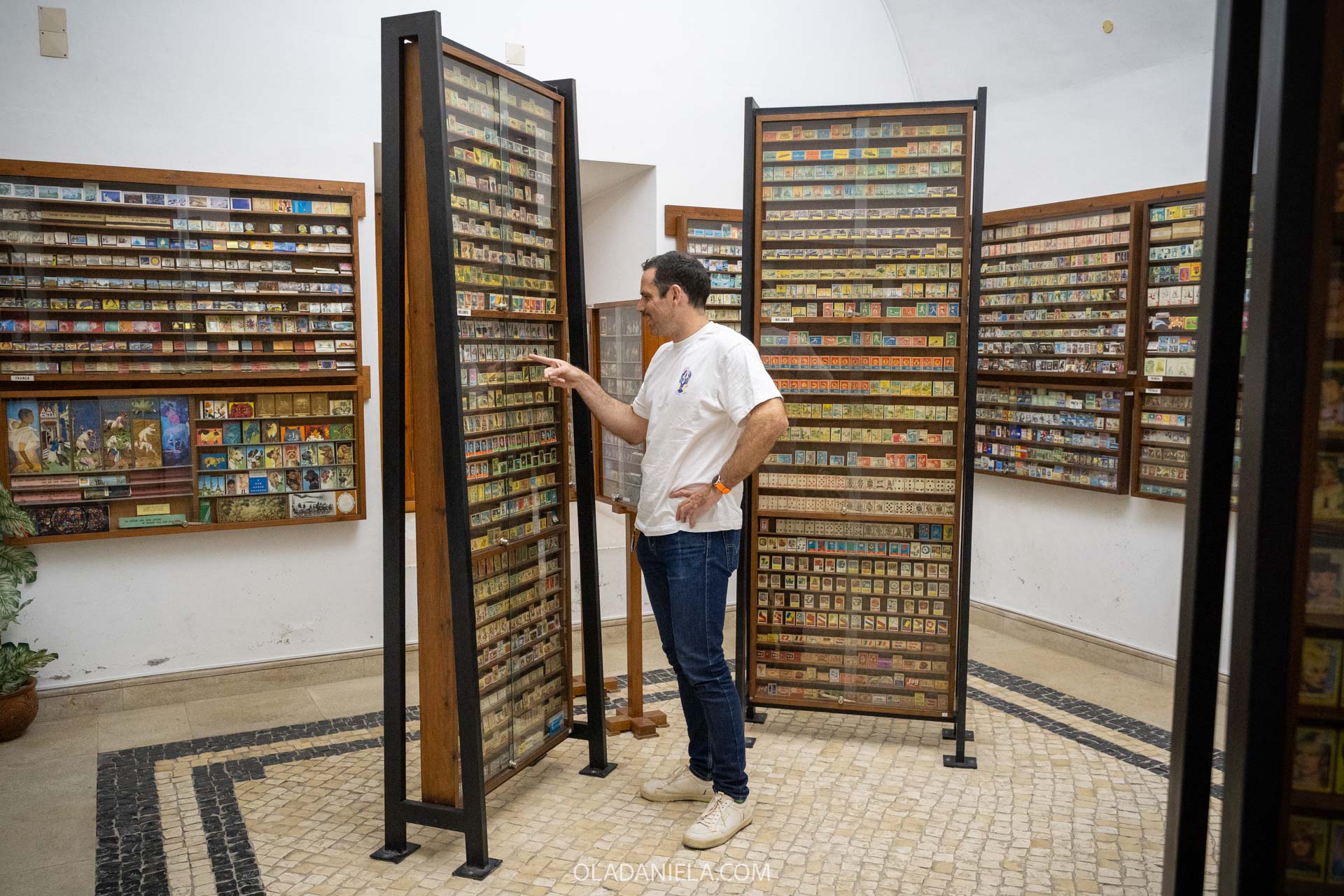
In 1953, aboard a boat to London (to attend the coronation ceremony of Queen Elizabeth II, no less), Senhor Aquiles da Mota Lima met an American woman who collected matchboxes. He promised to send her some from his travels – but he bought two while in London, keeping one for himself – and thus began his own collection.
Fast forward to 1980, and his collection of more than 60,000 matchboxes, match labels and matchbooks was donated to the city of Tomar. Since 1989, you’ve been able to view his collection at the Saint Francis Convent set across seven rooms at the Museu dos Fosforos.
Shop for locally made ceramics at outlet stores
Where: Across Portugal – find an outlet here
Portugal has a long love affair with ceramics – from small workshops to big factories. These days, it’s somewhat easy to find ceramic factory outlets stacked high with surplus stock, discontinued lines and perfectly imperfect “seconds” that would otherwise have been destined for big-name brands abroad. I really love the stores that sell pottery by weight – known locally as cerâmica ao quilo or loiça ao peso – where you buy plates, bowls and mugs like apples at a supermarket – for just a few euros per kilo.
Drink talha (amphora) wine like the Romans did
Where: Vila das Frade, Alentejo, Portugal

Seek out vinho de talha in Portugal’s sun-drenched Alentejo region. This ancient winemaking method, introduced to the Iberian Peninsula over 2,000 years ago, sees grapes ferment in large clay amphorae known as talhas. The juice macerates naturally with skins and stems. While the tradition almost died out, the natural wine movement and some curious winemakers have been experimenting with this artform. Each autumn, around magusto (November 11), villages like Vila das Frades have a party and taste the new season wines.
Boat out to a 12th-century castle on a river island
Where: Constância, Ribatejo, Portugal
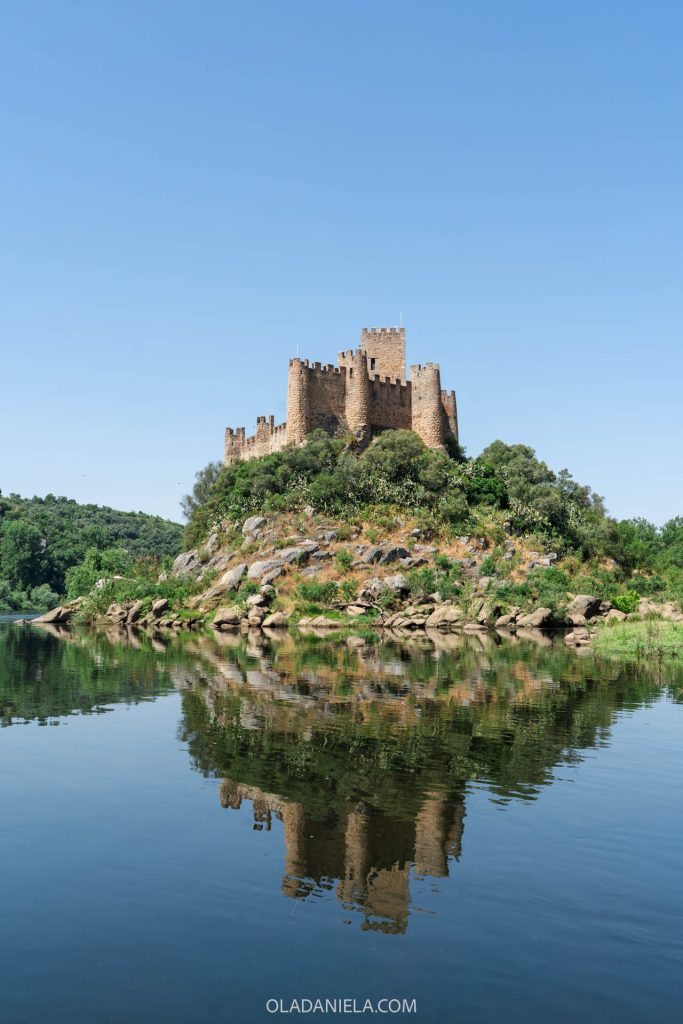
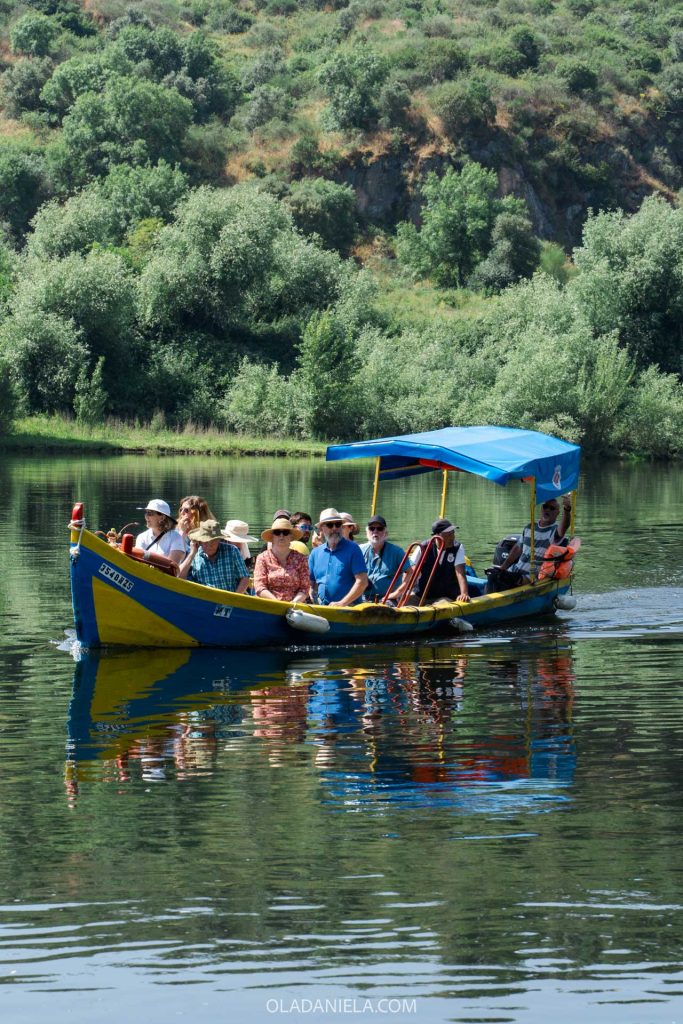
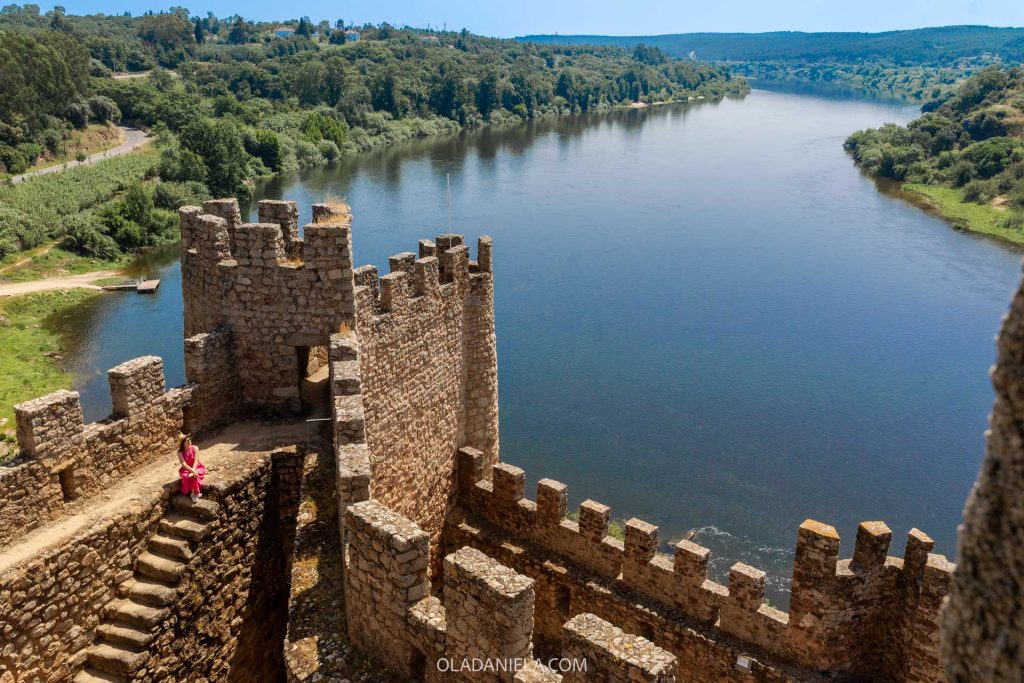
You’ll likely do a double-take when Castelo de Almourol comes into view – this storybook fortress rises dramatically from a tiny island in the middle of the Tagus River. On a perfect day, the stone towers of this former Templar stronghold (believed to date back to before 1129 and later rebuilt in 1171 by the Knights Templar) will reflect on the slow-moving river. Getting to the river island is half the fun – bring cash and hop on a small blue boat to jet across and explore the castle.
After, head to nearby Constância for a cute village stroll and coffee, then head north to Tomar or south to Lisbon.
Read next… Best day trips from Tomar
Watch a parade of smoked sausages on sticks
Where: Aranhas, Penamacor
Every January, the central Portuguese village of Aranhas hosts the Festa das Varas do Fumeiro, where the highlight is a “pole parade”. This celebration of local traditions, knowledge and flavours sees locals carve a route through the village with chouriças, farinheiras andmorcelas (chorizo, flour and blood sausages) tied to wooden poles, led by an accordion band.
Besides the parade, expect a festival with traditional food stalls, folk dancing and concerts. It always falls on the last weekend of January.
Contemplate life and death at a bone chapel
Where: Évora (Alentejo), Campo Maior (Alentejo), Alcantarilha (Algarve) and Faro (Algarve)


“Stop here and think of the fate that will befall you”, reads the inscription above the door of Faro’s bone chapel. It’s a cheery reminder left by the Carmelite monks, highlighting life’s fragility. Portugal has four chapels lined with real human skulls and bones arranged in various patterns. The most famous is the Capela dos Ossos in Évora, but you’ll find similarly macabre spaces at the Capela dos Ossos in Faro and the lesser-known bone chapels in Campo Maior and Alcantarilha. Far from being morbid tourist attractions, these solemn spaces were initially designed for quiet contemplation.
Read next… 20 things to do in Évora, the Alentejo capital
Buy a book or candle at Lisbon’s oldest stores
Where: Chiado, Lisbon
Step into a doorway and back in time when you enter some of Lisbon’s oldest stores. Book lovers should make a beeline for Livraria Bertrand in Chiado, officially recognised as the world’s oldest operating bookstore, open since 1732 and still lined with arched wooden shelves. Though my favourite is just around the corner – Casa das Velas Loreto has been handcrafting candles since 1789, its window glowing with tapers, pillars and intricately moulded wax creations. It’s been run by the same family for seven generations!
Also in Chiado, visit other historic stores including:
- Luvaria Ulisses – a tiny, early-20th-century glove shop specialising in made-to-measure leather gloves.
- Chapelaria Azevedo Rua – selling felt fedoras, straw boaters and tailored headwear since the 19th century.
- Joalharia Ferreira Marques – An ornate jewellery store.
- Paris em Lisboa – a 19th-century linens store and top spot to buy sheets, towels, etc.
- Manteigaria Silva – a gourmet deli dating to 1890, selling cheeses, cured hams, bacalhau and other Portuguese delicacies.
Ride rail bikes in Marvão
Where: Marvão, Alentejo
A disused stretch of railway near the Spanish border has been turned into a pedal-powered experience. Meet at the beautiful Marvão-Beira train station, where, together with a guide, you can cycle along the tracks on specially adapted bike carts that seat two. The scenic path passes through cork oak groves, over bridges, and by the historic villages of Marvão and Castelo de Vide within Serra de São Mamede Natural Park. Extend the fun and sleep at Trainspot, a cute guesthouse within an old station.
Eat a stew cooked in volcanic earth
Where: Furnas, São Miguel Island, Azores

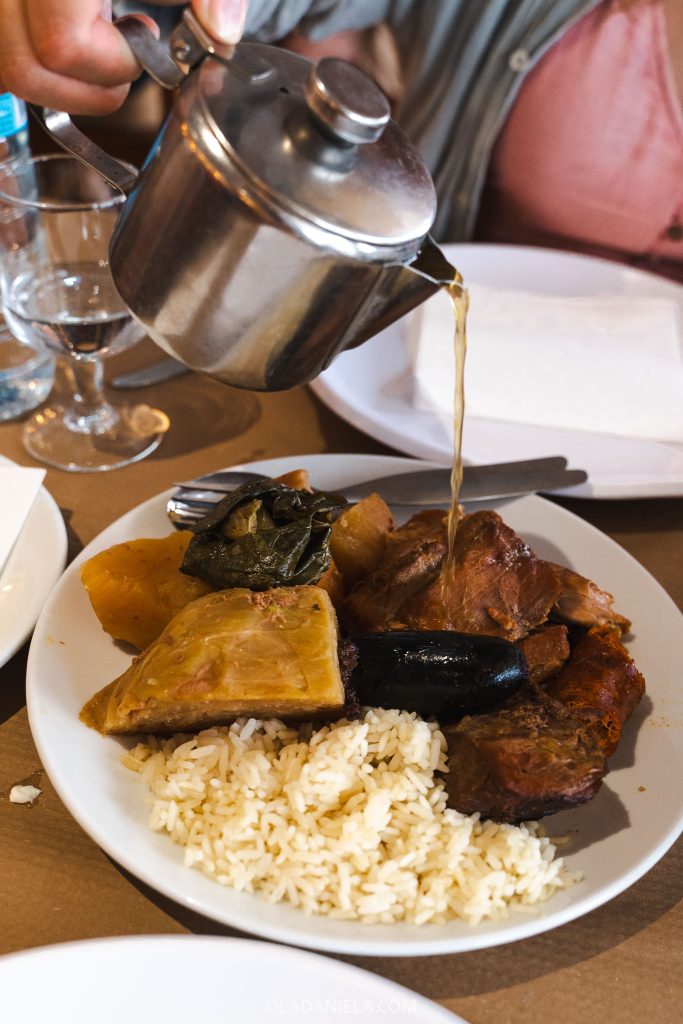
The earth bubbles and steams in Furnas like it’s alive, hissing and heaving with volcanic breath. Naturally, the most obvious thing to do is cook a stew in it. Locals lower heavy pots into volcanic soil near the shores of Lagoa das Furnas, burying them for hours in naturally heated ground to slow-cook cozido das Furnas, the Azorean take on Portugal’s beloved meat-and-veg stew. Expect generous chunks of beef and pork, smoky sausages, cabbage, potatoes and carrots, all gently steamed underground.
If you visit São Miguel Island, you can try it yourself at favourite spots like Tony’s Restaurant – just book a table in advance.
Read next… Where to eat on São Miguel Island, Azores
Listen to Portugal’s other official language
Where: Miranda do Douro, Tras-os-Montes, North

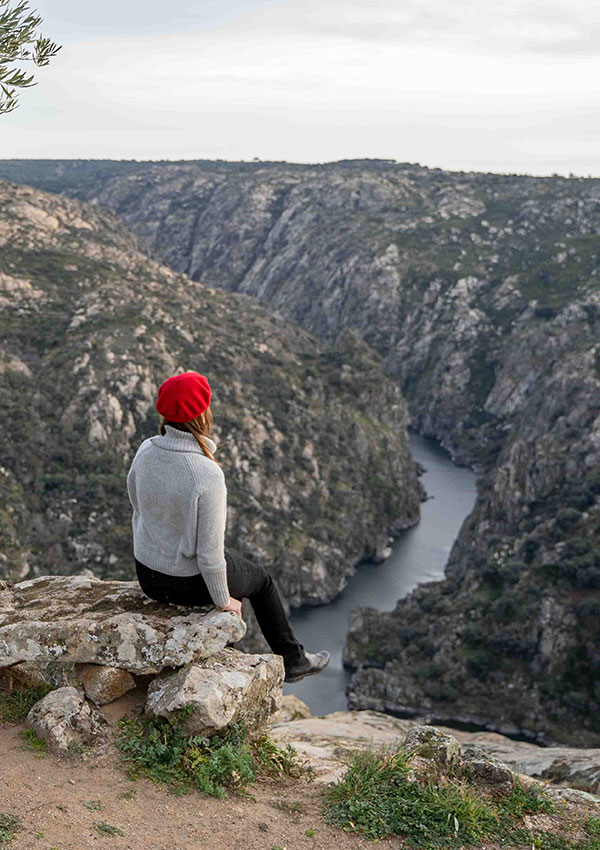
No, it’s not English – despite how widely it’s spoken in downtown Lisbon and Porto. Portugal’s second official language is Mirandês, a centuries-old tongue recognised in 1999 and still spoken in and around Miranda do Douro, near the Spanish border. Rooted in the Astur-Leonese linguistic family, Mirandese has its own spelling, literature and even translations of classic works.
Spend time in this remote corner of Trás-os-Montes, and you might spot bilingual street signs or street art, or see it celebrated during cultural festivals. Today, there are only around 3,500 to 5,000 active, native speakers in the region.
Wander preserved Roman ruins of Conímbriga
Where: Conímbriga, Coimbra, Central Portugal
Just south of Coimbra lies a sprawling archaeological site that was once a thriving Roman town, complete with grand villas, bathhouses, an aqueduct and intricate mosaic floors. At Conímbriga you can trace the outlines of former homes and admire geometric patterns and mythological scenes underfoot – let your imagination bring it to life with merchants, soldiers and families going about their business here. These well-preserved Roman ruins are never crowded!
Tip: Leave enough time to visit the onsite museum and nearby PO.RO.S museum. The town next to Conímbriga, Condeixa-a-Nova, is also famous for its painted ceramics.
Go clam picking in the Algarve
Where: Ria Formosa, Algarve
For a hands-on taste of Algarve life, board a traditional fishing boat and head out into the tranquil estuaries of the Ria Formosa Natural Park for a day of clam picking. With a local fisherman and a marine biologist as your guides, you’ll get to witness and learn how to harvest clams and razor clams from the soft tidal flats. Later, you’ll visit oyster nets and get to sample freshly shucked oysters with a glass of sparkling. I heard that sometimes Nina, the Portuguese water dog, joins the journey too.
See prehistoric rock art in the Douro
Where: Côa Valley, Alto Douro, North
Northeast Portugal is home to one of the largest open-air museums of Paleolithic rock art in the world. But this mega outdoor art gallery, dating back 25,000 years to the Neolithic period and the Iron Age, nearly disappeared. It was a David-and-Goliath battle between an already-in-progress hydroelectric dam and students from the local high school that saved the UNESCO World Heritage site in the 1990s. Now you can visit three sites in the Parque Arqueológico do Vale do Côa on a guided tour to see more than 1,200 rock engravings from Europe’s early people.
Tip: You have to visit the three open sites on a guided tour and if you want to see all three you’ll have to stay overnight nearby. You should also visit the incredible museum.
Honestly, I have so many more cool, unique experiences to share in Portugal but I had to cap this list at 35! Leave more ideas in the comments or let me know if you’ve done any of these experiences…..
Read next…
- 14 mistakes people making when visiting Portugal
- 50+ essential tips (from a local) for your first time in Portugal
- 16 most beautiful villages and small towns in Portugal
- Romaria d’Agonia: The most beautiful traditional festival in Portugal
- 22 most beautiful castles in Portugal
- 24 hours in Viseu, Portugal’s pretty garden city
- What to wear in Portugal – packing list and seasonal guide