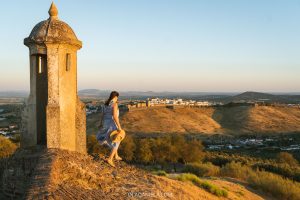
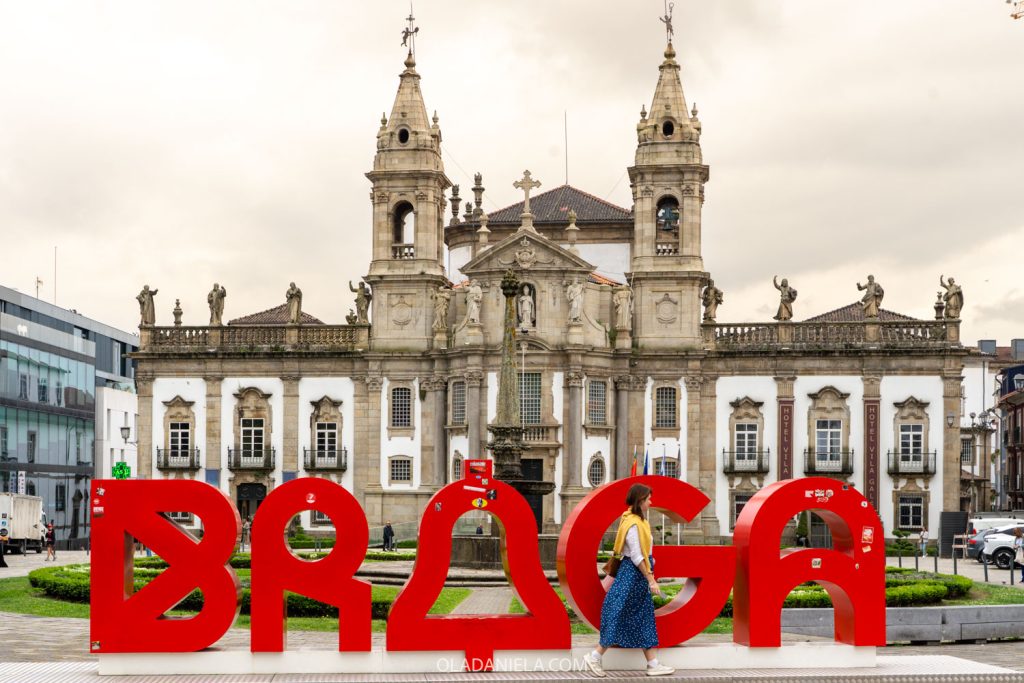
As overtourism has etched away parts of the soul and culture of Lisbon and Porto, Braga remains at its core a traditional Portuguese city. It’s a lively, gorgeous destination with plenty of history, baroque architecture, contemporary culture and hearty cuisine.
Braga’s famous Arco da Porta Nova, one of the historic gates to the city, was built in the 16th-century without any doors. This curiosity left such a mark it spawned its own saying: “Are you from Braga?”, locals will ask if someone leaves the door open.
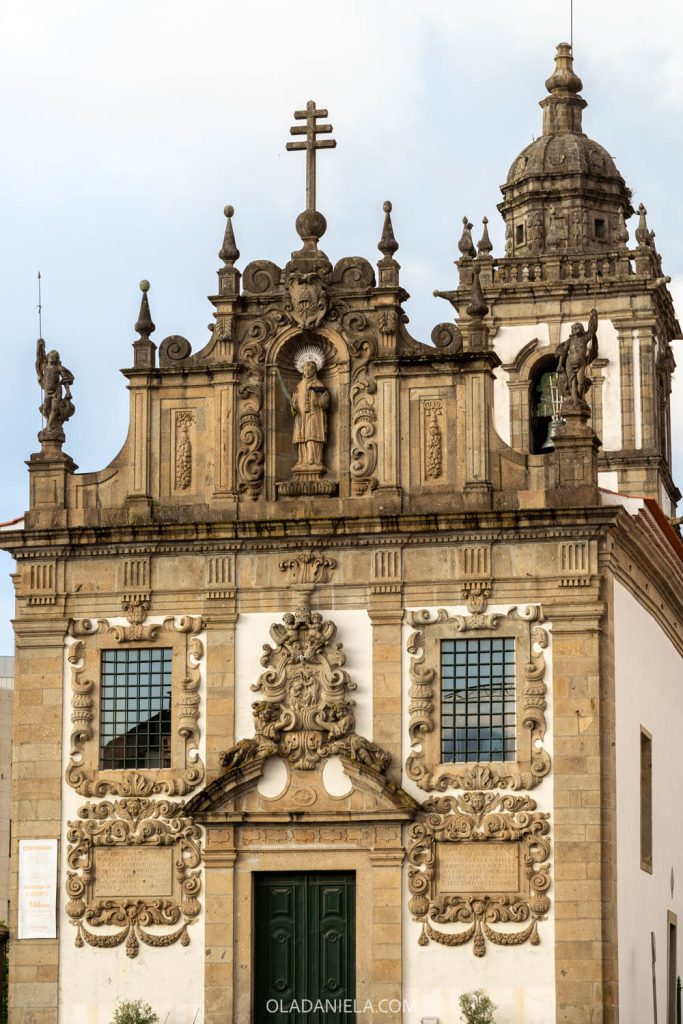
But the story of Portugal’s third largest city stretches back much further. Founded by the Romans as “Bracara Augusta” in 16 BC, Braga has played an important role in the country’s history – some of which you can see in its monuments, which include 82 churches, 2 sanctuaries, 76 chapels and an enormous 11th-century cathedral.
If I had two days or 48 hours in Braga, here’s what I’d do to explore both sides – the old and new, contemporary and ancient – in the capital of the northern Minho region.
I’ve drafted a two-day Braga itinerary for you below – and under that you’ll find a Braga map, hotels guide and even more things to do.
In a hurry? Quick overview of 48 hours in Braga
⭐ Day 1 in Braga ⭐
Morning: Braga’s historic heart – Praça da República, Arco da Porta Nova, Sé de Braga Cathedral. Download this walking tour.
Afternoon: Secret gardens & baroque palaces – Jardim de Santa Bárbara, Palácio dos Biscainhos, Palácio do Raio
⭐ Day 2 in Braga ⭐
Morning: Head to the Braga Municipal Market (Mercado Municipal)
Afternoon: Sanctuary of Bom Jesus do Monte
Evening: Find an event – try Theatro Circo, cutting-edge gnration or artsy Muzeu
⭐ Best Braga hotels⭐
🛏️ Berço de Mordomias (I’ve stayed here!) – gorgeous guesthouse in the Old Town. Ideal for 1-3 days.
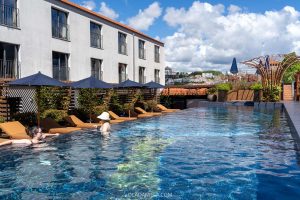
🛏️ INNSiDE by Meliá Braga Centro – 4-star hotel set on the leafy and central Avenida Central park with an infinity pool and sun terrace.
🛏️ Hotel Vila Galé Collection – 16th-century hospital turned 4-star hotel with vaulted stone ceilings, beautiful pools and a central cloister garden.
🛏️ Villa Isobel (I’ve stayed here!) – 15-min drive from Braga – leafy guesthouse with infinity pool, valley views and a 10/10 breakfast. Easy parking. You could relax here a week!
Day 1 in Braga
Morning: Explore Braga’s historic heart
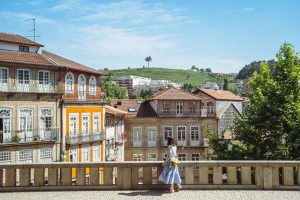
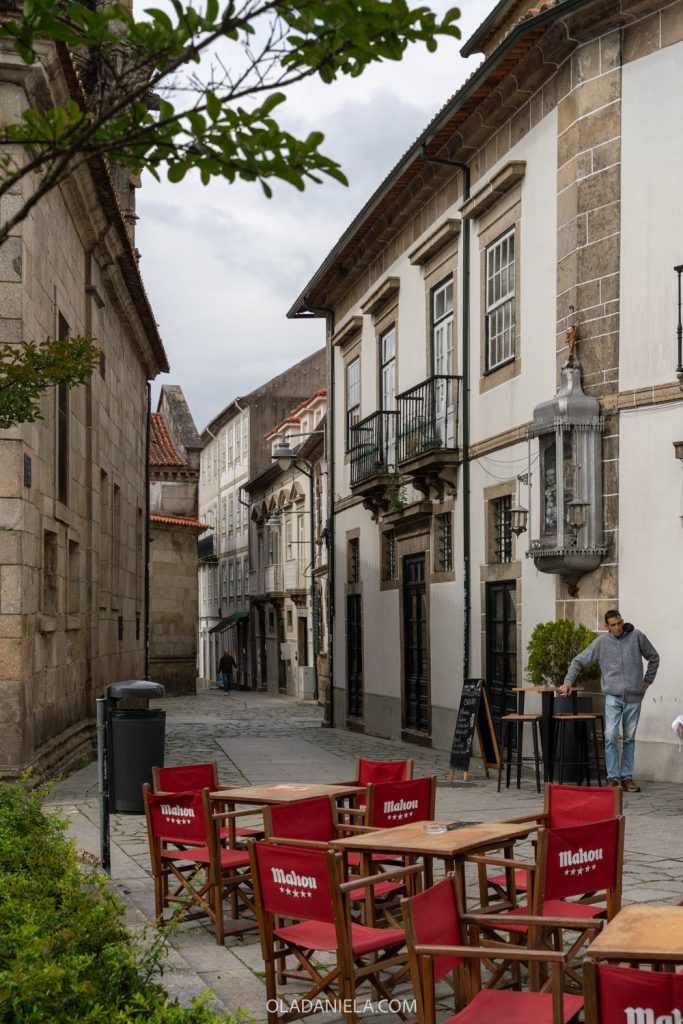
Braga has a compact and flat historic city centre filled with cobblestone streets, churches, and skinny buildings stacked side-by-side. Start your morning in Praça da República, where tables spill out of the historic Café Vianna and Café Astória – the perfect spot for people watching over a bica (espresso). Alternatively, chase down a single origin flat white at Guria! Coffee Spot.
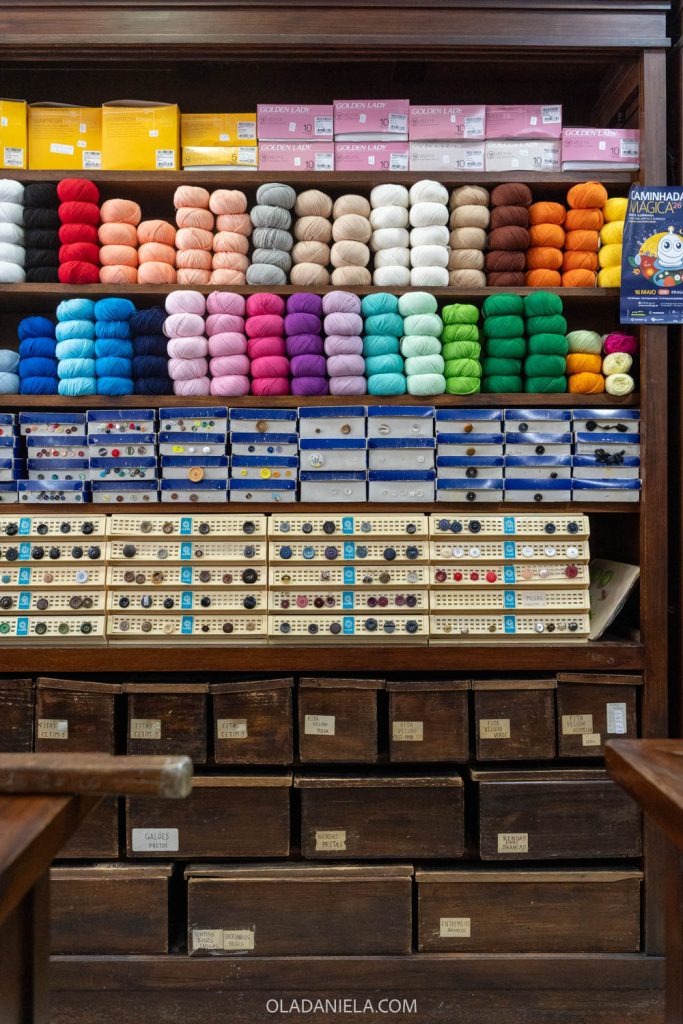
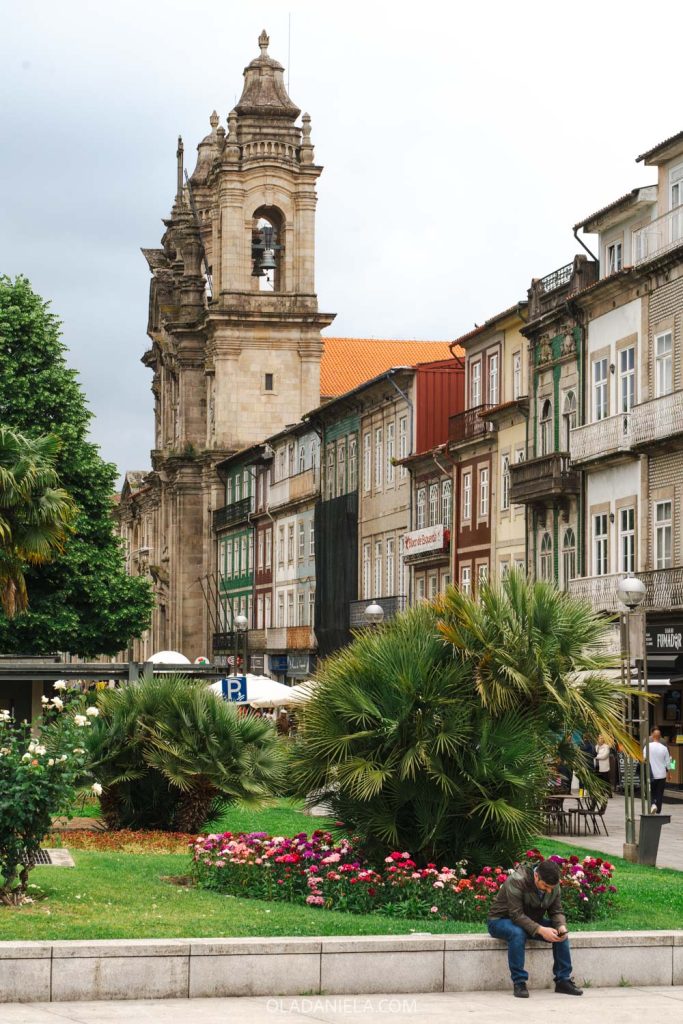
Praça da República is a huge square with fountains and gardens. Along the perimeter you could visit 100° Página Book store, which has a cafe too, or drop into one of the city’s oldest stores – Pereira das Violas – Retrosaria, a haberdashery shop run by the third and fourth generation of the same family.
History fan? Download this top-rated walking tour of Braga and learn as you explore independently, or book this private walking tour.
See the Sé de Braga & Arco da Porta Nova
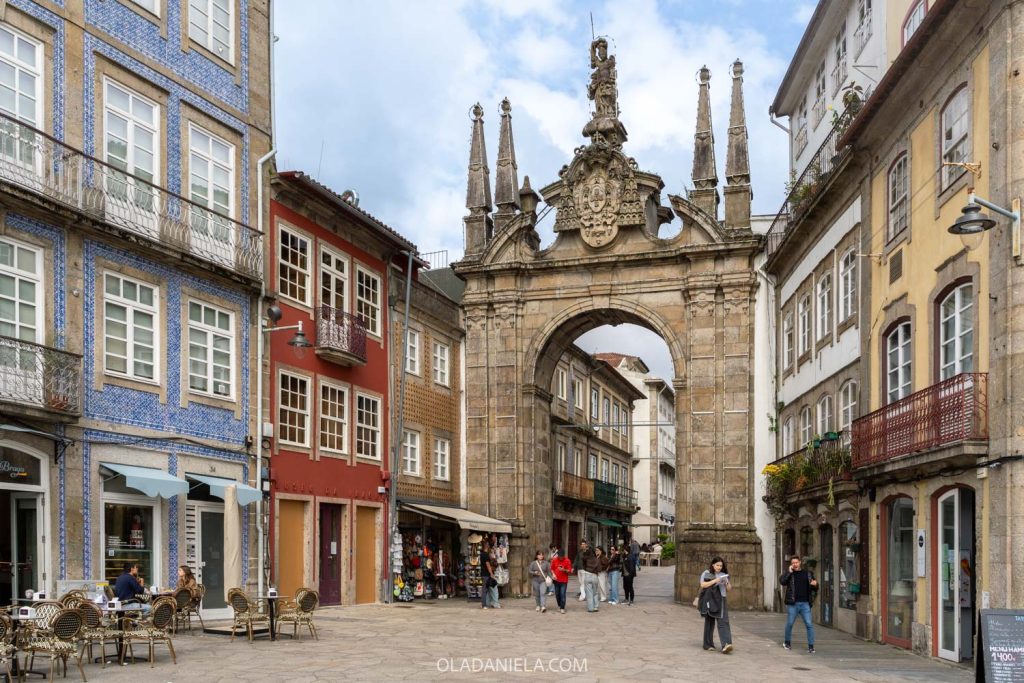
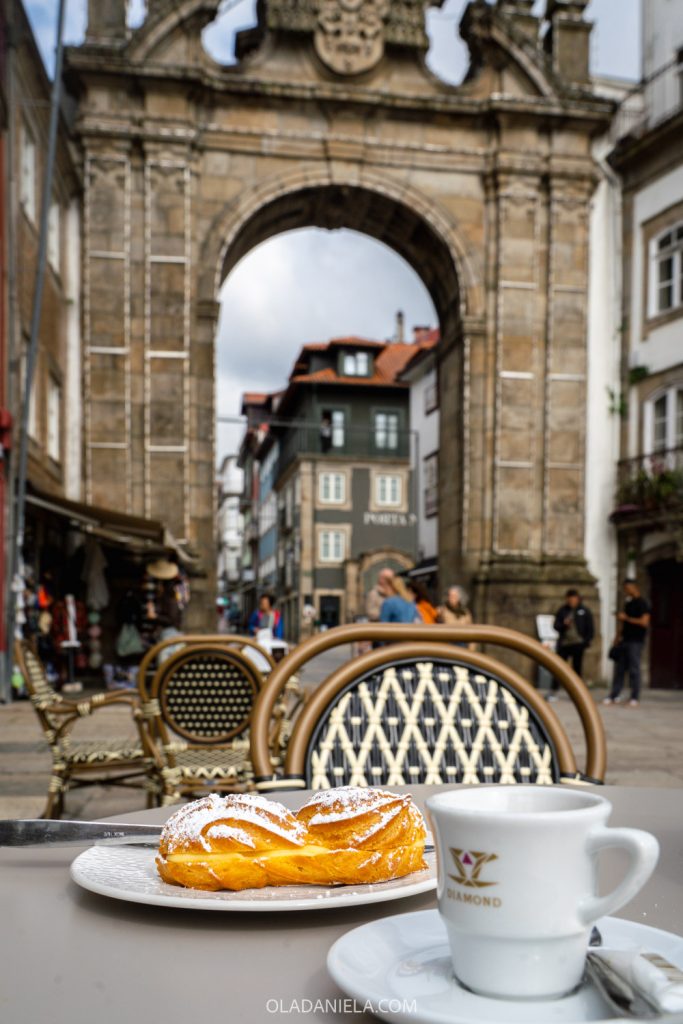
From here, wander down old pedestrian streets towards the Arco da Porta Nova – the city gate behind Portugal’s open door idiom. There’s a great bakery just outside the gate called Tíbias de Braga. Grab a terrace table to admire the gate over a coffee and a tibia. The specialty sweet is like a custard-filled eclair but it’s shaped like a tibia leg bone.
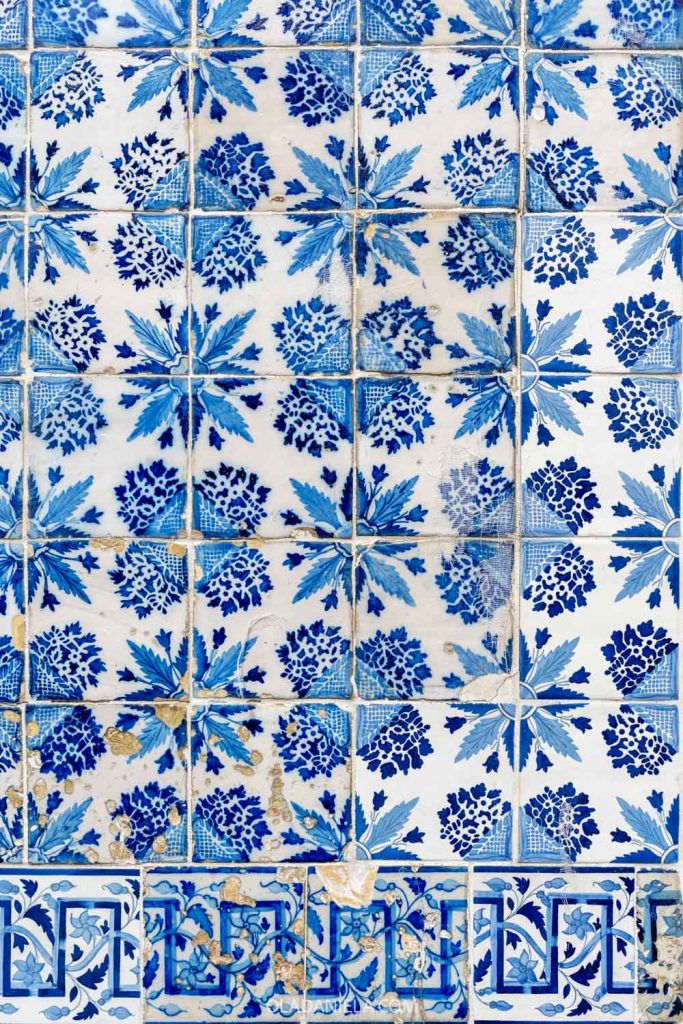
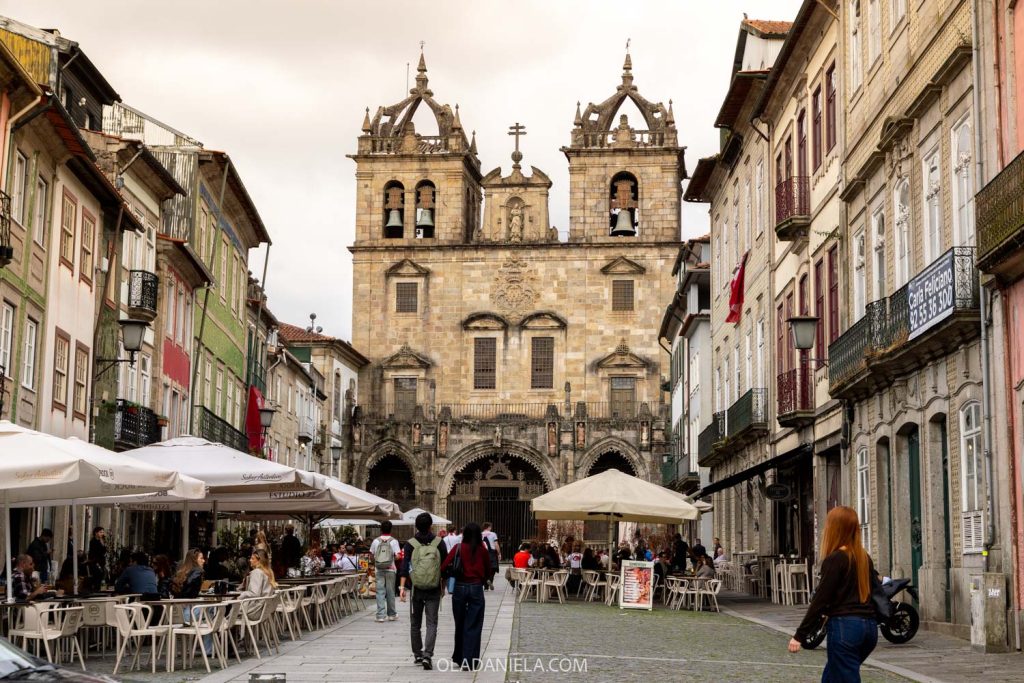
A short stroll away is Braga’s crown jewel – the Sé de Braga. This is the oldest cathedral in Portugal, consecrated in 1089. The building (which predates Portugal’s founding) is a mix of Romanesque, Gothic and Baroque architecture. The royal tombs inside include the parents of Portugal’s first king and you’ll also find massive, ornate twin organs.
Lunch: Dona Petisca or Bira dos Namorados
Afternoon: Secret gardens & baroque palaces
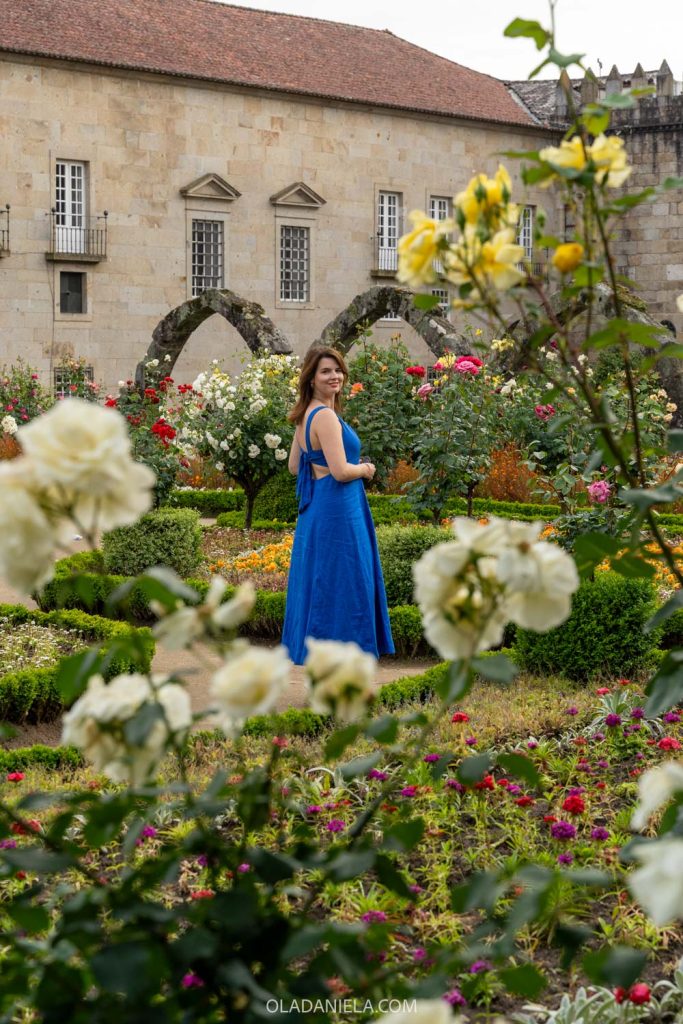
After lunch, swap the streets for gardens or galleries. Find a moment of quiet at the Jardim de Santa Bárbara, a gorgeous, manicured medieval garden that’s usually filled with colourful blooms that pop against the backdrop of the Archbishop’s Palace.
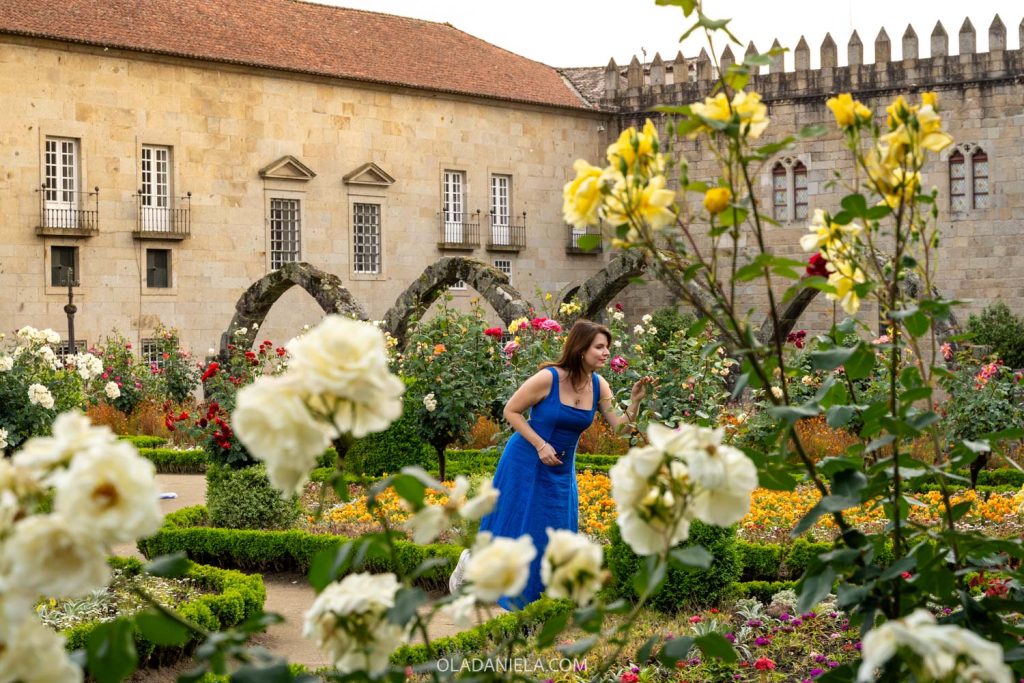
From there, hop into Palácio dos Biscainhos, an 18th-century aristocrat’s mansion turned museum. This palace was my greatest surprise on a recent trip to Braga – step inside about 20 rooms to peek at the opulent lives of Braga’s historic elite. There’s also a huge walled Baroque garden to explore.
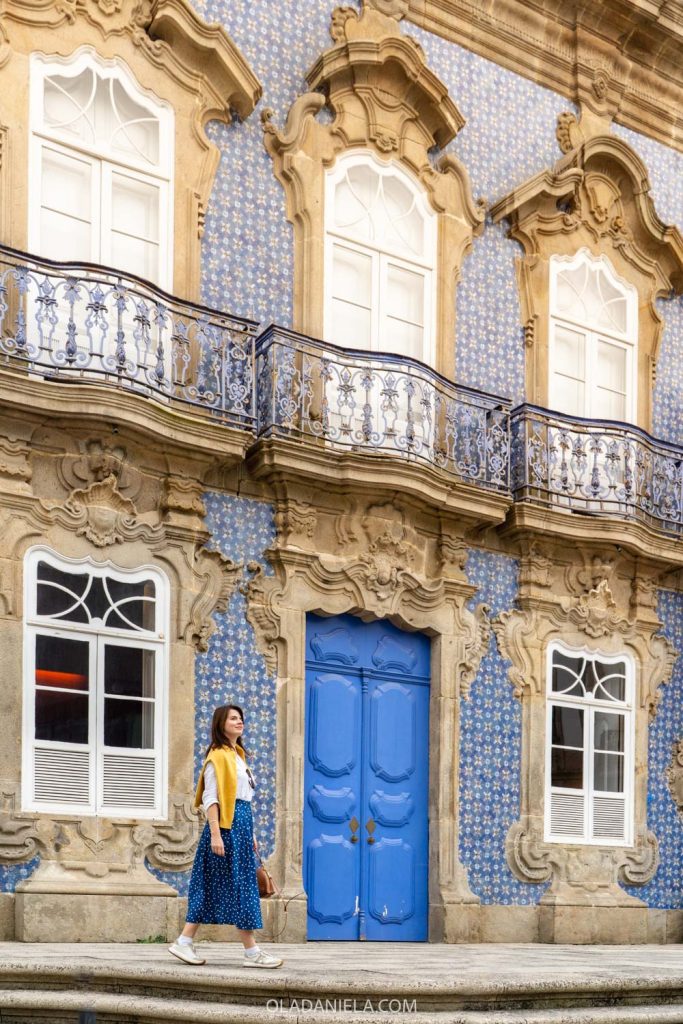
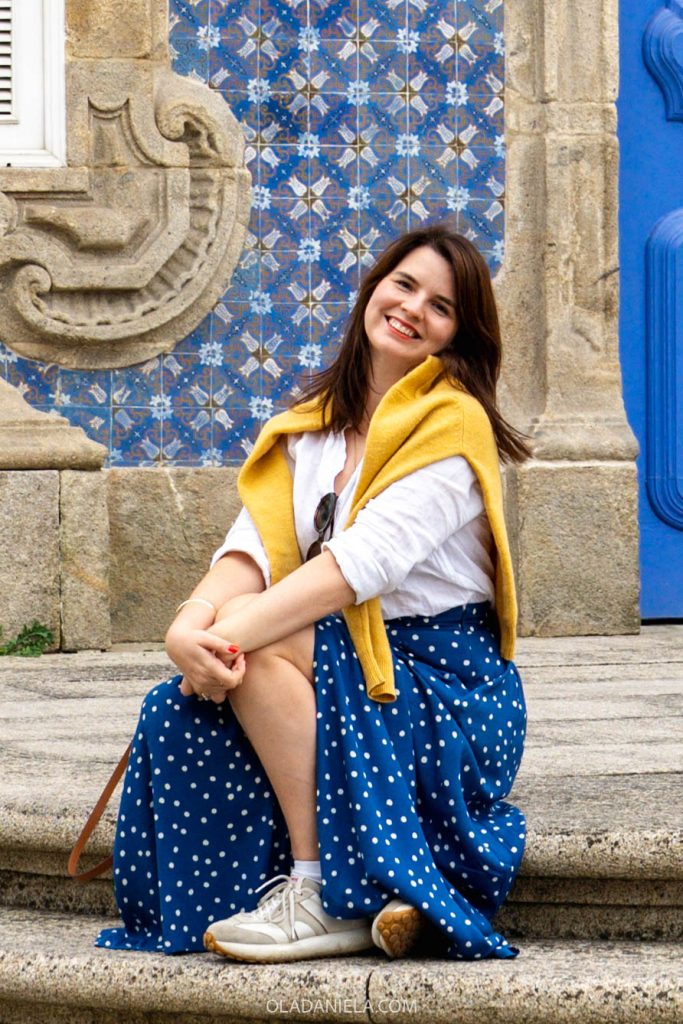
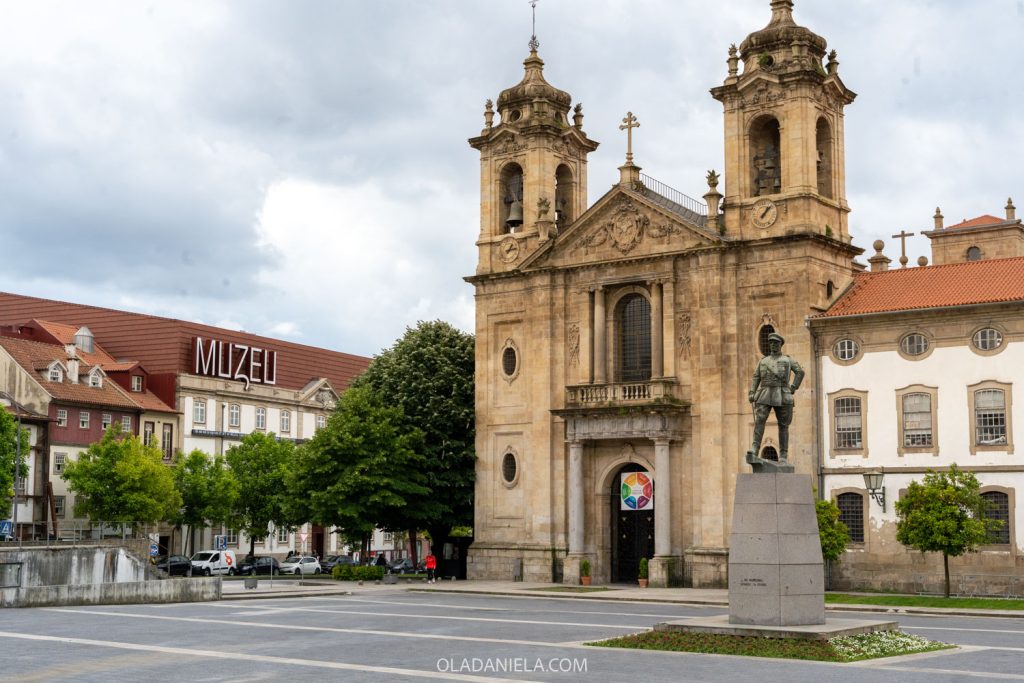
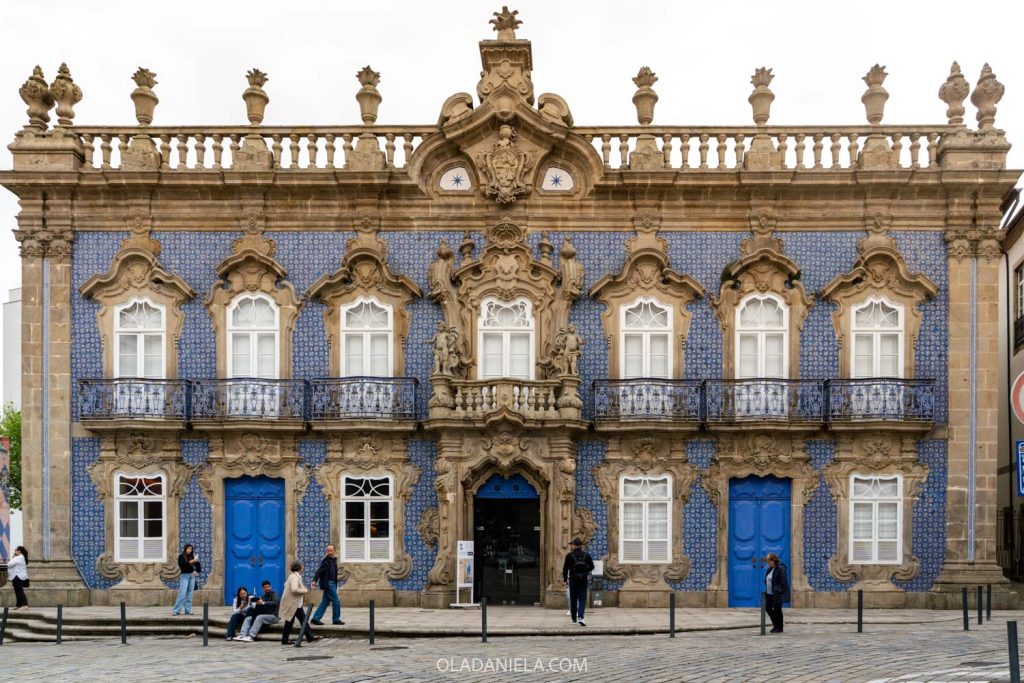
Alternatively, hop over to Palácio do Raio to photograph the stunning blue-tiled, Rococo facade (there’s also a museum inside), or visit MUZEU, Braga’s new contemporary art gallery “dedicated to promoting critical thinking and social activism”, which opened in 2026. It’s free on Thursdays.
Evening: Traditional fare or modern shareplates
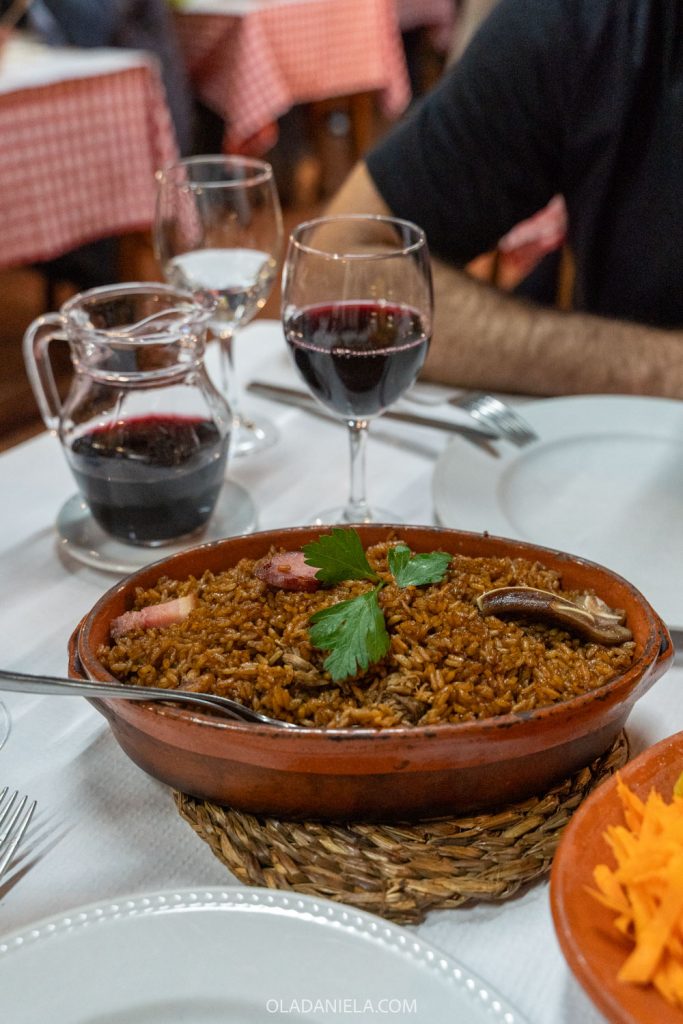
As day shifts to evening, try one of two tried-and-tested options for dinner in Braga. The first, Tasquinha Dom Ferreira, is a charming and historic tasca (bistro) hidden behind red doors. Push past the bar to find a rustic dining room with stone walls, red checkered tablecloths and terracotta servingware. It’s a top spot to try regional dishes, such as Bacalhau à Braga (Braga-style codfish) or the special duck rice. Portions are large!
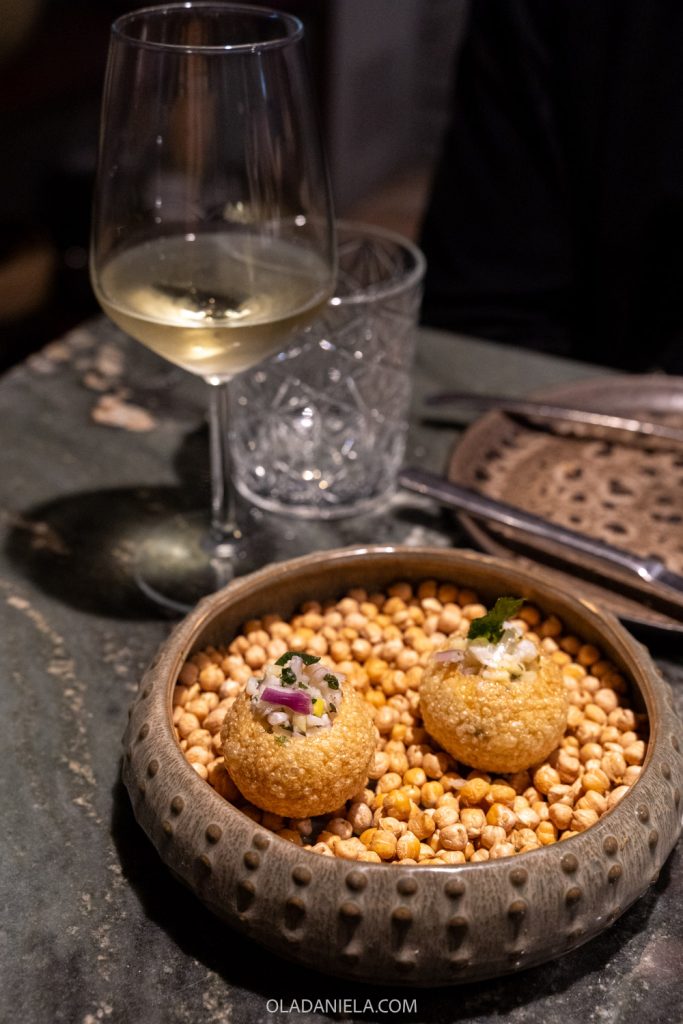
For something different, get dressed up and make a booking at O Filho da Mãe. This small, chic restaurant has its heart in South American cooking. The menu blends local ingredients and recipes with South American influences.
Read next… Where to eat in Braga
Day 2 in Braga
Morning: Head to the market
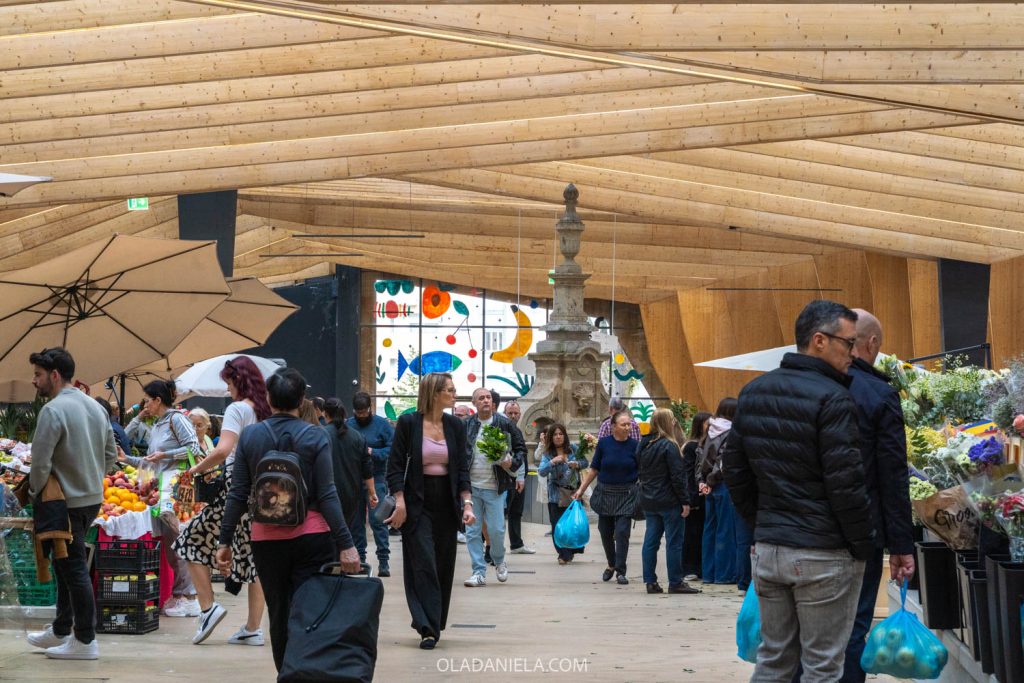
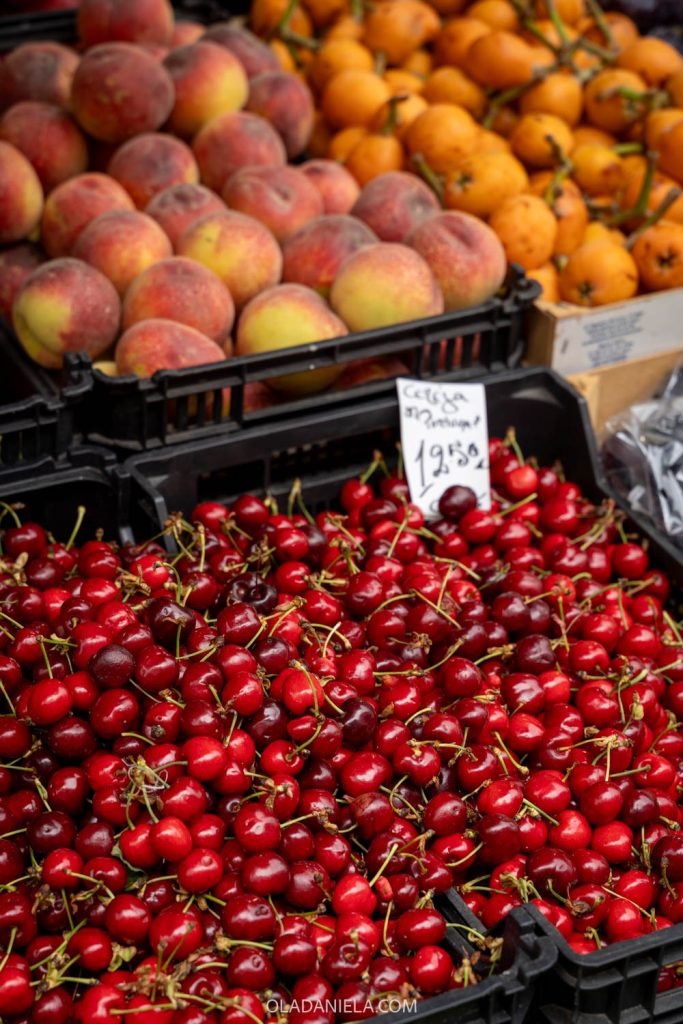
Start your second day at the Braga Municipal Market (Mercado Municipal). This cool local marketplace opened in 1950 and received a sleek, modern architectural update in 2020, while still maintaining the market’s traditional soul. Expect to find a covered hall buzzing with friendly locals picking up fresh produce, smoked meats, fresh bread, cheeses – and maybe even live poultry. Grab a coffee and a light bite at one of the market’s food stalls before or after.
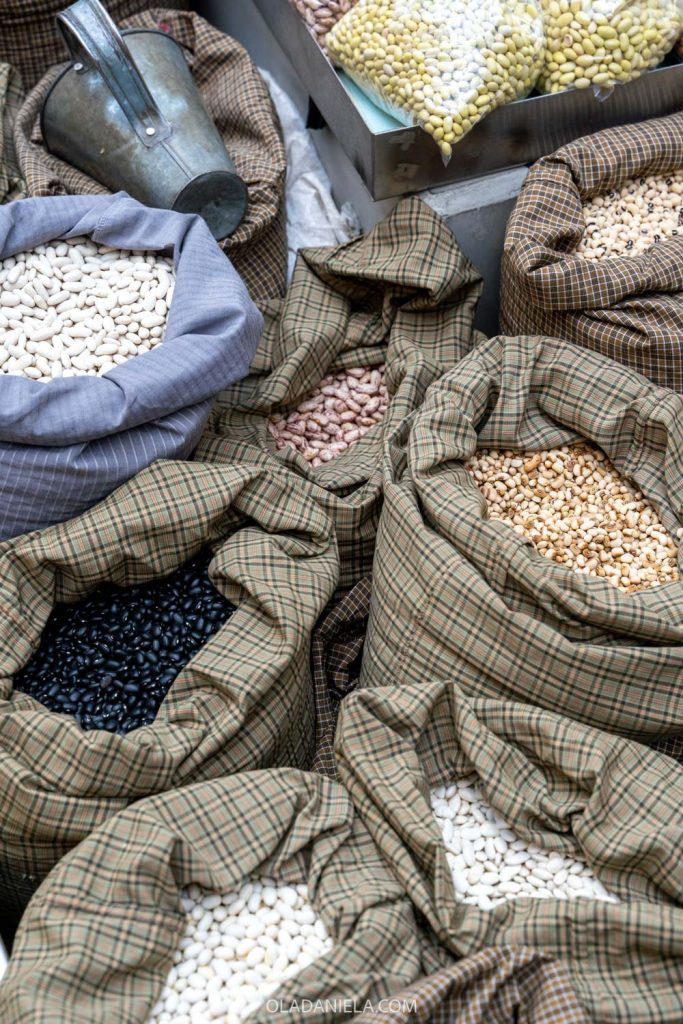
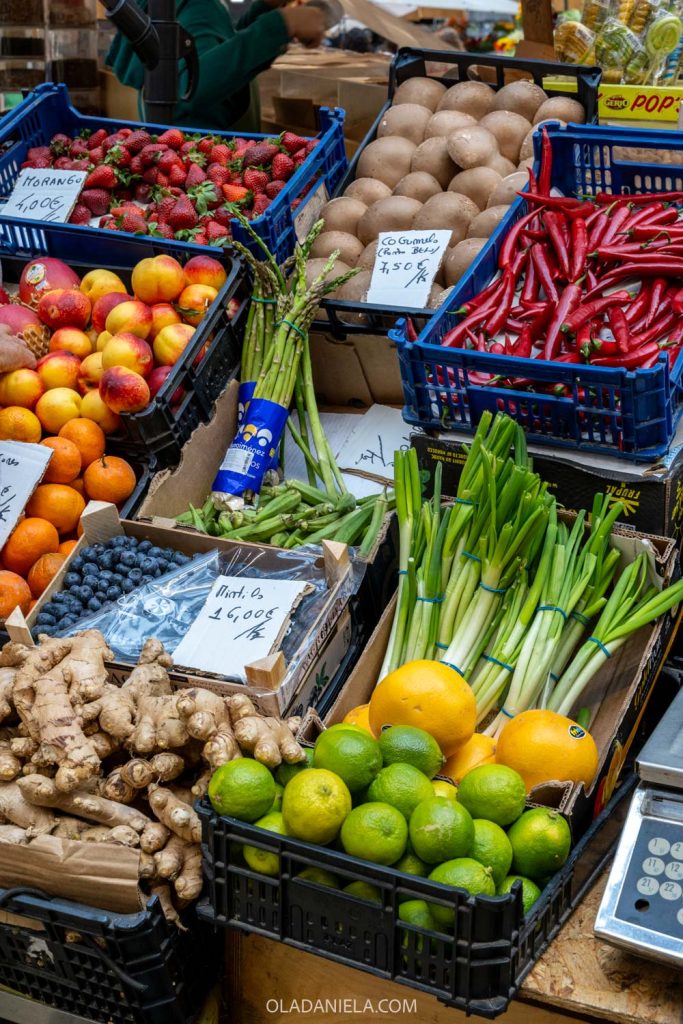
Lunch: If you didn’t pop into Tasquinha Dom Ferreira on the first day, it’s close by.
Afternoon: Sanctuary of Bom Jesus do Monte
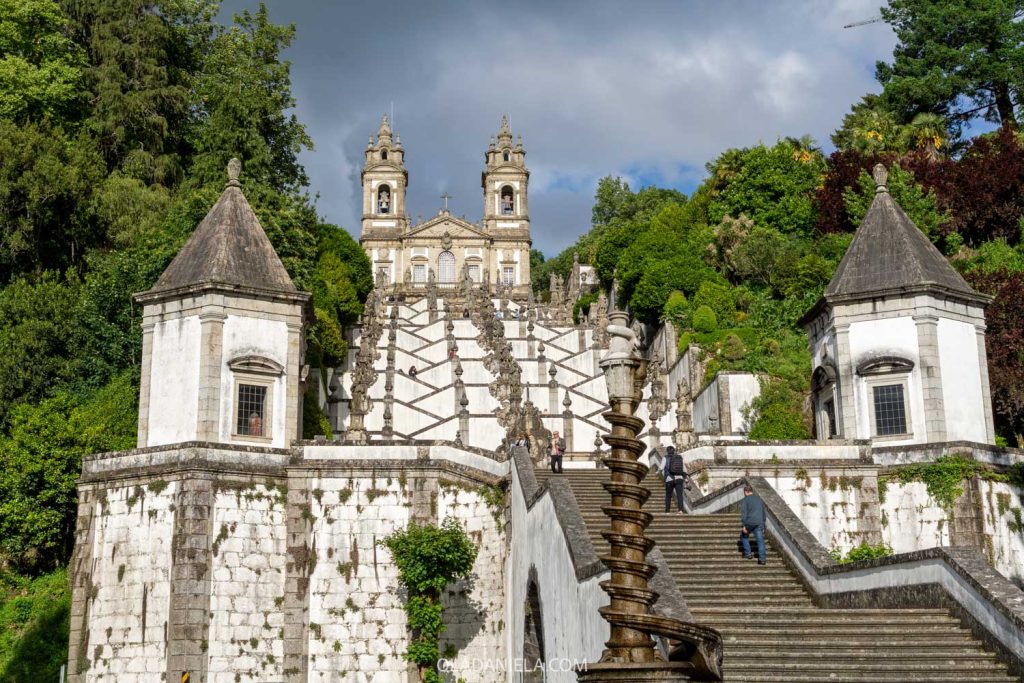
Make a pilgrimage up to the Sanctuary of Bom Jesus do Monte, a 7-minute drive from town.This historic Catholic sanctuary and UNESCO World Heritage site is perhaps Braga’s most famous landmark. It faces west, so visit in the afternoon for better light on the monumental zigzag Baroque staircase. Challenge yourself to climb the 500+ granite steps to the top… or ride the historic, water-powered funicular. It’s the oldest of its kind in the world, open since 1882.
At the top, pop into the Neoclassical Basilica, built between 1784 and 1811, then explore the surrounding parklands. There are trails dotted with fountains, sculptures, chapels, manicured gardens and even a small lake where you can rent little rowboats for a small fee.
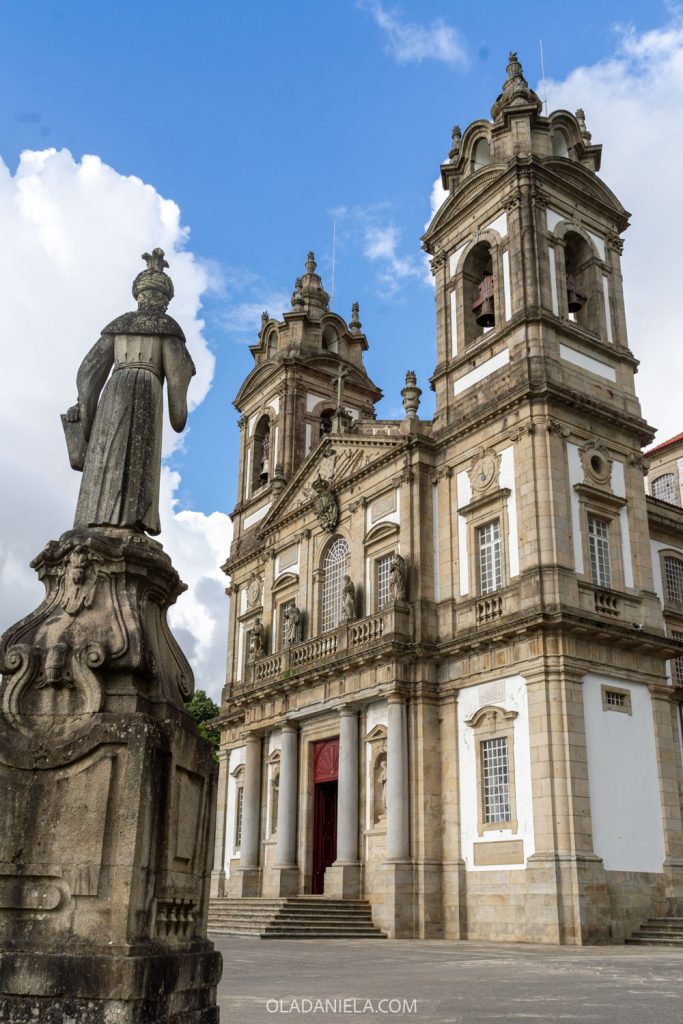
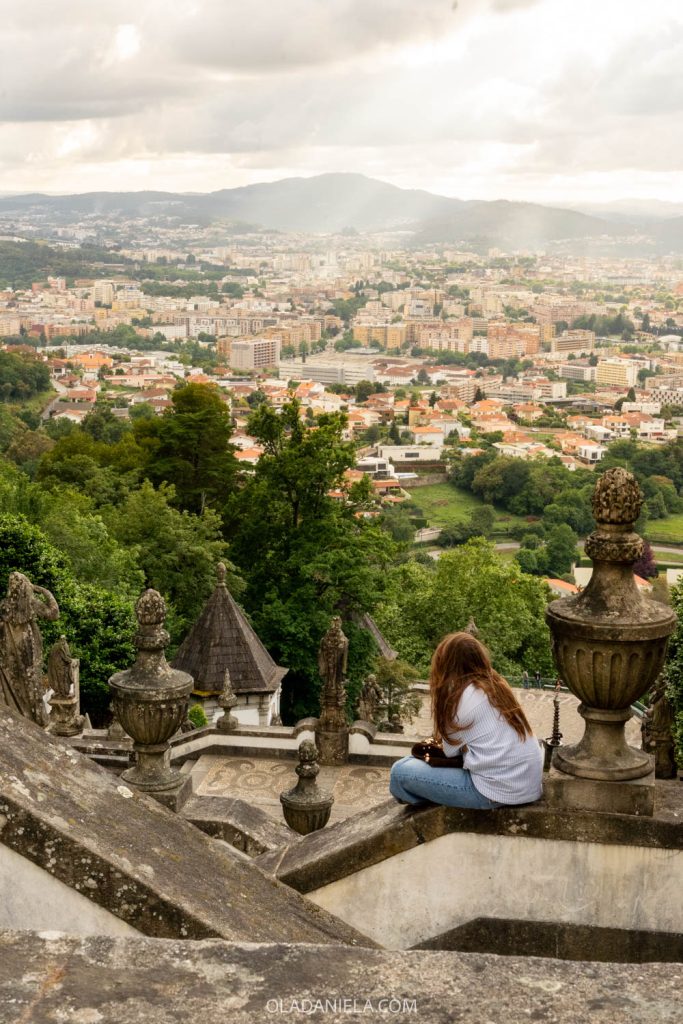
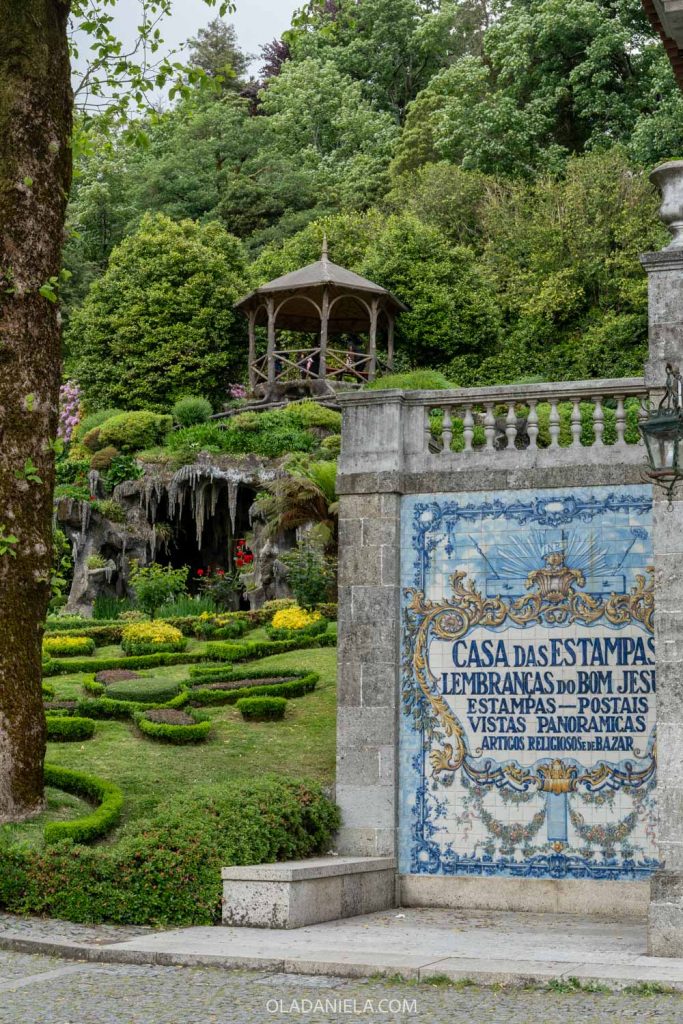
How to get there: Catch the #2 bus from the train station or old town – it takes about 20 minutes and will drop you at the base of the funicular. With a car you can drive to the funicular base or the top of the staircase. Bring €1 for the car park fee.
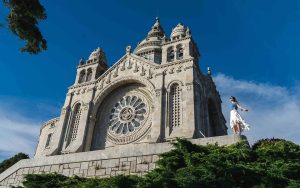
If you have time, Braga has another religious sanctuary (it is Portugal’s religious capital or “Portuguese Rome” after all) located on another hill. Jump back in the car or call a taxi to take you over to the neoclassical Sanctuary of Our Lady of Sameiro. From its 566-metre altitude (1,857 ft), you’ll gain an epic view over the valley and Braga too. It’s one of the most visited places of Marian worship in Portugal, and there are pilgrimages on the first Sunday of June and the third Sunday of August.
Evening: Find an event
While Braga might be deeply associated with tradition and religion, it’s also a university city with a student population that keeps the city feeling young and fresh. There’s a fairly big cultural program on offer – so take a look at a few cultural venues like the opulent, Edwardian Theatro Circo, cutting-edge gnration and artsy Muzeu for special events. Pop by the Braga tourism office in Praça da República to find out what’s on while you’re in town.
Map of Braga
More great things to do in and around Braga
If you have more than 48 hours to spare or want to tailor your weekend there, here are more ideas for the best things to see, do and experience in and around Braga.
Explore museums & cultural venues
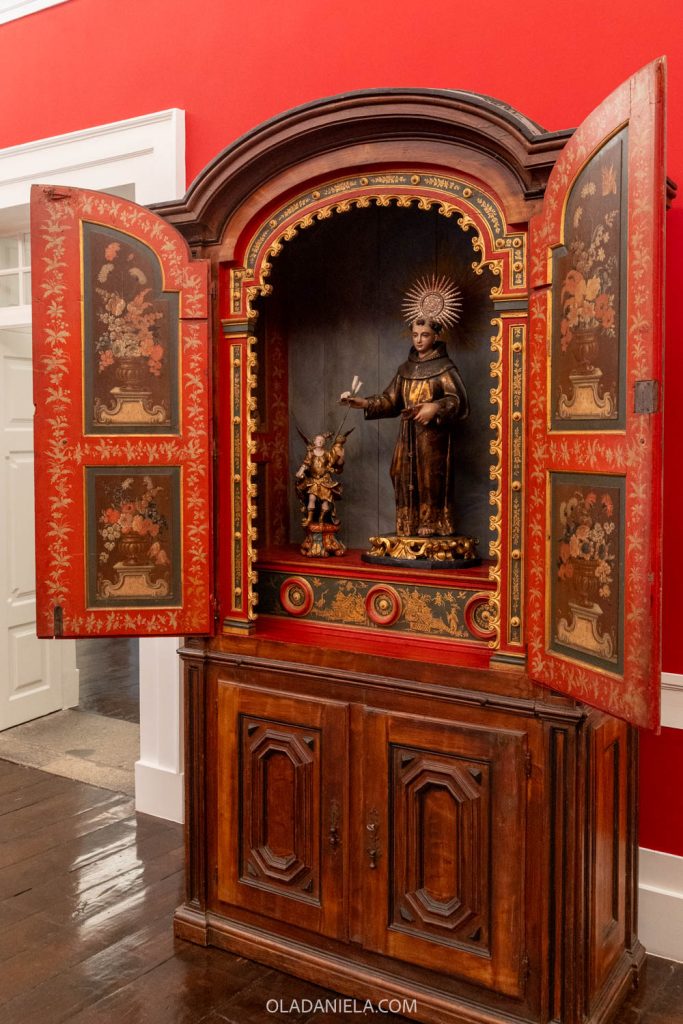
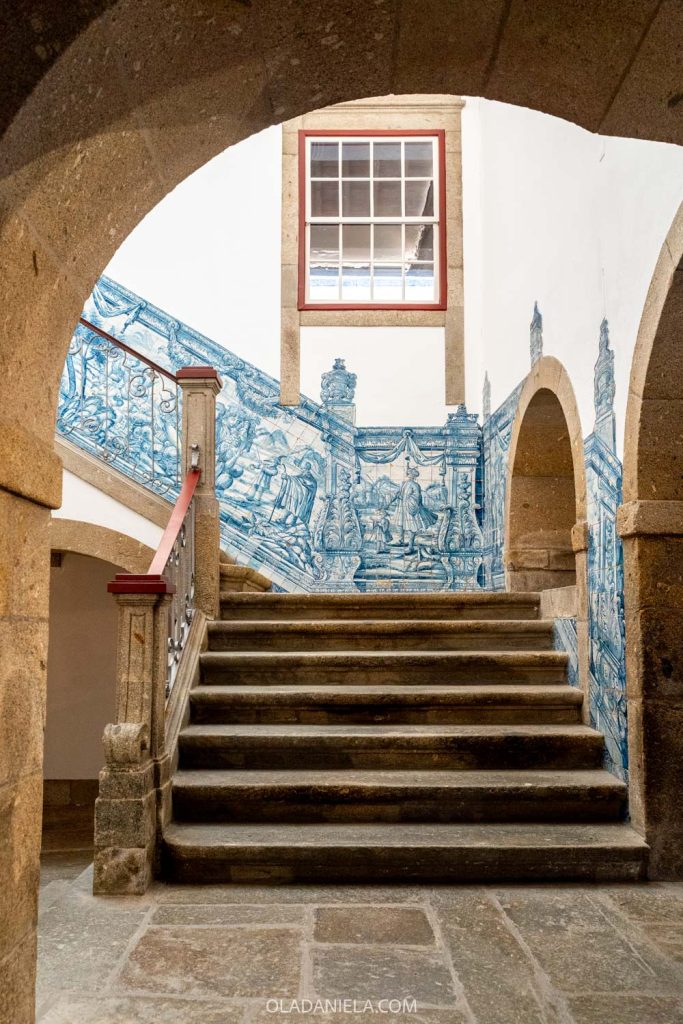
For a relatively small city, Braga punches above its weight when it comes to culture.
- Muzeu is Braga’s new “space for contemporary art and thought”. The huge gallery, from dstgroup’s José Teixeira, is home to 1,000+ works from a major private collection and only opened in 2026. Free on Thursdays.
- gnration is all about cutting-edge electronic music and digital art, housed in a remodeled military police barracks
- Palácio dos Biscainhos is an aristocratic museum-house filled with gorgeous 18th-century furniture, art, ceramics and a walled Baroque garden. Free for Portuguese residents.
- Museu Nogueira da Silva is famous for its photogenic gardens and fine art collections
- Museum of Archaeology D. Diogo de Sousa safeguards the city’s ancient Roman treasures. Free for Portuguese residents.
- Museu do Traje Dr. Gonçalo Sampaio showcases traditional clothing – but the limited monthly opening hours can be tricky (email ahead!)
- Centro Interpretativo dos Abades de Priscos connects you to Braga’s famous convent sweet, but is by appointment only.
Experience Braga’s most epic festivals
The top three events to catch each year in Braga are:
Semana Santa (Holy Week)
While the rest of Portugal takes a relaxed approach to Easter, Braga’s Holy Week is a dramatic devotion. Church altars overflow with flowers and the city’s eight historic calvários (street shrines) open to display vivid paintings of the Passion of Christ. Expect midnight torchlit processions, mass, live music and street food stalls.
Braga Romana
Every May, the city throws on togas and tunics for a five-day Roman festival, Braga Romana, that brings ancient Bracara Augusta back to life. Wander legionnaire camps, watch intense wrestling matches and see horses and birds of prey.
Festa de São João
Braga goes wild on June 23 each year at this summer street party. A sea of thousands of people hit each other over the head with plastic hammers and dance to cheesy pimba music.
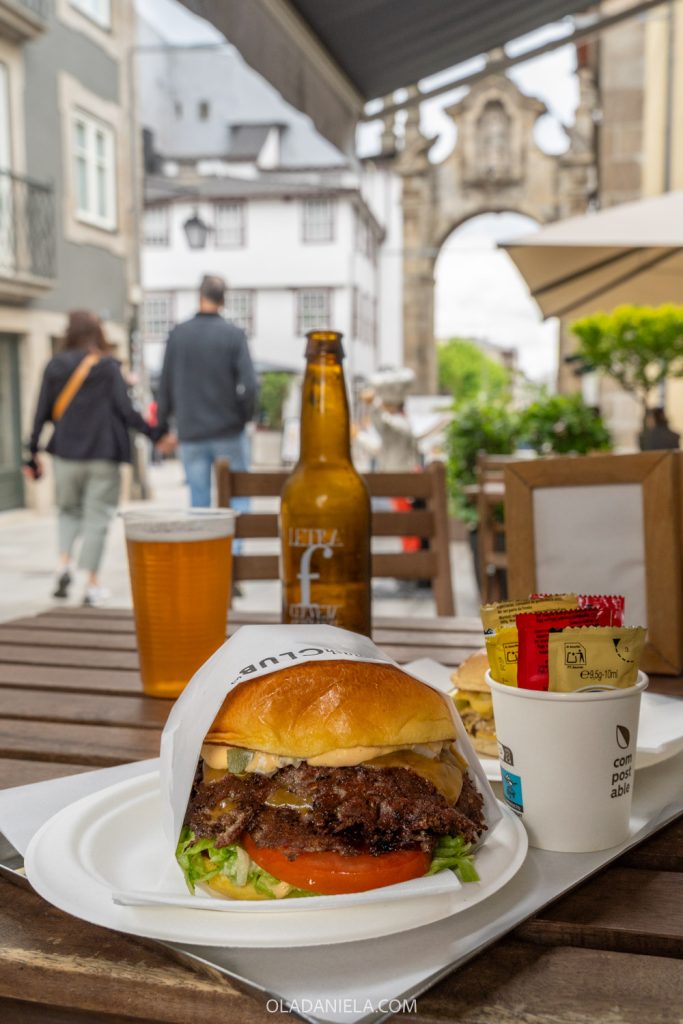
Soak in the views from Miradouro do Picoto
This viewpoint on a forested hill just south of the city centre offers a 360-degree panorama of Braga and the rolling Minho landscape. Take a couple of cold drinks and watch the sunset light up the horizon.
Gaze up at the Braga Tower (Torre de Menagem)
This imposing, battle-worn stone tower is the last remaining fortified vestige of Braga’s medieval castle, which was (sadly) mostly demolished in the early 20th century.
See ancient Roman baths
Braga’s Roman Thermae of Maximinus were accidentally discovered during excavations in 1977. Locals found a public bath complex alongside a later-discovered Roman amphitheatre. Take a look at the site, then visit the nearby D. Diogo de Sousa Museum to see more artifacts.
Shop at the city’s historic stores
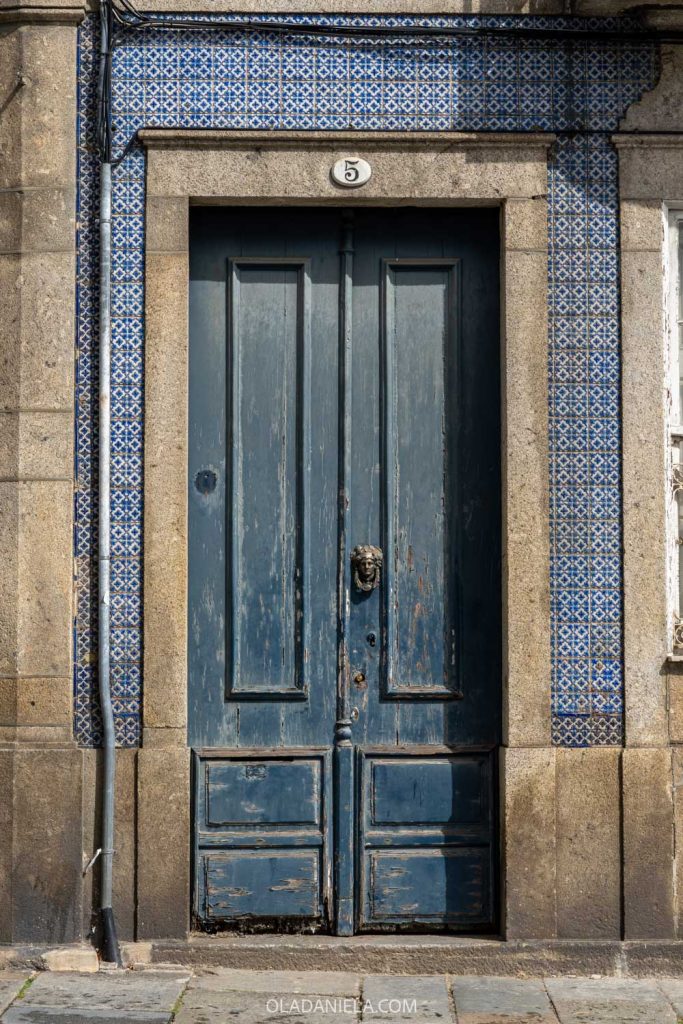
Braga is a little more old-school (or perhaps it is resisting gentrification for now), so it has a strong network of independent historic shops. It catalogues and protects this heritage through the official Lojas com História (Shops with History) initiative. These are generations-old storefronts usually run by local families where you can buy traditional Portuguese goods or food. I really like Pereira das Violas, a haberdashery store open since 1918 and run by the third and fourth generation of the same family, and Casa Silva, a cobbler and leather workshop open since 1919.
Visit an excellent ceramics outlet
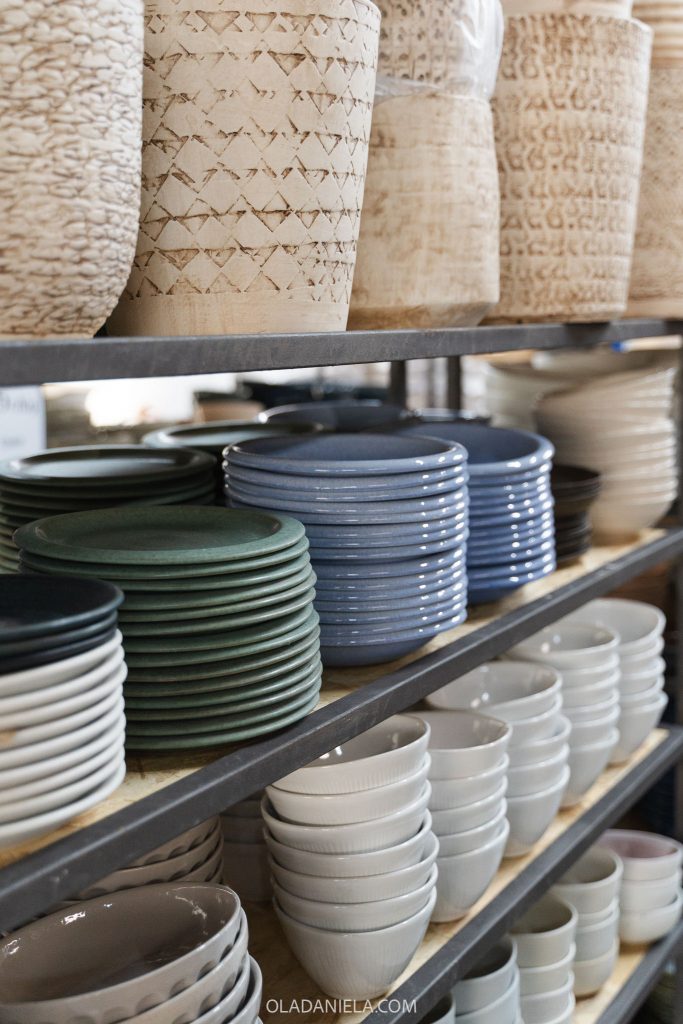
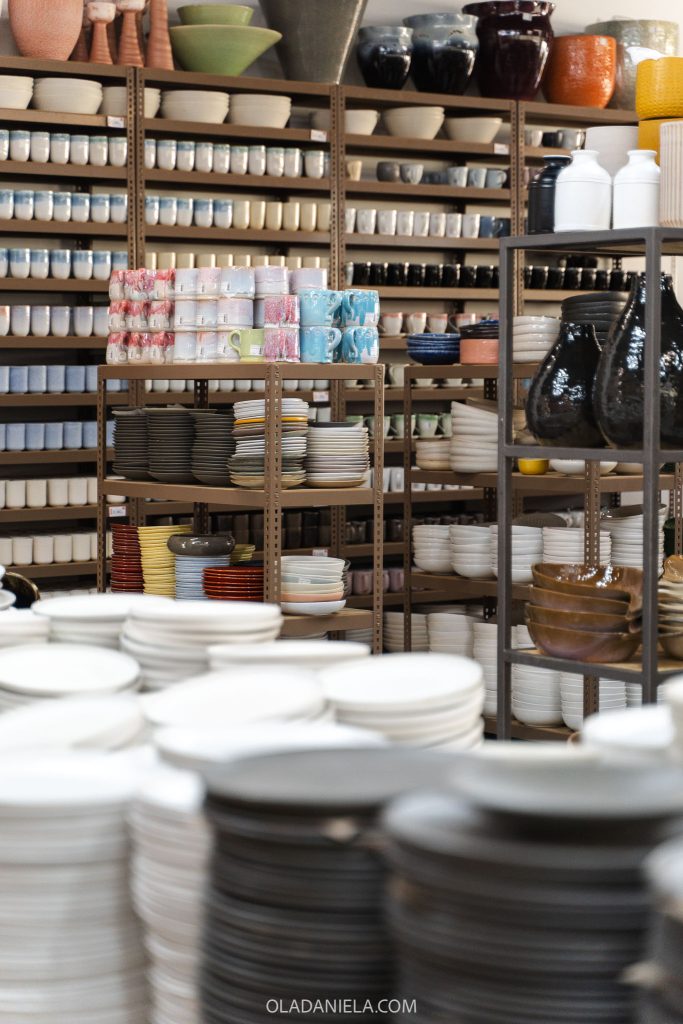
I’m a huge fan of the Clayo factory outlet, located about a 7-minute drive from downtown Braga. I’ve been twice and the quality and range of what’s available is really high. Most of the ceramics on the floor are made by the producer itself in nearby Barcelos – so you’re picking up seconds, excess stock etc. Prices are around €3/kg – though some items are per piece.
Read next… Where to shop Portuguese ceramics by weight (cerâmica ao kilo) & pottery outlets
Escape to the Monastery of São Martinho de Tibães
A 15-minute drive from the city center lies a sprawling monastery complex that dates all the way back to the 11th century. Though a devastating fire ripped through the structure in the 20th century, restoration has beautifully revived the Monastery of São Martinho de Tibães‘ gold-leaf Rococo church and wild green gardens.
Where to stay in Braga
Choosing the right base can make all the difference when exploring Portugal’s oldest city. If you arrive by train, or plan to explore on foot – stay in the pedestrianised historic center (Old Town). Here you’ll be in the heart of centuries of architecture where café tables spill across plazas and you can dine at the city’s best independent restaurants. I’ve stayed at Berço de Mordomias, a lovely guesthouse in a historic building right by the famous Arco da Porta Nova. ➡️ Check availability here.
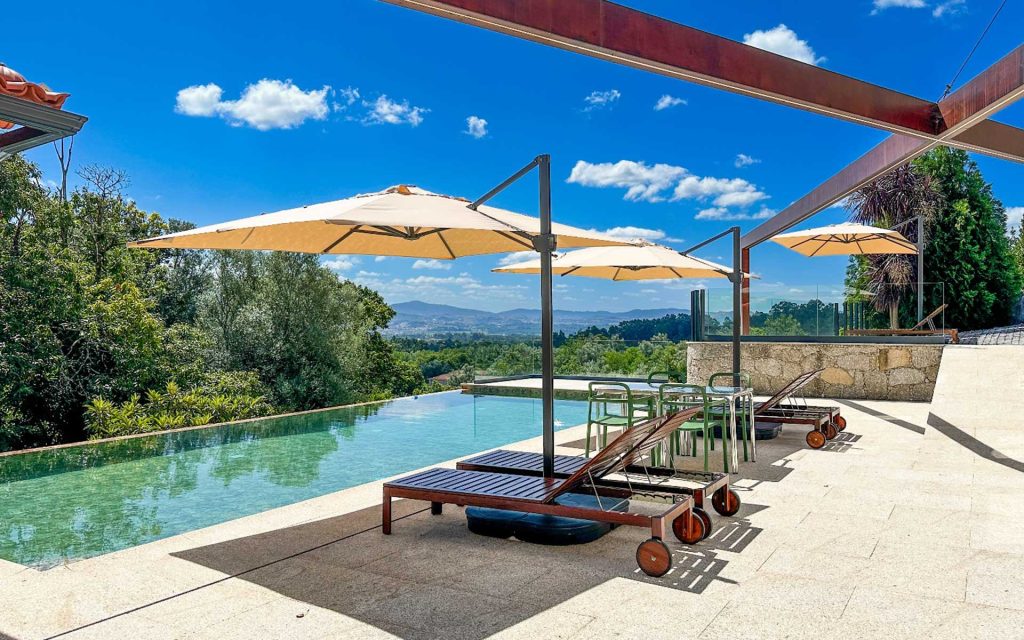
Beyond that, you could consider a romantic escape to the Bom Jesus do Monte, where a luxury hotel enjoys views back over Braga. Or sleep in the nearby countryside at Villa Isobel, a renovated guesthouse with lush beds, an infinity pool, valley views and a 10/10 breakfast with barista coffee. ➡️ Check availability here.
➡️ More hotel options in Braga
- My pick: Berço de Mordomias – guesthouse with rooms in the heart of Braga’s Old Town. Great location for 1-3 days in Braga.
- My pick: Villa Isobel – 15-min drive from Braga – guesthouse with infinity pool, valley views and a 10/10 breakfast with barista coffee. Easy parking. You could relax here a week!
- Hotel Vila Galé Collection – 16th-century hospital turned 4-star hotel with vaulted stone ceilings, beautiful pools and a central cloister garden.
- Porta Nova Collection House – boutique stay right by the famous arch with modern rooms and a wine bar.
- Burgus Tribute & Design Hotel – contemporary design hotel in the Old Town.
- INNSiDE by Meliá Braga Centro – 4-star hotel set on the leafy and central Avenida Central park with an infinity pool and sun terrace.
- Villa Theatro Heritage Apartments – historic apartments with a boutique guesthouse feel.
- Braga Heritage Lofts – sleek and modern aparthotel-style accommodations with air conditioning.
Where to eat in Braga
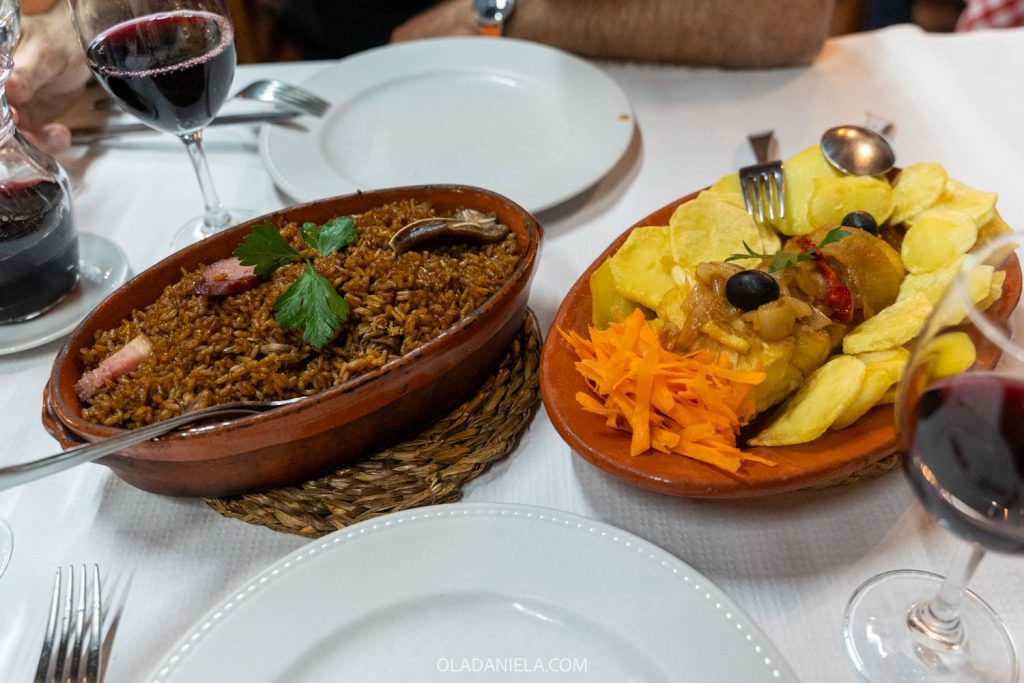
Braga is a northern Portuguese city – and the north of the country is famous for its heavy-hitting comfort food with smoked meats, starchy carbs and hearty portions. Even the city’s most famous dessert – Pudim Abade de Priscos, a super rich flan or creme caramel – uses both bacon lard and a huge number of egg yolks. It’s incredible, and not for vegetarians.
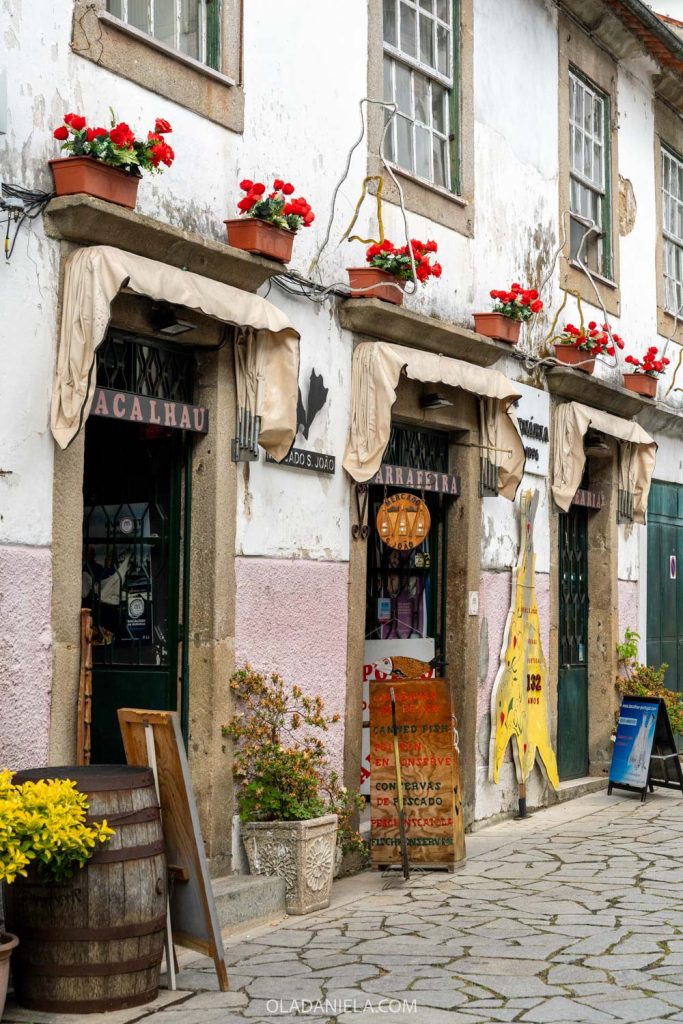
But Braga is also a young, vibrant city so there are cool petisco (tapas) spots and craft beer bars. I’m finalising a huge Braga restaurant guide and will link it here when I’m done so you can explore traditional taverns serving up crispy bacalhau à Braga (salted cod smothered in onions and sliced potatoes) and modern share plate spots.
How to get to Braga
Braga is really close to Porto, the second-largest city, so getting there is easy. Here are the best ways to reach the capital of the Minho region:
By air
If you are flying in, Porto Airport (OPO) is your closest airport – just 50 kilometers (about 30 miles) south of Braga. The Get Bus shuttle service runs direct transfers from outside the arrivals terminal straight to the Braga bus station in about 45 minutes.
By train
Braga train station is close to the old town, so it’s the perfect way to drop in for a day or arrive without a car.
- From Porto: Catch the cheap and frequent urban train (Urbano) from Porto’s São Bento or Campanhã stations. It takes about 70 minutes, and trains run roughly every hour. Buy tickets on the day.
- From Lisbon: Grab the high-speed Alfa Pendular (AP) or Intercidades (IC) train from Lisbon’s Santa Apolónia or Oriente stations. The journey takes around 3.5 to 4 hours. Book this one ahead of time – direct via CP (or use Omio if you’re struggling with the CP site).
By car
For flexibility, a car is best. Just note that any highways have tolls, so get a Via Verde responder for your rental car.
- From Porto: It’s a quick 45-minute drive north via the A3 highway.
- From Lisbon: Take the A1 highway north towards Porto, then transition onto the A3 up to Braga. The total drive takes about 3.5 hours. Just keep in mind that these main highways (autoestradas) are toll roads.
FAQs about visiting Braga
Is Braga worth visiting?
Absolutely. If you’re interested in exploring more of Portugal, Braga is the third-largest city and is an uncrowded alternative to Porto and Lisbon. Expect to find a blend of Roman and baroque history, traditional commerce, pretty squares and gardens and a student population that keeps things interesting.
How many days do you need in Braga?
Two days (48 hours) is perfect. This gives you one full day to explore the historic pedestrian core, its museums and the cathedral, and a second day to venture up to the hilltop sanctuaries like Bom Jesus without rushing. If you’re short on time, you could see Braga in a single day.
Can you do a day trip to Braga from Porto?
Yes, and it’s super easy. The urban train takes just over an hour from Porto’s São Bento or Campanhã stations and drops you right on the edge of Braga’s historic centre. Driving takes just 45 minutes. Once there, you can see the old town sights and the cathedral on foot. If you have a car (or take a cab) you can reach the Bom Jesus.
There are lots of great guided day trips from Porto to Braga too – I’d try this top-rated one that includes Braga, Guimarães and lunch!
Which city is better to visit – Braga or Guimarães?
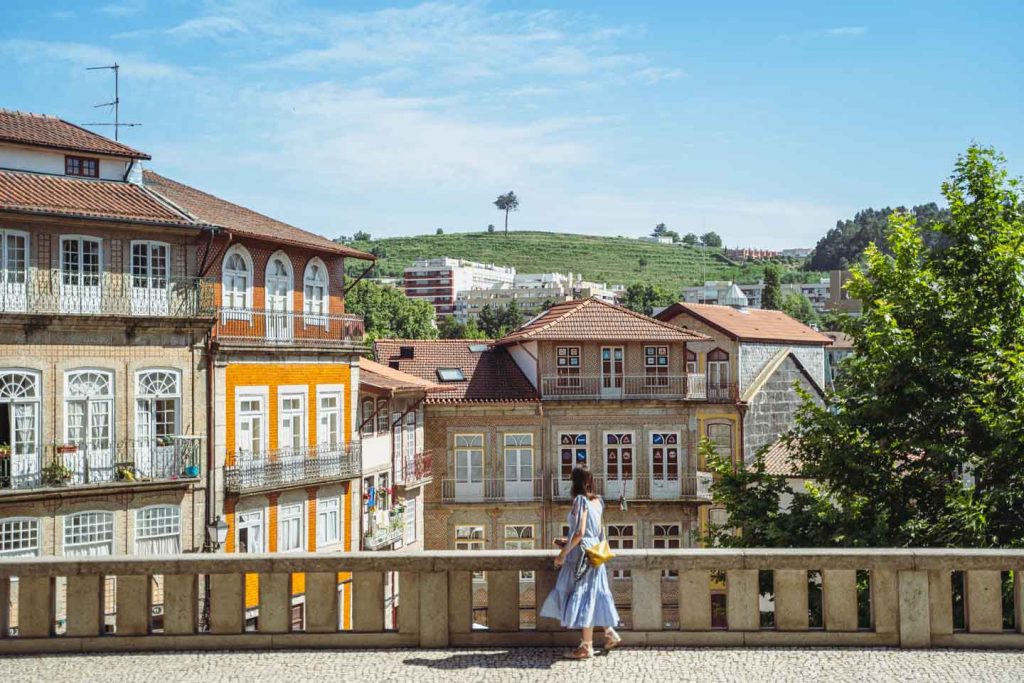
I love both, so it depends on what you’re looking for. Guimarães feels like a medieval fairy tale – the old town of the “birthplace of Portugal” is so well preserved and overlooked by an imposing 10th-century castle. Braga is a larger city, with a grand display of monumental Baroque architecture (like the Bom Jesus), and has more nightlife and things to do.
Read next… 48 Hours in Guimarães
Can you visit Braga and Guimarães in one day?
Yes, there are lots of day trips from Porto that fit Braga and Guimarães into a single day. This packs a lot into a short period of time, but you’ll get to see the highlights of both. If you stay in Braga, I like this guided small-group tour, which includes the Bom Jesus and time in Guimarães. If you’re in Porto, go for this top-rated small-group tour of both.
What is the best time of year to visit Braga?
Spring (April to June) and autumn (September to October) are the best times to explore Portugal. For the absolutely best time of year, align your trip with one of Braga’s major festivals – like Holy Week (Semana Santa) in the spring or the Braga Romana festival in late May.
Is Braga walkable?
Super walkable – bring your sneakers. The historic centre of Braga is flat and largely pedestrianised. To reach the hilltop sanctuaries like Bom Jesus do Monte, you will need to take a 10-minute bus, taxi or car.
That’s my guide to the best things to do in Braga with a few days. Anythign I should add? Leave me a comment…
Read next…
- Where to eat in Braga
- 48 hours in Guimarães
- 48 hours in Porto
- Where to eat in Guimarães
- Where to eat in Viana do Castelo
- 22 most beautiful castles in Portugal
- 16 most beautiful villages and small towns in Portugal
- Where to eat in Coimbra
- Best Festivals & Events in Portugal
- Guide to the best Douro Valley winery tours
- Portugal Road Trip: Where to stop between Lisbon and the Douro Valley
- The Independent Guide to the Douro Valley